· via Hacker News – Front Page (native)
AI agent teardown of five peripherals finds disableable webcam LED and a hidden mic shell
A developer let Claude Opus 5 tear down the firmware of five desk peripherals and found unsigned updates, a microphone command shell reachable from a browser, and a webcam LED that can be switched off mid-recording.
Intro
A two-week evening project documented in an August 23 post on schlarp.com, which surfaced on the Hacker News front page, shows how far AI agents have pushed practical hardware reverse engineering. The author pointed Claude Opus 5 at five peripherals sitting on the desk — a webcam, a monitor, a microphone, a video capture dongle and a key light — and ended up with a webcam that can record with its status light off, a microphone hiding a 48-command plaintext shell reachable from a web page, and a key light whose memory can be written by anyone on the local WiFi.
The workflow
The recipe was the same for every device. The author downloaded the manufacturer's firmware image and update utility, loaded both into a reverse engineering environment, and handed the agent a brief: exhaustively document the firmware, reverse engineer the update format and protocol, reimplement the updater, evaluate its security properties — checksums, signature validation, secure boot — and hunt for hidden or debug functionality. The physical device stayed attached so the agent could probe it in non-mutating ways. Across all five devices the effort came to roughly 13 hours of agent working time and 98 human prompts, according to the post's session transcripts, with most findings validated against real hardware and released as GitHub repositories of generated documentation and scripts.
A webcam that records in the dark
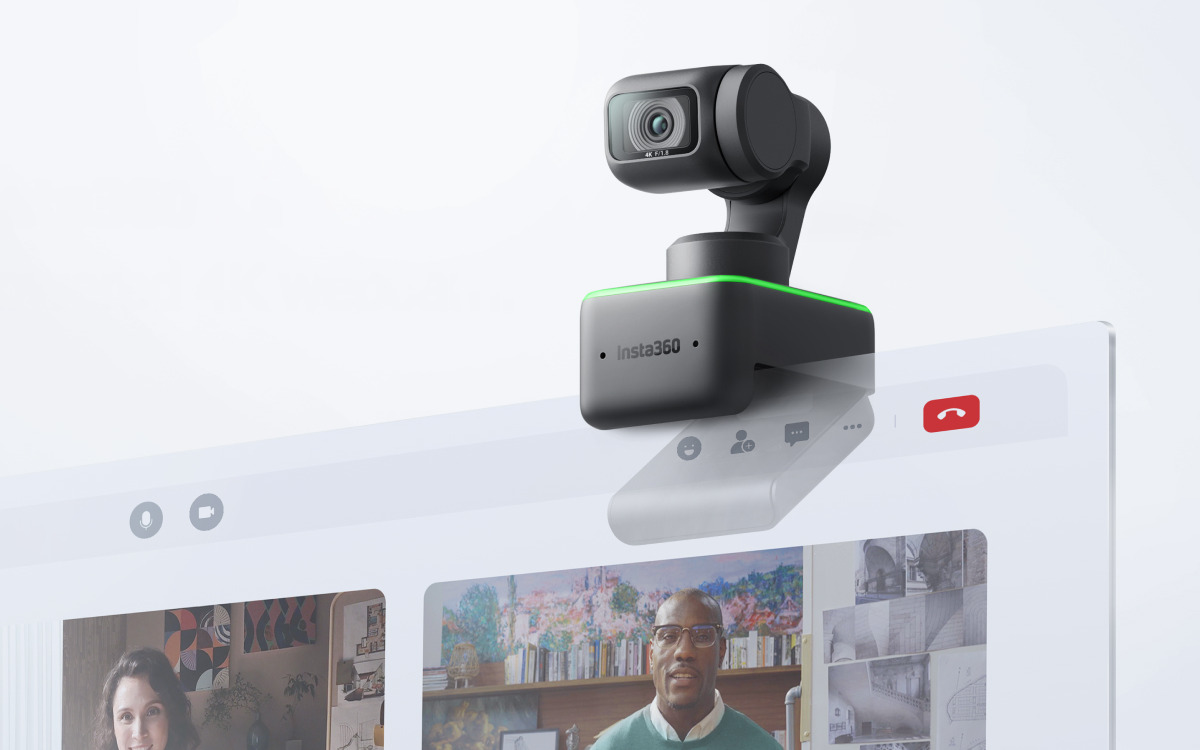
The Insta360 Link, a gimbaled webcam with face tracking, took 3.7 hours of agent time and 33 prompts. It runs ThreadX, a real-time operating system sourced from chip vendor Ambarella, alongside several small vision models for tracking and gesture control — considerable attack surface for a desk camera. The firmware can be replaced two ways: an extension-unit command on the USB Video Class interface puts the device into mass-storage mode so an update can be staged and applied at the next reboot, while a separate vendor-class channel permits arbitrary file reads and writes plus a reboot, allowing a full flash with no user interaction at all. The only integrity protection is an appended MD5 hash. The author had the agent patch the firmware's table of LED patterns so the green light that signals recording never illuminates, recompute the hash and reflash the camera; the recording indicator then stayed dark. The gimbal still tilts down when idle, so the camera is not fully covert.
Monitor firmware with the doors open
The ASUS ROG Swift PG42UQ monitor, the project's starting point, needed just 1.2 hours and 13 prompts. The motivation was mundane: silencing a recurring on-screen reminder to run pixel cleaning. The firmware turned out to have essentially no protection — an A/B slot scheme and a simple checksum, with updates delivered over an I2C bus bridged through USB. The reminder has no built-in off switch and returns after eight hours of use, but the agent located the code to patch; the author has not yet risked flashing an expensive display. A useful side effect was a Linux shell script that drives the monitor's DDC/CI interface to toggle the hardware crosshair, zoom overlay, FPS counter and countdown timer, features ASUS otherwise exposes only through its Windows utility.
A plaintext shell inside a microphone
The Shure MV7 microphone took the longest, at 4.2 hours and 32 prompts. Its firmware was hidden inside the Windows MOTIV Mix application, so the agent installed that under Wine, located the update server and pulled the image, which contains both DSP and MCU code with, again, no meaningful flash security. The update protocol runs over a USB HID vendor class that implements a full plaintext command shell with 48 commands, covering DSP settings, arbitrary memory reads and writes, and LED control. A four-tier privilege system guards the sensitive parts, but its authentication amounts to comparing a string against the name of the tier requested, so simply naming the top tier grants it. That tier can disable the touch panel so the microphone cannot be muted at the device, and can drive the mute LED independently of whether the microphone is actually muted — the webcam trick, echoed on an audio device. Because the protocol is HID, a web page in Chrome can reach it through WebHID, and the author had the agent build a browser-based console for it. An Elgato Cam Link 4K capture dongle, at 1.5 hours of agent time, rounded out the batch.
Why it matters
Two threads run through the post. The first is security: status LEDs are the only signal most people have that a camera or microphone is live, and they are firmware-controlled features on devices whose update mechanisms, in these cases, lacked signature checks or anti-tamper measures. Unsigned update paths also make peripherals attractive homes for persistent implants. The second is effort. Findings that once demanded specialist reverse engineering skills — bespoke update protocols, trivial privilege escalation, LED subversion — came out of roughly 13 hours of agent labor and short prompts from a motivated hobbyist. That cuts both ways: it democratizes auditing, repair and cross-platform tooling for owners, while shrinking the skill barrier for anyone with worse intentions.
- #ai-agents
- #security
- #firmware
- #reverse-engineering
- #hardware