· via Hacker News – Front Page (native)
Americas loses measles elimination status as endemic transmission returns in Canada
PAHO has withdrawn the Americas' measles elimination verification after endemic transmission resumed in Canada, amid a 30-fold surge in regional cases this year.
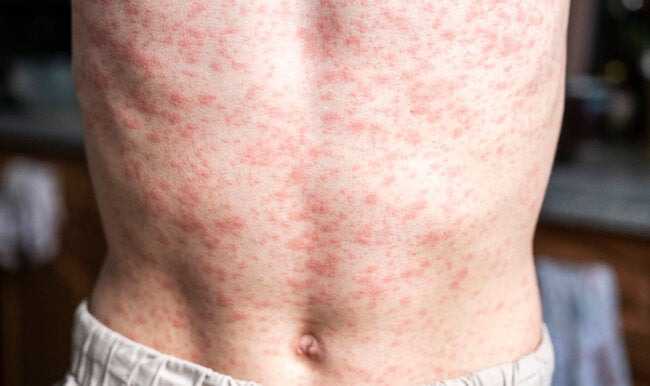
The Pan American Health Organization (PAHO) announced on 10 November 2025 that the Region of the Americas has lost its verification as free from endemic measles transmission — a status the region was the first in the world to achieve, twice.
The reversal was triggered by Canada, where an outbreak that began in October 2024 has kept the virus circulating for more than twelve months, meeting the definition of reestablished endemic transmission. All other countries in the region retain their elimination status, according to PAHO.
How the decision was made
The verdict came from PAHO's Measles, Rubella and Congenital Rubella Syndrome Elimination Regional Monitoring and Re-Verification Commission, which reviewed the regional epidemiological picture at a meeting in Mexico City from 4 to 7 November 2025. PAHO Director Jarbas Barbosa accepted the commission's conclusion and cast the loss as a setback that can still be reversed, pointing out that the region has stopped measles transmission twice before and can do it a third time with political will, cross-border cooperation and consistently high vaccination.
The outbreak in numbers
As of 7 November 2025, PAHO had logged 12,596 confirmed measles cases across ten countries — roughly a thirtyfold increase over 2024. About 95% of those infections are concentrated in Canada, Mexico and the United States.
The virus has killed 28 people so far this year: 23 in Mexico, three in the United States and two in Canada. Active outbreaks are running in Canada, Mexico, the United States, Bolivia, Brazil, Paraguay and Belize, most of them seeded by imported cases that then spread locally.
PAHO reports that 89% of cases involve people who were unvaccinated or whose vaccination status is unknown. Infants under one year of age are the most affected group, followed by children between one and four.
Canada's outbreak started in New Brunswick in October 2024 and spread nationwide, generating more than 5,000 confirmed cases. Case counts are now declining, but transmission continues in Alberta, British Columbia, Manitoba and Saskatchewan.
Vaccination coverage is the weak point
Measles spreads aggressively — PAHO notes that one infected person can pass it to as many as 18 others — and severe cases can involve pneumonia, encephalitis, blindness and death. The agency credits the vaccine with preventing more than six million deaths across the Americas over the past 25 years, and an estimated 15 million over the past five decades.
Coverage, however, sits well below protective levels. In 2024, regional uptake of the second dose of the measles-mumps-rubella (MMR) vaccine averaged 79%, against the 95% needed to keep outbreaks from taking hold. Only 31% of countries reached 95% coverage for the first dose, and just 20% managed it for the second.
The path back
This is not the region's first reversal. Venezuela lost its elimination status in 2018 and Brazil in 2019, and the region recovered its standing in 2024 through coordinated action. Regaining the designation requires demonstrating at least twelve consecutive months without endemic transmission, supported by vaccination, surveillance and outbreak-response data.
Canada will now present and implement an action plan under PAHO's regional framework, focused on raising immunization coverage, strengthening surveillance and responding quickly to suspected cases. PAHO has deployed experts to Mexico, Argentina and Bolivia, and is monitoring risk in Belize, Brazil and Paraguay.
The verification commission is also pressing countries to expand electronic immunization registries, keep laboratory surveillance adequately funded and staffed, use PCR testing to resolve suspected cases that return a negative IgM antibody result within the first three days after rash onset, and formally document outbreak closures.
Why it matters
Losing elimination status is more than symbolic. The regional data shows precisely where measles finds its foothold: populations with low vaccine uptake, with the youngest children paying the highest price. Elimination, it turns out, is not a permanent award but a standing obligation — held collectively by every country, and forfeited when coverage dips anywhere in the region. The commission's recommendations also make clear how much modern outbreak control depends on unglamorous infrastructure: immunization registries, laboratory networks and surveillance data. Barbosa's argument is that the tools for a third elimination already exist; the open question is whether countries can raise coverage quickly enough to outpace a virus that exploits every gap.
- #public-health
- #measles
- #vaccination
- #canada
- #infectious-disease