· via Hacker News – Front Page (hnrss.org)
Anthropic opens life sciences lab after Claude finds CRISPR-like enzyme system
Anthropic has launched a life sciences lab and reports that Claude found a novel CRISPR-like enzyme system in phage DNA with only high-level human direction.
Anthropic moves into the life sciences
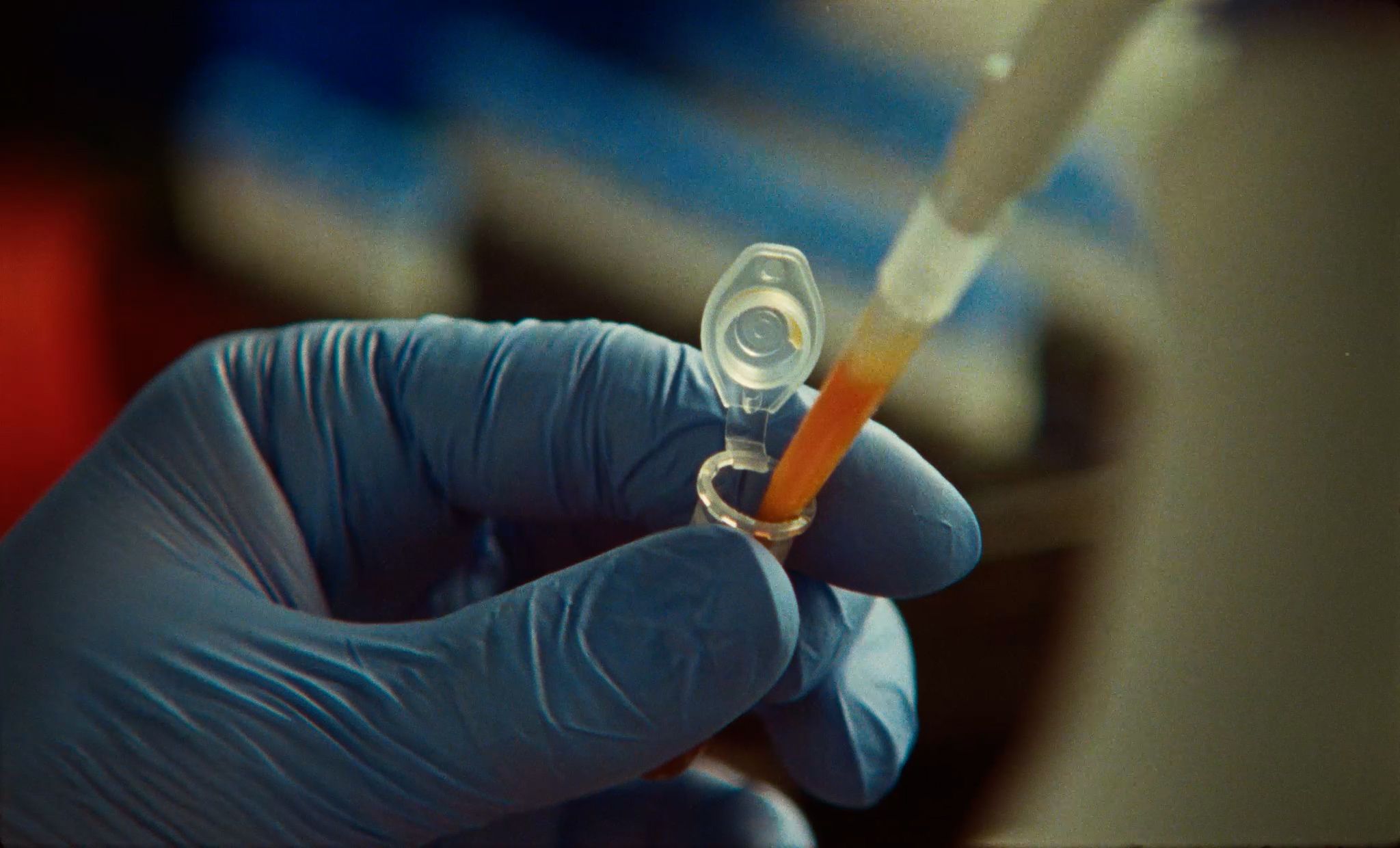
Anthropic has created a life sciences research group and laboratory dedicated to fundamental biology, with Claude doing large-scale analysis of DNA datasets to surface uncharacterized protein families and human scientists testing the resulting hypotheses at the bench. The lab is in the Bay Area, works only at BSL-1 and BSL-2 biosafety levels, handles no human pathogens, and leaves all physical lab work to people, the company says.
According to Anthropic, the group formed in spring 2026 to test whether general AI models can systematize discoveries that historically began with someone noticing something odd in nature's molecular machinery — restriction enzymes from bacterial immune systems, Taq polymerase from a Yellowstone hot spring bacterium, and CRISPR, first spotted as strange repeats in bacterial DNA before becoming the foundation of gene-editing medicines.
What Claude found
The first public result from the effort is an enzyme system Claude identified in bacteriophages, the viruses that infect bacteria, which Anthropic has named array-associated reverse transcriptases (ART). The core enzyme is a reverse transcriptase, which copies RNA into DNA, and it had already been identified in a jumbo phage. What Claude appears to be first to notice, Anthropic says, are the system's defining features: an associated array of non-coding DNA repeats and an extra accessory protein of unknown function.
That repeat-array architecture echoes how CRISPR itself was first recognized. Anthropic is careful to say the function of ART is not yet known, but notes that the system combines characteristics previously seen together in only a handful of systems — all of them programmable and capable of DNA manipulation such as cutting, copying and insertion.
Feng Zhang, a pioneer of CRISPR genome editing at MIT and the Broad Institute, reviewed the pre-print and described it as an encouraging example of AI agents contributing to biological discovery, adding that the link between RNA-repeat arrays and reverse transcriptases is intriguing and merits further investigation.
How the search worked
Anthropic's scientists gave Claude a prompt to search a large DNA sequence database for interesting new reverse transcriptases; beyond that initial prompt, the company says its role was limited to lab work. About 950 Claude agents then spent 21 hours and 210 million tokens exploring the data, investigating families and using their own judgement to pick candidates.
The agents gathered more than 200,000 reverse transcriptases, flagged 3,500 new candidate systems, and narrowed those to the 20 most compelling, each documented in a short report proposing a function and the supporting evidence — analysis Anthropic says would take an expert weeks to months. One agent noticed a repeating pattern of DNA sequences sitting next to the gene for an odd-looking reverse transcriptase, and lab testing confirmed it marked a previously uncharacterized system.
Humans and agents in the loop
The team's standard workflow has Claude survey a protein family, read the relevant literature and reproduce known results to sanity-check its methods, then hunt for family members or genomic neighbours that fit no described system. Most candidates are eliminated when Claude critically re-examines the evidence; only survivors reach human review and wet-lab testing, with Claude helping interpret the resulting data. The work runs in Claude Science and Claude Code — the same tools available to any scientist — plus a custom harness that coordinates many parallel Claude sessions.
A single campaign can yield hundreds to thousands of candidate reports, so Anthropic says the hypotheses themselves have become an object of study: the team works out what separates proposals worth testing from the rest and feeds those lessons back into its instructions. The lab sits inside a broader life sciences organization that also covers drug discovery and training Claude in biology and chemistry, and Anthropic has released a pre-print detailing the ART finding.
Why it matters
CRISPR's journey from a curious bacterial oddity to a medical platform shows how much value hides in unexplained patterns in genomic data, and how long humans take to find them manually. An AI system that can sweep sequence databases, propose testable hypotheses and hand them to a working lab compresses a search cycle measured in months into roughly a day. The ART system itself remains uncharacterized, and Anthropic is explicit that this is an early result shared partly to demonstrate capability. But it is a concrete, experimentally backed case of an AI model making an observation that experienced genome miners had missed, and a working preview of biology labs where agents and scientists share the discovery process.
- #anthropic
- #claude
- #crispr
- #biotech
- #genomics
- #ai-agents