· via Hacker News – Front Page (native)
Anthropic tells IPO investors Claude Mythos cut AMD GPU onboarding to about three days
Anthropic told IPO investors that Claude Mythos Preview did the software work to run its AI on AMD MI355X GPUs in about three days with almost no human input, versus six to twelve months previously.
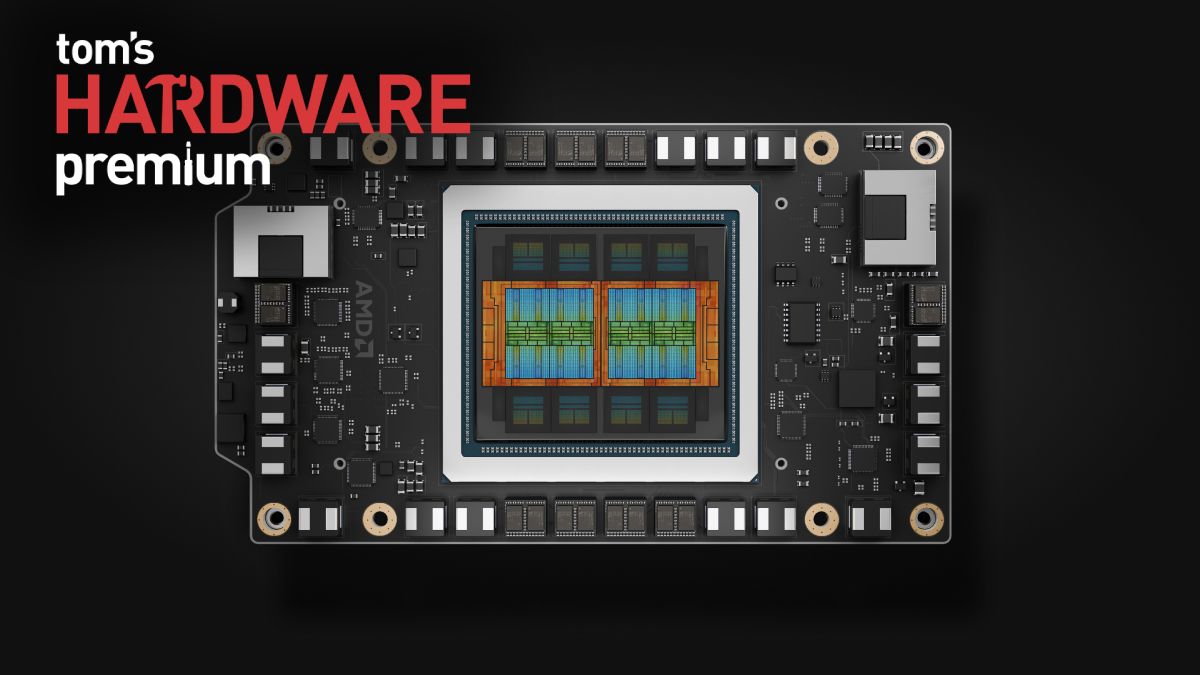
Anthropic's three-day porting claim
Anthropic has told investors ahead of its stock market listing that one of its AI models, Claude Mythos Preview, completed the software work needed to run an Anthropic model on AMD GPUs in roughly three days, with what the company described as "basically no human intervention." According to Tom's Hardware, which reported the remarks, that same job has historically taken six to twelve months.
The comparison came from Tom Brown, Anthropic's co-founder and chief compute officer, who told investors that the conventional version of the effort required a team of "dozens of engineers."
What the three days actually covered
The scope is narrower than the headline number suggests. According to Tom's Hardware, the three days cover prompt processing — the phase where a model ingests input before generating output — for a single Anthropic model on AMD's MI355X GPUs, delivered at what Anthropic called "a useful level of performance." Mythos is said to have ported or written "almost 100% of the kernels" for that work.
It is also a claim made in an IPO pitch rather than a published technical paper. On the evidence available, the figure has not been independently verified, and terms such as "useful" are left undefined.
Kernels and the CUDA moat
Kernels are the low-level programs that map a model's computation onto a specific chip family, and writing them well is one of the main reasons AI teams default to Nvidia hardware: years of accumulated CUDA code and tooling make switching vendors expensive. Tom's Hardware frames Anthropic's result as evidence that this moat is eroding. If an AI system can produce nearly all of the vendor-specific code in days rather than months, the software cost of moving to AMD — or presumably other accelerators — falls sharply.
A multi-vendor compute fleet
The porting result fits into a broader strategy. Anthropic already runs its models across several chip families — Nvidia and AMD GPUs, Google's TPUs and AWS Trainium — and manages the fleet as "one fungible pool of compute," per Tom's Hardware. Brown called the early decision to support multiple hardware vendors "an unconventional bet."
That bet has aged well, the report notes: Google's TPUs can now run AI models built in PyTorch natively, and Meta uses the chips in production.
Why it matters
Two things are at stake. First, if the claim holds up outside an investor deck, it directly attacks the switching costs that underpin Nvidia's dominance in AI compute. Hardware that is easier to port to becomes easier to price against, which matters to anyone building or buying large training and inference fleets — including Anthropic itself as it prepares to spend at IPO scale.
Second, it is a data point on AI automating its own infrastructure. Kernel porting is specialized systems work, long treated as resistant to automation. A lab using its model to write the code that lets that model run on new chips creates a self-reinforcing loop: cheaper ports widen hardware choice, and wider hardware choice increases the value of automated porting.
The caveats deserve equal weight — one workload, one model, an undefined performance bar, and a claim made to people being asked to buy shares. But even discounted, three days versus a multi-month engineering project is a large enough gap that the burden of proof now sits with anyone arguing the CUDA moat is intact.
- #anthropic
- #amd
- #nvidia
- #gpu
- #cuda