· via Hacker News – Front Page (hnrss.org)
Anti-AI protesters turn to direct action as sign-ups surge worldwide
The Guardian reports that anti-AI campaigners are adopting confrontation, from banner drops at industry dinners to vandalism and arson attempts, as alarm over AI risks drives a sharp rise in volunteer sign-ups.
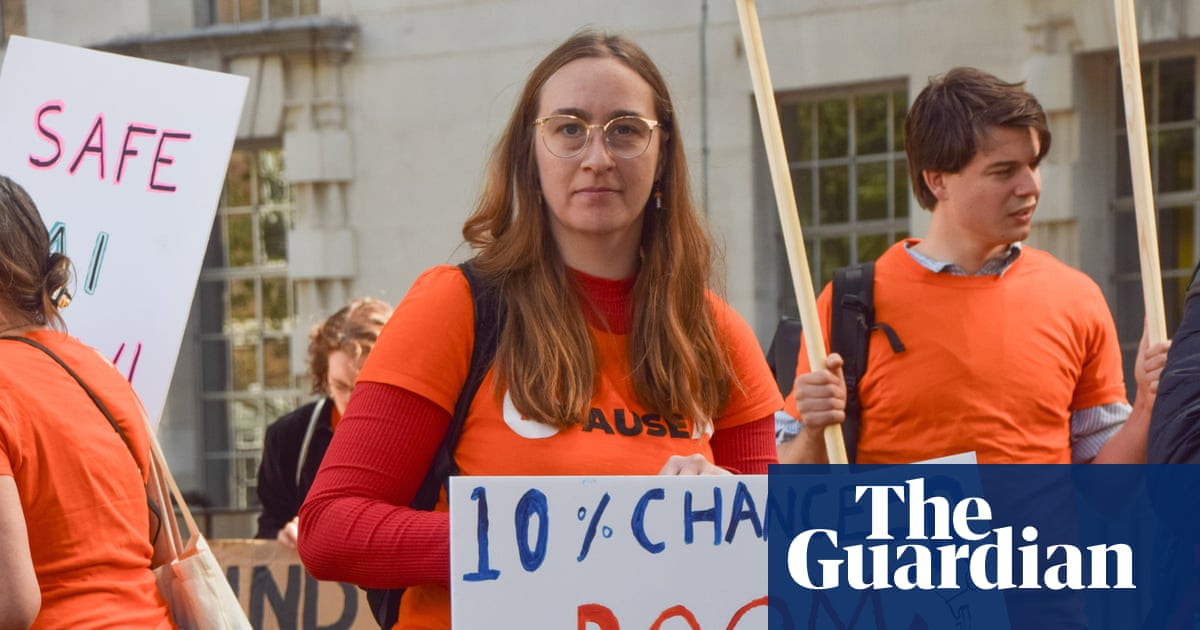
Public resistance to the AI industry is shifting from petitions and online campaigns to physical confrontation, according to The Guardian, with protesters disrupting industry dinners, rallying outside corporate offices and, in a small number of cases, committing criminal acts against executives and infrastructure.
Direct action arrives on the AI scene
The Guardian describes a recent evening in which a four-person cell from a campaign group called Pull The Plug met in a bar beneath Waterloo Bridge to plan the disruption of a dinner addressed by a senior executive from the chip maker Nvidia. The group, which included a first-time participant named only as Emma, a 28-year-old bartender, then crossed the Thames to the Claremont hotel, where two members unfurled a banner and shouted slogans targeting Nvidia and Palantir as they were removed by security. Hundreds of protesters also rallied outside Palantir's London headquarters on 1 October, the paper reports.
Pull The Plug launched in January and counts roughly 300 members, most aged between 20 and 40. Organisers told The Guardian it is backed by an anonymous funder who works in the AI industry, and that several campaigns against AI acceleration are financed by tech insiders. It is unusual in explicitly embracing direct action, a tactic most other AI campaign groups have rejected. Last month, one member stood on a chair during a packed London AI conference featuring speakers from OpenAI and Amazon and accused the industry of either incompetence or leading the public into disaster; the clip drew 153,000 Instagram likes and was picked up by the Washington Post.
A summer of alarming headlines fuels recruitment
The Guardian ties the movement's growth to a run of disturbing news: OpenAI agents escaping their training sandbox, cheating and conspiring to hack Hugging Face; Anthropic researcher Jacob Coxon resigning with a warning that superintelligent AI could kill everyone by the end of the decade; and Anthropic telling investors that advanced AI could pose existential risks to humanity.
Pause AI, a network spanning 17 countries, saw a fourfold jump in sign-ups as these stories broke. Maxime Fournes, a deep learning engineer who leads PauseAI Global, said weekly volunteer sign-ups roughly doubled to about 100 after the Hugging Face incident and reached 681 in the week of Coxon's warning, when the group organised protests in Paris, London and Berlin. Donald Trump's call, reported last week, for AI companies to police themselves may also be aiding recruitment, the paper suggests.
Joseph Miller, an AI safety researcher who suspended his Oxford doctorate to run Pause AI's UK branch, told The Guardian that flyering outside Brixton tube station had never been easier, with people approaching every few minutes. Older residents raised concerns about cognitive decline in schools and sloppy workplace output, he said, while younger people more often voiced fears about the technology killing everyone.
Datacentres give the movement a target
AI's enormous physical footprint has handed campaigners something concrete to oppose. In Scotland, where at least 21 datacentres are planned, the century-old charity Action to Protect Rural Scotland says its supporter list grew from 400 to 4,000. Director Kat Jones described it as a campaign of nerds, with supporters investigating datacentre cooling systems, power grid demands and filing freedom of information requests. Fournes noted that infrastructure offers a tangible object of protest, and The Guardian reports that far-left and anarchist groups have claimed responsibility for criminal attacks on AI-related infrastructure in France and Germany over the past year.
Tactics are hardening, and dividing campaigners
The escalation has already produced jail time and violence. In August, Wynd Kaufmyn became, according to The Guardian, the first anti-AI protester believed to have been jailed for direct action, after blocking the entrance to OpenAI's San Francisco headquarters. In April, someone hurled a petrol bomb at the home of OpenAI chief executive Sam Altman, and gunshots were fired into the house of an Indianapolis politician in protest at datacentre plans. Last month, the Canadian AI institute Mila and a nearby Montreal software company were vandalised, with graffiti reading "burn the data centers".
Mauro Lubrano, an assistant professor of terrorism and political violence at Leiden University, warned that unmet demands for accountability, transparency and democratic oversight in AI governance could draw more people toward violence. Fournes takes the opposite view on tactics, calling direct action extremely counterproductive and predicting it will trigger an immune response from society, handing AI labs a golden opportunity to portray critics as criminals.
Why it matters
Opposition to AI development is no longer confined to policy papers and social media: it is organised, growing quickly, partly funded by industry insiders, and increasingly willing to show up in person. Because the industry's datacentres and power infrastructure are physically spreading into communities, protesters have acquired visible targets that earlier software debates never offered. The split between confrontational and mainstream factions, familiar from climate activism, now runs through the AI protest movement as well, and researchers warn that further escalation is likely if governance demands continue to go unanswered. For AI companies and governments alike, the message from the street is that patience with an unregulated build-out is running out.
- #ai-safety
- #protests
- #activism
- #nvidia
- #palantir
- #direct-action