· via Hacker News – Front Page (native)
Biography traces Cloudflare co-founder Lee Holloway, architect of Anycast and Cell architecture
A biography surfacing on Hacker News details how Cloudflare co-founder Lee Holloway built Anycast and the Cell architecture, and how frontotemporal dementia forced him out of the CTO role.
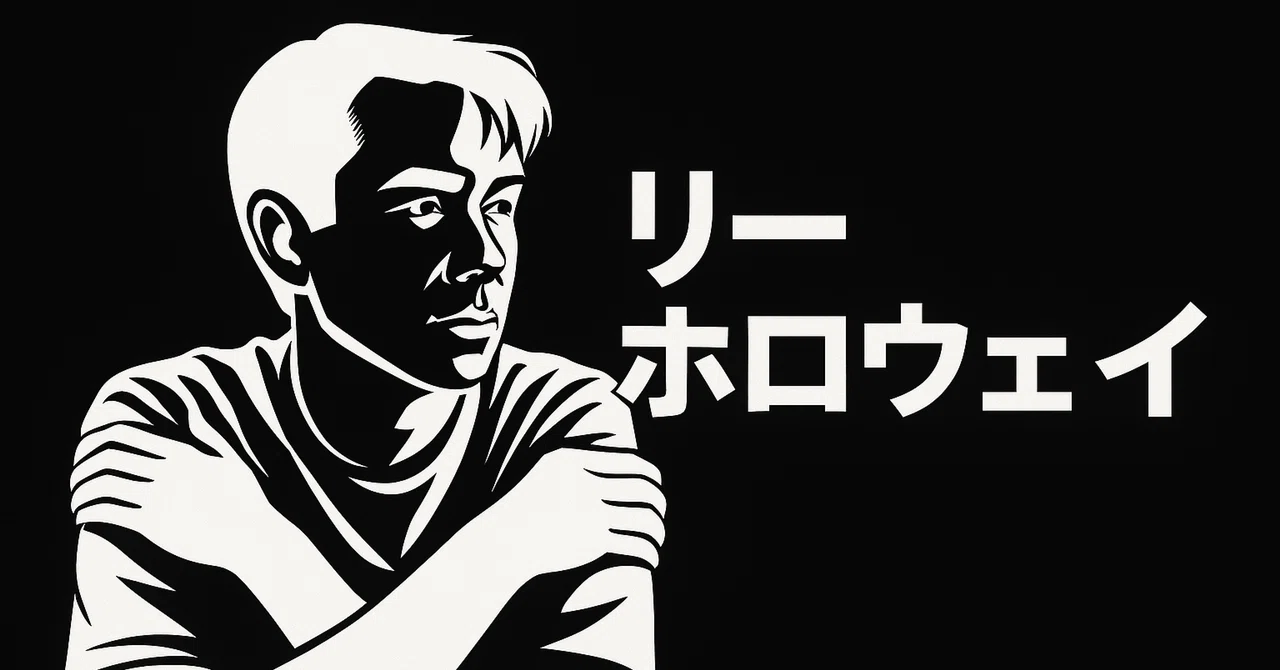
A biography of Lee Holloway, the engineer who co-founded Cloudflare and designed much of its core infrastructure, has surfaced on the Hacker News front page. Written by Masakazu Urabe and published on note.com, the first part of the series traces Holloway's path from a Cupertino childhood to the systems that still carry a large share of the internet's traffic — and the brain disease that ended his tenure as CTO.
From Cupertino to anti-spam
According to Urabe, Holloway was born in California around 1981 (the article marks the year as an estimate) and raised in Cupertino, where his father worked at Apple. He showed an early aptitude for strategy, winning a middle school chess tournament on a whim, and after graduating from Monte Vista High School he worked as an engineer at HomeWarehouse.com, a startup acquired by Walmart in 2000. He went on to study computer science at UC Santa Cruz, where he developed the ability to visualize large system structures in his head.
A professor, Arthur Keller, introduced him to Matthew Prince, an entrepreneur pursuing anti-spam software close to work being done in Holloway's lab. Prince hired him on the spot under a joint patent arrangement, and in 2004 Holloway joined Unspam Technologies in Park City, Utah, living in the basement of Prince's home with room and board standing in for a salary. He rose to Chief Software Architect and, as a side project, co-created Project Honey Pot, an open-source community effort to track web spammers that Urabe notes still operates today.
Building Cloudflare's foundations
When Prince left for Harvard Business School, the two stayed in contact. Prince and classmate Michelle Zatlyn had refined an idea to use Project Honey Pot's data not merely to monitor internet threats but to block them. After an hour-long pitch, Urabe writes, Holloway paused and answered, "That's interesting, let's do it!" Cloudflare was founded in 2009.
Holloway built the first prototype and the platform's technical base, which the biography credits with implementing the Anycast network — announcing the same IP addresses from many locations so traffic reaches the nearest point — and designing the Cell architecture. Early colleagues reportedly regarded him as the resident genius for his long, intensely focused coding sessions. He hired and mentored the first engineering team, and at the 2010 TechCrunch Disrupt launch he stayed off stage to keep fixing bugs until the demo. Urabe attributes Cloudflare's ability to process more than 10% of all internet requests and block billions of threats daily to the scalability of the systems built under his direction. In 2014, ahead of a deadline to give every customer free SSL/TLS encryption, Holloway reportedly worked in silent, headphone-wearing concentration and wrote the code in a single night; the article says encrypted web traffic across the internet doubled overnight as a result.
The onset of a hidden illness
From around 2011, Holloway's behavior began to change. Urabe reports that he grew exhausted to the point of collapsing after work, withdrew from colleagues and family, and showed apathy toward his young son at home. His first marriage, to Alexandra Carey, ended in 2012 after she proposed a temporary separation — a split coworkers interpreted as success going to his head. He later remarried Kristin Tarr, who handled communications at Cloudflare. Doctors explored a congenital heart condition, aortic valve regurgitation, as a possible cause of his headaches, and a six-hour surgery at Stanford University Hospital in January 2015 repaired the heart but left his mental state visibly altered; Tarr felt the vivid side of his personality had faded. The underlying cause, as the series frames it, was frontotemporal dementia (FTD), the progressive brain disease that ultimately forced him to step down as CTO. Part one cuts off before the diagnosis itself, leaving that account for a later installment.
Why it matters
Anycast routing and cell-based architecture are not historical trivia; by Urabe's figures they underpin a network that touches roughly a tenth of all web requests. The biography documents how much of that rests on choices made by one unusually focused engineer during a startup's first years, and how his decline was initially read by the people around him as a character flaw rather than illness. For infrastructure engineers, it is a study in how a handful of architectural decisions scale far beyond their author; for everyone else, it is a reminder of how easily a degenerative disease can be mistaken for a changed personality.
- #cloudflare
- #anycast
- #networking
- #cloud
- #biography