· via Hacker News – Front Page (hnrss.org)
Copy-paste redaction failure exposes Google's Nebraska data center power, water and tax figures
Botched redactions in Nebraska filings show Google's Lincoln data center peaked at 52.65 MW, its Papillion site used 547.9 million gallons of water in 2025, and the sites expect over $117 million in tax refunds.
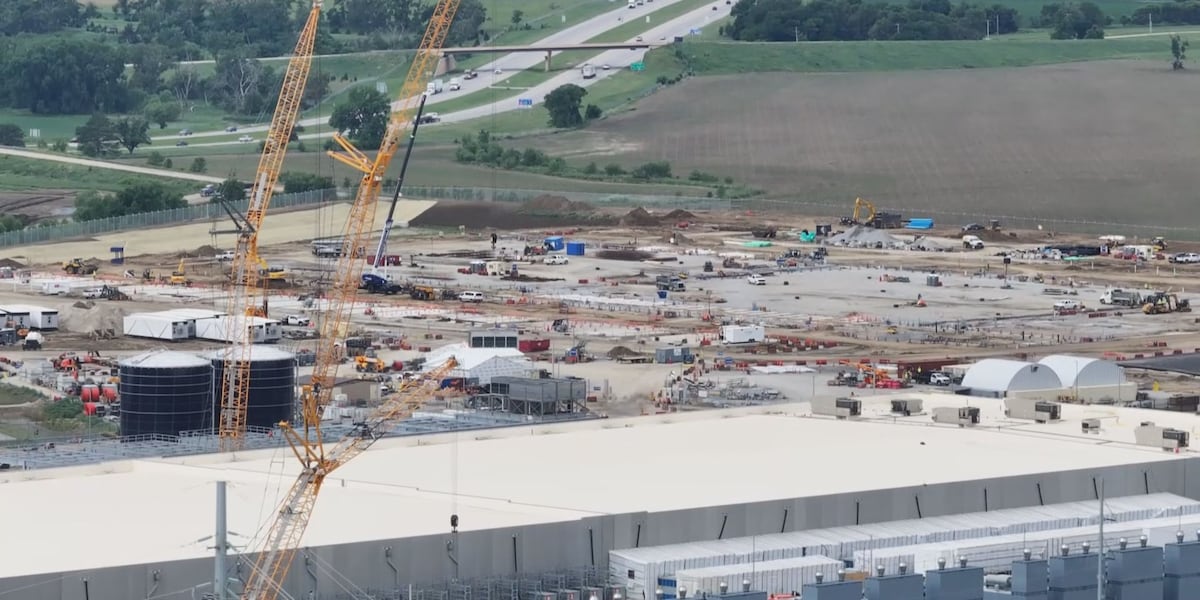
A redaction failure in Nebraska's new data center disclosure filings has exposed how much water and electricity Google's facilities in the state consume. The numbers were hidden behind a black box that was merely a graphical overlay: selecting the covered text with a cursor, copying it and pasting it into another document recovered the underlying figures. The findings were reported by Nebraska outlet 10/11 NOW (KOLN) and have since circulated widely via Hacker News.
How the disclosure happened
Nebraska Governor Jim Pillen signed an executive order on July 20 requiring data centers to self-report their impact on the state's water supplies, power grid and local infrastructure, with reports due to the Department of Water, Energy, and Environment (DWEE) by September 30. A DWEE Data Center Task Force oversees the process.
Google files reports for its three Nebraska sites under limited liability company names: Agate LLC in Lincoln, Westwood Solutions LLC in Omaha and Fireball Group LLC in Papillion. All three claimed their electricity and water figures were trade secrets, citing Nebraska statutes and administrative code provisions, which kept the numbers out of public view.
The concealment, however, depended entirely on redaction hygiene rather than removal of the text itself. According to 10/11 NOW, highlighting the redacted area and pasting it elsewhere revealed the values in full. The station has also filed a public records request with DWEE on September 30 to obtain the redacted information through official channels.
The figures underneath the black boxes
Agate LLC, the Lincoln facility, reported a peak electrical demand of 52.65 megawatts and 13.299 megagallons — roughly 13 million gallons — of water used over the past year across cooling towers, evaporative systems and general site operations. For context, 10/11 NOW calculated that 13 million gallons would fill about 20 Olympic-size swimming pools and is less than half of what the City of Lincoln reported using on a single day, September 29.
The largest water consumer among the six data centers that had filed as of September 30 was Fireball Group LLC, Google's Papillion site, which reported 547.88 megagallons of water consumption for 2025 — the bulk of the 765 million gallons collectively reported by all six facilities over the last year.
Tax refunds and building size revealed too
The same flawed redactions exposed financial details. Google's reports state that the data centers use or expect to use sales and use tax exemptions under the Nebraska Advantage Act, though no rebates had been received under that program to date, and no incentive payments had been received or were expected under the ImagiNE Nebraska Act.
Expected refunds from 2025 taxes were also visible in the documents: Agate LLC anticipates $55,822,472, Fireball Group LLC expects $39,171,573.39 and Westwood Solutions LLC expects $22,558,881 — more than $117 million combined. Agate LLC's submission also lists a gross floor area of 288,530 square feet, which 10/11 NOW likened to about five football fields.
Why it matters
Debate over the energy and water costs of AI infrastructure has largely run on estimates and company-level aggregates, because hyperscalers seldom publish site-level consumption. This leak supplies exact, operator-reported numbers for one company in one state — including the fact that a single Google campus accounts for most of the water use reported by Nebraska's data centers, and that the three sites combined expect over $117 million back in state taxes.
It also highlights a transparency gap: operators can assert trade-secret protection over precisely the environmental data regulators collect to assess grid and water impacts, leaving public scrutiny dependent on the durability of a black rectangle. As states weigh disclosure rules amid accelerating data center construction, Nebraska's episode is a ready-made argument that visibility should not hinge on redaction technique — and a practical reminder that publishing redacted PDFs requires stripping the underlying text, not merely covering it.
- #data-centers
- #cloud
- #ai-infrastructure
- #public-records