· via Hacker News – Front Page (native)
Cornell study finds households cover 62% of grid costs tied to data-center growth
A Nature Energy study from Cornell finds data centers paid only 38% of the $8.25 billion in 2025 infrastructure costs tied to their growth, with low-income and rural households absorbing much of the rest.
What the study found
Research published November 9 in Nature Energy, led by Cornell's Fengqi You and Cheng Feng, puts numbers on a question that has mostly been argued in general terms: who pays for the grid expansion triggered by data center construction. The team analyzed demand growth and infrastructure projects across four major U.S. power grids from 2020 to 2025, covering regions with the largest data center clusters — the southern San Francisco Bay Area, north Texas around Dallas–Fort Worth, the Midwest, and the mid-Atlantic, including northern Virginia, the biggest concentration built to date.
Drawing on roughly 4,000 existing and proposed data centers, power-price records, utility rate filings, transmission plans and federal household and job data, the researchers found that transmission investment rose from $2 billion in 2020 to $34 billion in 2025, with data centers driving much of that growth. In 2025, data centers covered only 38% of the infrastructure costs attributable to their expansion — $3.12 billion of an $8.25 billion bill. The remaining $5.13 billion, or 62%, fell largely on residents, with the lowest-income households facing additional energy costs reaching up to 28% of their incomes.
Why the allocation skews against households
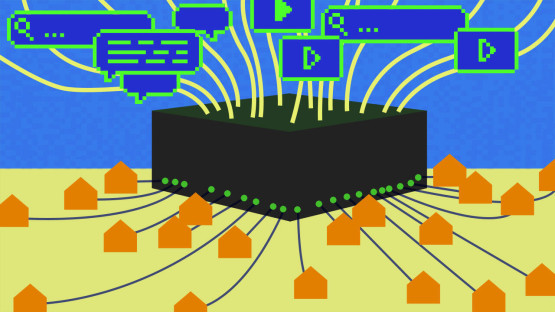
According to the Cornell announcement, the core problem is how new infrastructure costs are shared: allocation rules typically depend on past consumption patterns. A data center requires expanded transmission before it can operate, but until it draws power it registers no usage — so the bill lands on existing customers, including households.
The effect is regressive and geographically wide. The share of rural families carrying a high energy burden, defined as spending more than 6% of income on energy, grew 76% more than the corresponding share among urban residents. The authors also cite a national survey showing rural residents are less likely to use AI tools like ChatGPT. And because the grid links communities across state lines, residents of New Jersey, Pennsylvania and Ohio help pay for upgrades tied to data center growth in Virginia.
Price and job effects
The study found data centers also raised wholesale electricity prices — the amounts utilities pay regional markets before delivering power to homes. In the most affected hubs, growth pushed prices up nearly 10% or more by 2025, including a 15% jump in costs in Virginia and 20% in California's southern Bay Area. Areas with limited data center construction, such as New York and New England, saw no clear price increases from data center expansion.
The researchers also quantified benefits. Each gigawatt of data center capacity was associated with about 15,000 jobs across the economy, 2,700 of them directly tied to the facilities. Returns on state incentives varied sharply: California gained $180 in worker income per dollar spent, while Virginia saw $2 per dollar, and the presence of an existing qualified workforce predicted high returns better than the size of the incentive.
Proposed fixes
You and Feng recommend several changes. In all four regions, they found that if data centers reduced power use during just 22 peak demand hours per year, grid strain would ease and the need for expansion would shrink; companies operating facilities in multiple states or countries could shift operations to another region during peaks. States could charge data centers in line with the new demand they add, or follow Minnesota's recent approach of directing funds to low-income households to offset higher bills. Tax incentives could be tied to job creation and wages so benefits are more certain.
Some movement is already under way: six states have recently set special terms for very large energy consumers, and in March seven major technology companies signed the White House Ratepayer Protection Pledge, committing to pay for required grid updates. The study was funded by the Eric and Wendy Schmidt AI in Science Postdoctoral Fellowship.
Why it matters
Data centers are projected to consume between 8% and 17% of U.S. electricity by 2030, with 70% to 80% of that attributed to AI. Described as the first multi-region, long-term assessment of how data center costs are distributed across communities, the study arrives while states and Congress debate who picks up the bill. It reframes the issue from whether to build data centers to whether cost-allocation rules designed for slower-moving demand can keep up with concentrated, fast-growing loads. The evidence suggests that without reform, the residents least likely to use AI services will continue subsidizing the infrastructure that powers them.
- #data-centers
- #energy
- #ai
- #cloud
- #policy