· via Hacker News – Front Page (hnrss.org)
Court convicts man who used Tesla app to remotely control ex-partner's car
An Australian court convicted a man of using the Tesla app to stalk his former partner after the car's registration left him in control of its speed, locks, climate and charging.
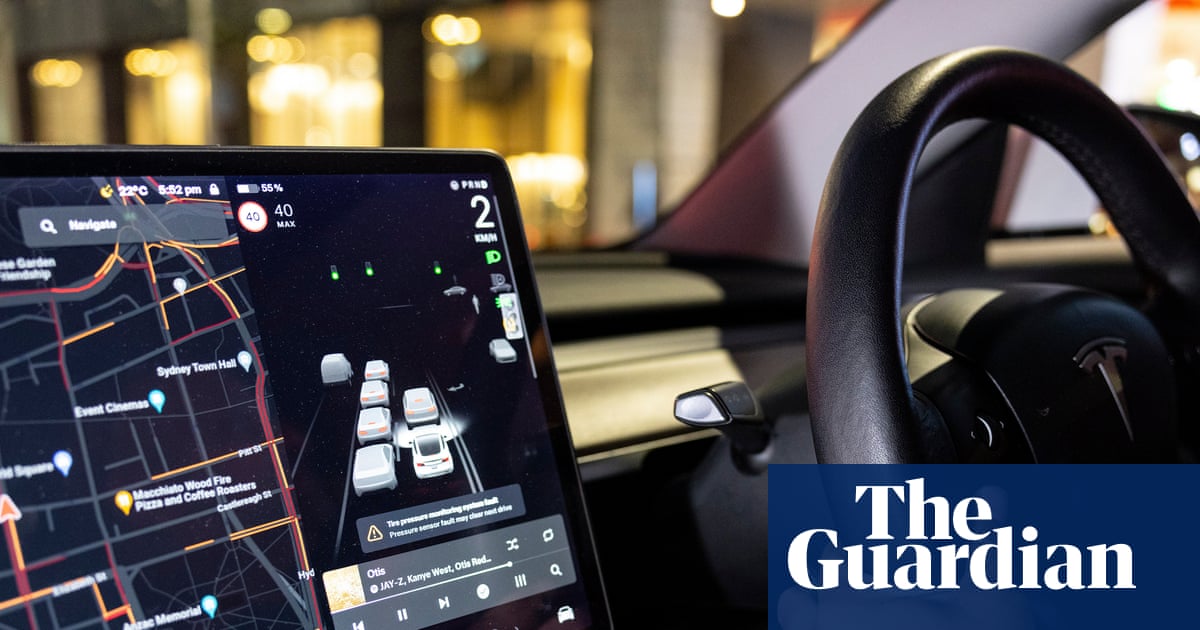
What happened
An Australian court has convicted a man on 30 domestic-violence charges, including harassment carried out through his former partner's Tesla app. According to The Guardian, Enrico Pucci, 50, was sentenced in early September 2026 at Parramatta local court in western Sydney to two years and three months in prison, with a non-parole period of 15 months, after pleading guilty the week before a hearing scheduled for August. He is appealing the sentence and is due back in court in late October.
The victim, identified by the pseudonym Stacey, had endured four years of abuse by Pucci, a businessman whom regulators had previously banned from managing corporations. The Guardian's report draws on police documents tendered in court.
The car as a channel of control
The police documents trace the takeover to a series of night-time incidents: the car alarm sounded on three occasions in the middle of the night, and Stacey was too afraid to go outside, believing Pucci was damaging the vehicle. The next morning it appeared untouched, but the electronic dashboard had been reset and a "parental control" profile had been added — one she had no way to access.
That profile, added on 1 November 2025, could govern nearly every aspect of the car: its speed, climate control, door locks and even a curfew determining when it could be driven at all. Over the following days Pucci flipped the cabin temperature between extremes, and on multiple occasions switched on Valet Mode, which immediately capped the car at 40 km/h — something police noted created significant safety issues for her on the road. He also made seven attempts to disconnect the vehicle from its charging port through the app.
Three days after the alarm episodes, according to the police records, Pucci followed Stacey in another car and yelled at her about a man she was dating, telling her: "I am in your car. I am in your maps." The documents state that from 1 November onward she had effectively no control of her own vehicle, and that the situation caused significant stress, mental harm and fear for her physical safety while driving.
How he got access
The access came not from a break-in but from a decision made years earlier. Stacey bought the Tesla while the two were still a couple and had trouble navigating the technology. Pucci offered to help on the condition that the car be registered in his name, so that he could, in his words, take control of the Tesla app to "assist her". When the relationship ended, roughly a month before the harassment began, that arrangement left him holding the digital keys to a car she drove every day.
A wider pattern of abuse
The 30 charges include eight counts of stalking or intimidation, six counts of common assault, two counts of choking a person without consent, and counts of using a carriage service to threaten to kill and to menace, harass or offend. The Tesla harassment fell under a charge of using a carriage service to stalk or harass. The documents also describe a March 2020 incident in which Pucci drove off with the victim's two-year-old son after threatening she would never see him again, and a 2021 strangulation that left her believing she was going to die.
In sentencing, Judge Peter Feather said Pucci had used "multiple methods to dominate" his former partner, including the Tesla app and fraudulent employment offers designed to create dependency — conduct he described as coercive and controlling, intended to entrench power. The Guardian also notes a 2017 federal court finding that a cleaning company owned by Pucci had treated vulnerable foreign workers as slaves, and a 2022 decision by the corporate regulator ASIC disqualifying him from managing corporations for five years over the failure of three companies that owed creditors almost $10 million.
Why it matters
Nothing in this case involved defeating Tesla's security. Pucci used legitimate features — parental controls, Valet Mode, remote climate and charging commands — through an account he was entitled to hold. That is precisely the problem: in a connected car, whoever controls the account controls a safety-critical machine, and here account authority followed vehicle registration rather than the person actually driving it. Features marketed as conveniences or safety tools, such as speed limits for young drivers, can be repurposed as instruments of coercion, and a 40 km/h cap imposed on a moving car is a direct road-safety hazard.
The case also shows legal systems adapting. Prosecutors pursued the app-based harassment under existing carriage-service stalking laws — the same provisions used for abusive calls and messages — effectively treating a car app as a communication channel. For automakers, the takeaway is that account transfer, shared access and revocation are safety design problems, not paperwork: owners need a fast, verifiable way to cut off another person's app access, plus clear records of who changed what. As vehicles become software platforms on wheels, this is unlikely to be the last time one appears in a domestic-violence case file.
- #tesla
- #connected-cars
- #security
- #privacy
- #domestic-abuse