· via Hacker News – Front Page (native)
FCC lets prisons jam contraband phones despite CTIA test showing interference 2.5 miles away
The FCC voted to let state and local prisons jam contraband cellphones, over industry test data showing blocked 911 calls and interference reaching two and a half miles from the test site.
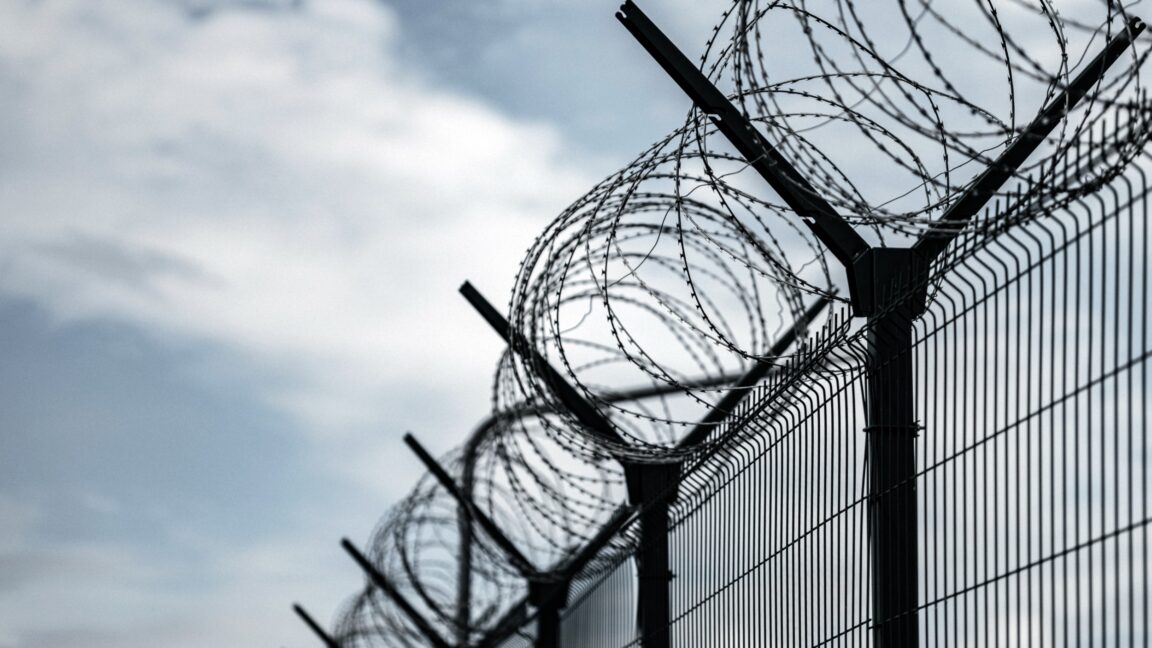
FCC opens the door to prison jamming
The US Federal Communications Commission has voted to let state and local prisons and jails operate cellphone jammers against contraband devices, ending a long-standing ban on non-federal use of the technology. According to Ars Technica, the order passed at the commission's meeting this week, with Chairman Brendan Carr describing it as the first authorization of targeted jamming for state and local correctional facilities. Participation is voluntary; no facility is required to deploy the equipment.
The move required reversing the FCC's own reading of the Communications Act, which bars willful or malicious interference with licensed radio communications and which the agency had interpreted as prohibiting non-federal entities from running jammers, including in prisons. The new order creates an exception for state and local correctional facilities. The FCC's jammer rules have never bound federal agencies, because the federal government's own spectrum use sits outside the agency's regulatory reach.
Carr cast the decision as a response to a stubborn security problem. He said contraband phones keep entering prisons by the thousands each year, that estimates put as many as 500,000 inmates nationwide in regular possession of them, and that the devices have been used to run scams, coordinate drug trafficking and order violence from inside. He cited a 2024 Georgia case in which an incarcerated gang leader directed a drive-by shooting that killed two 13-year-old boys at a birthday party.
Measured spillover reached two and a half miles
The vote came despite industry test data documenting exactly the interference the FCC is now authorizing. CTIA, the wireless industry's lobby group, told the FCC in an October 1 filing that a pilot it ran with the Virginia Tech Applied Research Corporation and the South Carolina Department of Corrections blocked 911 calls, disrupted public safety and other communications, and affected wireless network infrastructure as far as two and a half miles from the site.
Notably, the pilot was tightly constrained: it used a small number of micro-jammers, covered a limited set of spectrum bands, and ran at restricted power levels. Even so, it failed at its primary objective in outdoor recreation areas, where contraband phones completed calls in half to two-thirds of attempts. CTIA's takeaway was that current jamming technology is simultaneously too broad and too weak, threatening lawful communications while missing a significant share of the contraband traffic it aims to stop.
Conditions attached, more questions open
Carr argued that the order's conditions address the interference risk. Facilities seeking to jam must apply to the FCC, explain their deployment plan, and demonstrate through testing that the signal stays within the designated area and does not disturb lawful communications beyond the prison walls. Neighboring communities are to be notified before operations begin. The FCC is also seeking comment on further steps, including closing loopholes on additional frequencies and possibly establishing quiet zones around correctional facilities.
The order drew support from prison phone companies ViaPath (formerly Global Tel*Link) and NCIC Correctional Services, along with the National District Attorneys Association, the Correctional Leaders Association and the National Association of Police Organizations, which pointed to attacks on officers, riots and coordinated drug deliveries arranged on contraband phones.
Opposition came from an unusual quarter. Seth Stern of the Freedom of the Press Foundation wrote to Commissioner Anna Gomez's office arguing the FCC ignored the role contraband phones play in exposing prison abuses. He noted that incarcerated people's footage formed the basis of the Oscar-nominated film The Alabama Solution, supported an ongoing Department of Justice investigation into Alabama prisons, and served as evidence in a civil lawsuit over the death of Steven Davis, who was killed by prison guards; that suit eventually settled.
The lone Democrat voted yes, with a caveat
Gomez, the only Democrat on the three-member commission, supported the order but partially dissented. She warned that jamming can block 911 and emergency calls and disrupt networks used by police, fire and medical services, and that bringing jamming hardware into the US market invites unauthorized sales, noting that criminals already use Wi-Fi jammers to disable security cameras and alarm systems during robberies. She said she could back the final order only because its safeguards confine jamming to a narrow class of authorized users. Her partial dissent concerned money: the FCC regulates the prices of inmate calling services, and she argued that families of incarcerated people should not fund prison security measures like jamming through higher calling rates.
Why it matters
The order breaks a prohibition that, as Gomez noted, has stood for 90 years against jamming by non-federal actors, and the evidence in the record suggests the spectrum effects will not respect prison boundaries. Interference measured at two and a half miles puts ordinary subscribers, emergency callers and carrier infrastructure within range of every deployment. If real-world results resemble the pilot, the policy trades measurable harm to surrounding networks for incomplete blocking of contraband calls, and the pending proposals on quiet zones could formalize those effects into permanent gaps in licensed cellular coverage. The decision also introduces jamming equipment into the commercial market for the first time, with the diversion risks Gomez flagged.
- #fcc
- #spectrum
- #wireless
- #telecom-policy
- #jamming