· via Hacker News – Front Page (native)
FDA clears PrecivityAD2 blood test for detecting Alzheimer's amyloid
The FDA has cleared C2N Diagnostics' PrecivityAD2, a blood test built on WashU Medicine technology that detects Alzheimer's-related amyloid with over 90% accuracy using mass spectrometry.
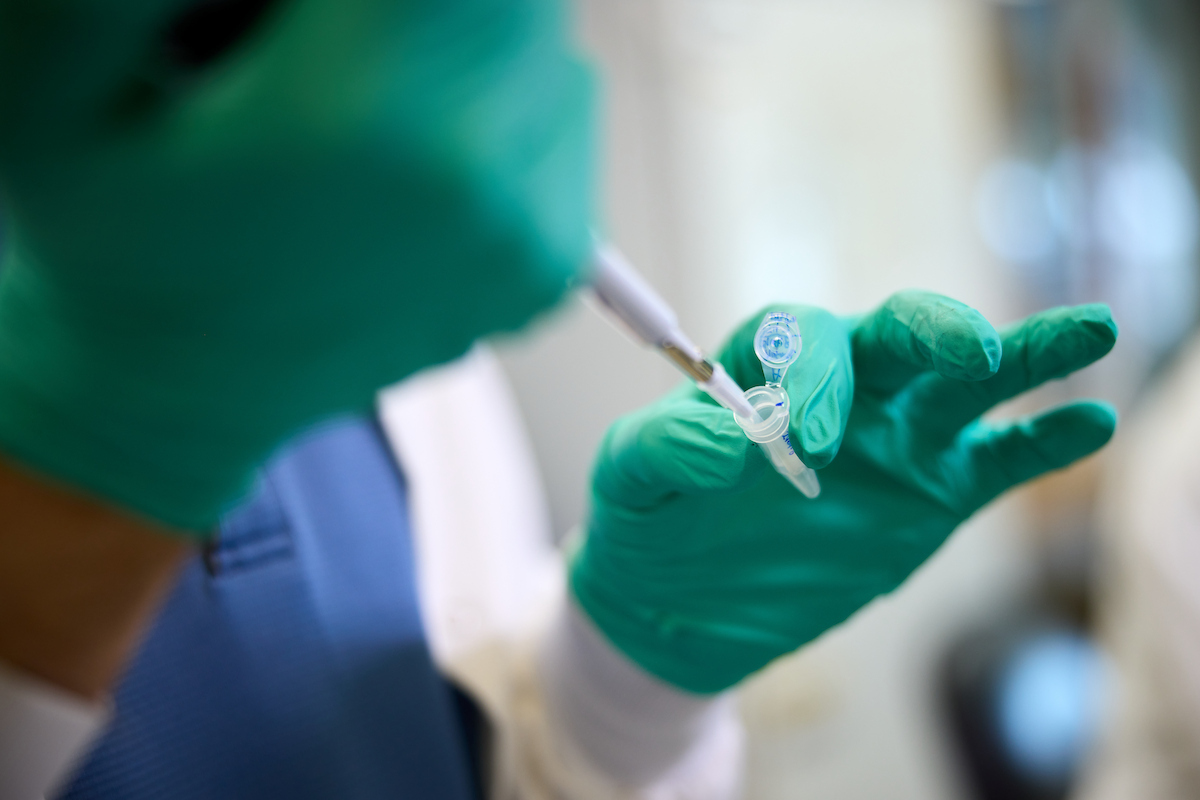
FDA clears PrecivityAD2 blood test for Alzheimer's evaluation
The U.S. Food and Drug Administration has cleared for marketing a blood test that helps clinicians identify amyloid plaques in the brain, the pathological hallmark associated with Alzheimer's disease. According to Washington University School of Medicine in St. Louis (WashU Medicine), whose researchers invented the underlying technology, the test — PrecivityAD2 — detects amyloid pathology with more than 90% accuracy, matching the performance of the spinal taps and brain scans currently used to confirm a diagnosis.
The test was developed and validated by C2N Diagnostics, a WashU startup co-founded in 2007 by neurologists Randall Bateman and David M. Holtzman. Physicians could already order PrecivityAD2 for patients with mild cognitive symptoms, but FDA clearance allows broader marketing to clinicians and health systems that depend on FDA review for quality assurance. As WashU Medicine notes, clearance can also facilitate insurance coverage, which would make the test more affordable and accessible.
How the test works
PrecivityAD2 differs from some other FDA-cleared Alzheimer's blood tests in its measurement method. Rather than immunoassay techniques, it uses high-resolution mass spectrometry to produce quantitative measurements of its target biomarkers: the ratio of amyloid proteins Aβ42 and Aβ40, together with two forms of tau protein, phosphorylated tau217 and total tau217. These markers are associated with amyloid pathology, a characteristic feature of the disease.
WashU Medicine reports that prior studies demonstrated the test can identify amyloid pathology with greater than 90% accuracy, performing comparably to cerebrospinal fluid testing and brain imaging even in patients whose cognitive symptoms are mild. The clearance reflects FDA evaluation confirming that level of accuracy.
Decades of research behind a single blood draw
The technology rests on foundational research by Bateman and Holtzman into Alzheimer's-related amyloid and tau proteins, including stable isotope-linked kinetics (SILK) methods for studying how amyloid-beta is produced and cleared in the brain and cerebrospinal fluid. That work, patented through WashU's Office of Technology Management, was licensed exclusively to C2N, which optimized and commercialized the underlying assays.
In WashU Medicine's announcement, Bateman said the test offers an accurate and reliable way to detect brain amyloid plaques from a single blood draw, and that clearance will let the innovation reach more patients investigating the causes of cognitive symptoms such as memory loss — enabling earlier treatment, when treatments are most effective. Holtzman described the clearance as a key milestone in the effort to transform diagnosis and management of the disease on a path toward a cure.
C2N employs more than 120 researchers, physicians and other professionals and is expanding its headquarters in St. Louis's Cortex Innovation District, adjacent to WashU Medicine. An ongoing expanded research collaboration between the university and the company has helped accelerate the test's commercialization.
Why it matters
The clearance arrives just as Alzheimer's care is changing. WashU Medicine points out that the first treatments capable of slowing the disease's progression recently became available, that these drugs work better when started sooner rather than later, and that further investigational drugs are in the pipeline. Accurate, accessible biomarker testing is the gateway to that early intervention.
Practically, replacing an invasive spinal tap or an expensive brain scan with a routine blood draw lowers the barrier to evaluation in ordinary clinical settings rather than only specialty memory clinics, and the insurance coverage that clearance can facilitate may widen access further. For anyone tracking diagnostic technology, the decision also validates mass spectrometry — quantitative measurement of specific protein ratios — as a regulatory-accepted alternative to immunoassay-based blood tests, a useful signal about where Alzheimer's diagnostics tooling is heading.
- #alzheimers-disease
- #medical-diagnostics
- #fda-approval
- #biotech
- #blood-tests