· via Hacker News – Front Page (native)
Federal judge rules Flock license plate reader search unconstitutional in Oklahoma meth case
A federal judge ruled that police searches of Flock license plate data violated the Fourth Amendment, suppressing all evidence from an Oklahoma traffic stop that yielded 91 pounds of methamphetamine.
A first for Flock in federal court
A federal judge in Oklahoma has ruled that a police lookup in Flock's automated license plate reader (ALPR) database was a warrantless search that violated the Fourth Amendment — and, according to 404 Media, the first time a federal court has struck down Flock searches on constitutional grounds. The decision suppresses every piece of evidence in the case, including more than 91 pounds of methamphetamine recovered from the defendant's car.
The ruling
U.S. District Court Judge Sara Hill found that Tulsa County deputies had no valid reason to run Melissa Kyle's license plate through Flock or Motorola's Vigilant ALPR system, and no grounds to treat the travel history those systems produced as suspicious. Querying the networks amounted to mass surveillance carried out without a warrant, the court concluded. Because the initial lookup was unlawful, the location records and everything officers later found in the vehicle were excluded as fruit of the poisonous tree.
How the stop unfolded
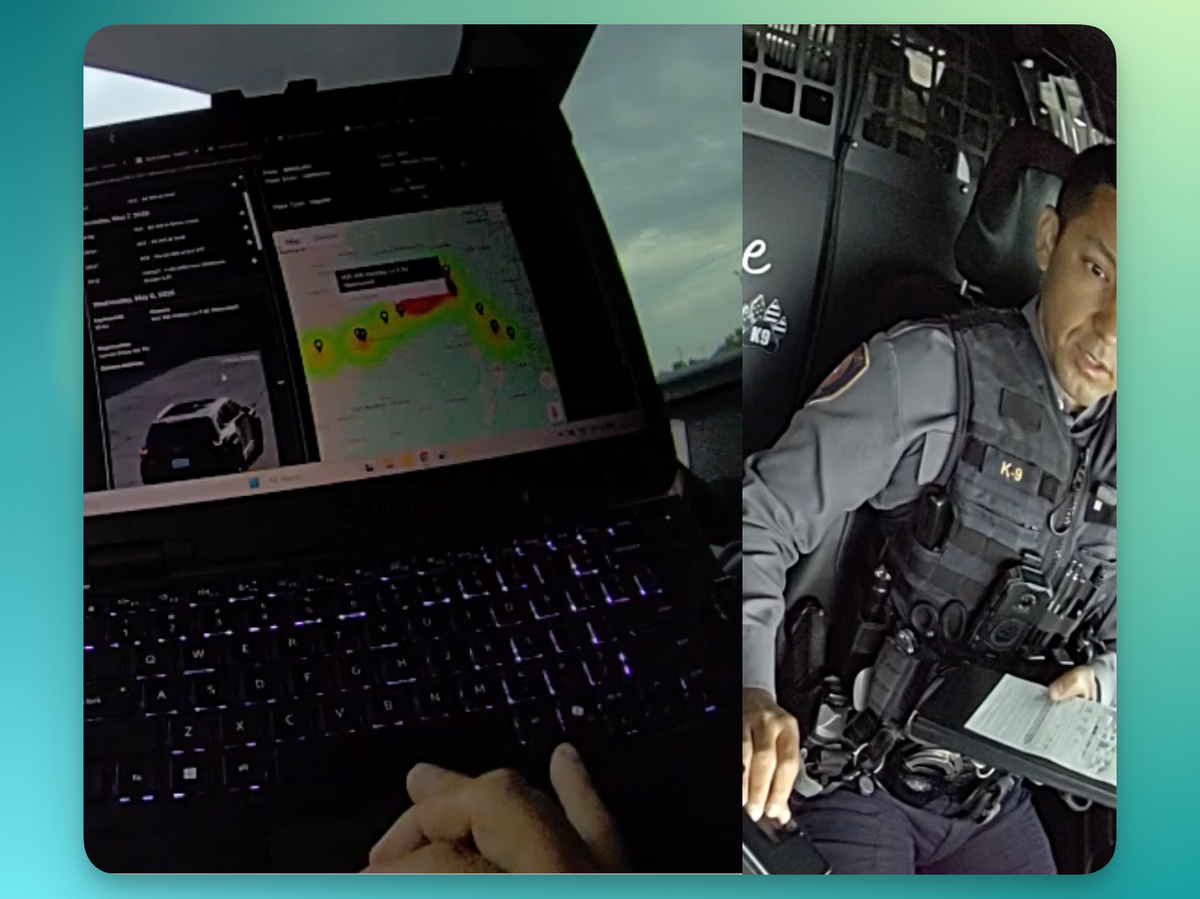
404 Media obtained the deputy's body camera and in-car footage — purchased from the federal courthouse clerk in Tulsa by one of the outlet's readers, since the court never made it available online even though it was entered as evidence — and the recordings lay out the sequence in detail.
According to the footage, deputy sheriff Freddie Alaniz spotted a car with California plates, decided to target it for that reason alone, and began querying the plate on his laptop while still driving 60 miles per hour. He told colleagues the car had produced no Flock hits until a camera west of Amarillo, Texas, which made the return trip from California stand out to him, and that he stopped the vehicle for a lane violation.
Kyle explained the car was a rental and that she had visited family in California after separating from her husband. While she retrieved the rental details, Alaniz scrolled through the car's ALPR history: 79 detections over 30 days, around 50 of them during her few days with the vehicle, tracking it from Missouri through Oklahoma, Texas, New Mexico and Arizona into California and back. He questioned her about the route, and prosecutors later argued that small mismatches between her answers and the camera data amounted to deception and justified a search.
Alaniz said he would only issue a warning for the lane change, then told Kyle that short round trips to California are, in his training and experience, associated with drug transport, and asked to search the car. She said no. He detained her, called for backup, and the ensuing search turned up the methamphetamine — a find Alaniz remarked on in colorful terms on camera.
What the court found wrong
Judge Hill wrote that the circumstances the government relied on — a brief interstate trip, uncertainty about exact dates, nervousness while talking to police — describe things ordinary travelers experience for perfectly lawful reasons. Building probable cause on that behavior, after first generating a detailed movement history from camera networks, crossed the constitutional line.
404 Media also notes a telling gap in the data: Alaniz could see no hits from California itself, which the outlet suggests may be because Flock sharply limited nationwide sharing of California camera data after earlier misuse, including searches connected to immigration enforcement and to a woman who had an abortion.
Why it matters
ALPR networks of this kind let an officer reconstruct weeks of nearly anyone's movements in a few clicks, and this case shows how that capability converts routine traffic stops into interrogations about travel. The ruling — described by 404 Media as the first of its kind against Flock in federal court — hands defense attorneys and privacy advocates a concrete precedent for challenging plate-reader searches, and courts elsewhere will now have to reckon with it. It also demonstrates the cost to law enforcement: a major drug prosecution collapsed not because the evidence was weak, but because of how it was obtained. And as 404 Media observes, dragnet surveillance of ordinary drivers usually comes to light only through cases involving serious crime; here, the constitutional violation began with nothing more than a California plate and a short road trip.
- #flock
- #license-plate-readers
- #surveillance
- #fourth-amendment
- #privacy