· via Hacker News – Front Page (native)
First U.S. CaRi-Heart AI study finds coronary inflammation in 42.9% of asymptomatic adults
Biograph's first U.S. study of Caristo's CaRi-Heart AI found coronary inflammation in 42.9% of asymptomatic, low-risk adults — a risk signal that standard blood tests and risk calculators failed to detect.
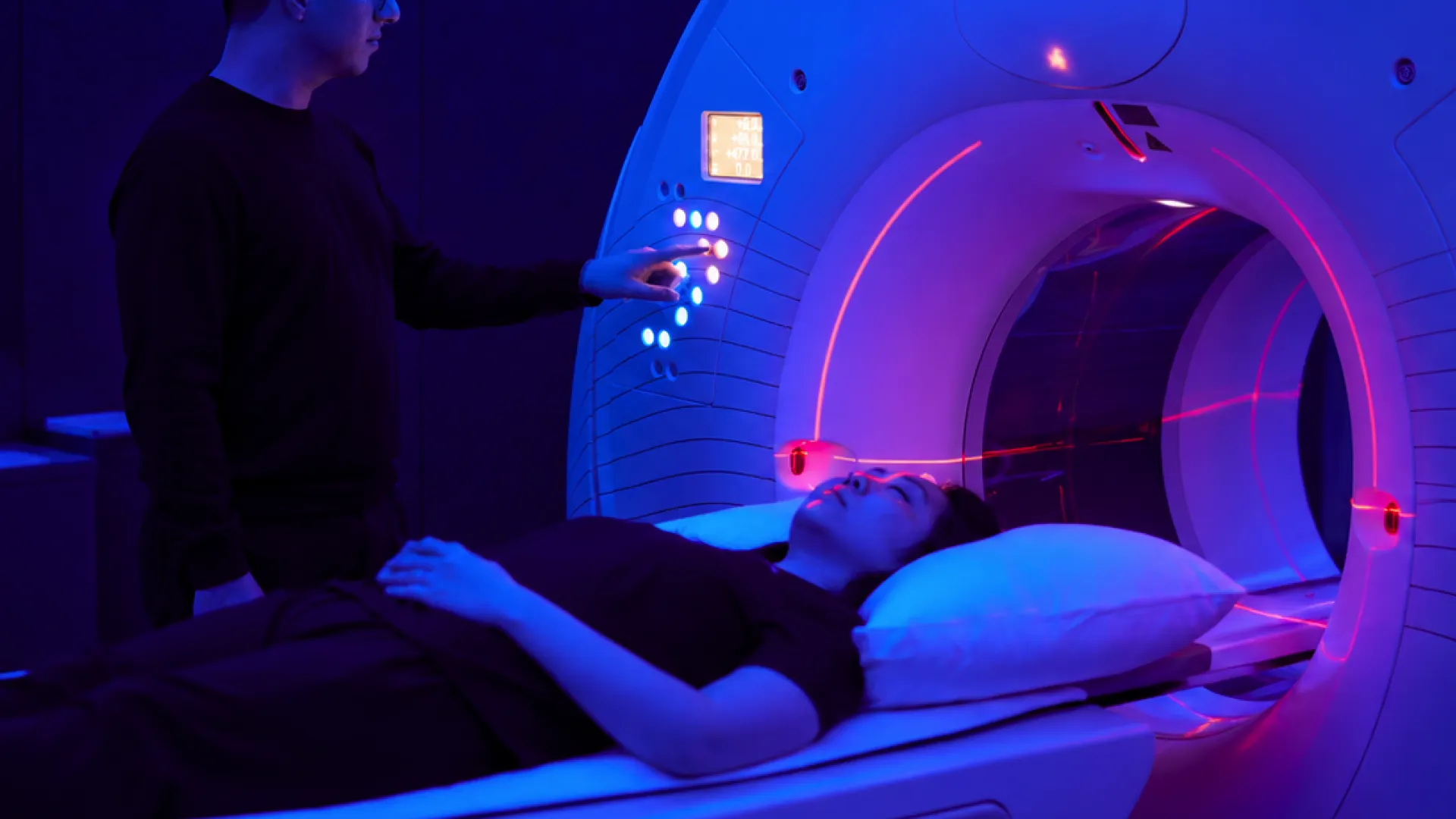
AI finds inflammation standard screening misses
Biograph, a preventive health and longevity clinic, has completed what it describes as the first U.S. study of Caristo Diagnostics' CaRi-Heart technology in people with no symptoms and no known heart disease. According to the company's announcement, which drew attention after reaching Hacker News' front page, AI analysis of coronary CT scans detected elevated coronary inflammation in 42.9% of participants — all of whom would be classified as low risk by conventional criteria.
The study was offered to clinically eligible members of Biograph's top-tier "Black" membership. It paired the clinic's high-resolution coronary CT angiography (CCTA) and cardiometabolic profiling with two Caristo tools: CaRi-Heart, which quantifies inflammation in the tissue surrounding the coronary arteries, and CaRi-Plaque, which measures plaque burden and artery narrowing.
The numbers
Beyond the headline figure, 17.9% of participants showed very high inflammation in at least one major heart artery. More striking still, inflammation often appeared in arteries that looked clean: about 47% of participants with no detectable coronary plaque nonetheless had elevated perivascular inflammation. According to the announcement, some individuals with the highest inflammation readings had entirely normal coronary anatomy on CT.
That finding underpins the study's central argument: plaque accumulation and arterial narrowing may be late consequences of an inflammatory process in the vessel wall, so measuring the inflammation directly could surface risk years before structural damage becomes visible.
Bloodwork drew a blank
The most consequential claim concerns what failed. Biograph reports that routine bloodwork and clinical assessment tools — including ApoB, non-HDL cholesterol, HbA1c, hs-CRP and the American Heart Association's PREVENT-ASCVD risk calculator — showed no correlation with the presence of coronary inflammation and could not identify which patients had inflamed arteries.
On the regulatory side, CaRi-Heart has received FDA De Novo marketing authorization and, per the announcement, is the first and only solution authorized to quantify coronary inflammation from routine CCTA scans. CaRi-Plaque holds separate FDA clearance for AI-assisted plaque and stenosis analysis.
Caveats worth noting
The results should be read with care. The study population came from a single clinic's paying members, a group unlikely to represent the general public. The manuscript is available as a preprint rather than a peer-reviewed publication, and the announcement was issued by a company with a direct commercial interest in the technology.
The study's own authors also urge restraint, stating that more research is needed to validate the finding and to establish the prognostic value — and the clinical benefit — of care directed at coronary perivascular inflammation.
Why it matters
If the results hold up in broader, independent populations, this points at a meaningful shift in cardiovascular risk detection: AI extracting a biological signal from imaging that hospitals already collect routinely, in patients whom today's screening toolkit passes as healthy. Nearly 43% of people who would be sent home with a clean bill of health carried a measurable marker of arterial disease in the making.
It is equally a case study in the gap between detection and benefit. Finding inflammation is not the same as showing that treating it prevents heart attacks, and that question remains open even by the study's own account. For now, CaRi-Heart looks like a technology to watch — a potential early-warning layer that may eventually complement standard risk scores, rather than a proven new standard of care.
- #ai
- #health-tech
- #medical-imaging
- #diagnostics
- #machine-learning