· via Hacker News – Front Page (hnrss.org)
French PM asked ISPs to prepare DNS blocks of TikTok, Instagram, Snapchat and X
According to Blast, France's prime minister asked Orange, SFR, Free and Bouygues to stand ready to cut access to TikTok, Instagram, Snapchat and X before a 24 October protest, with operators voicing doubts.
What the government asked for
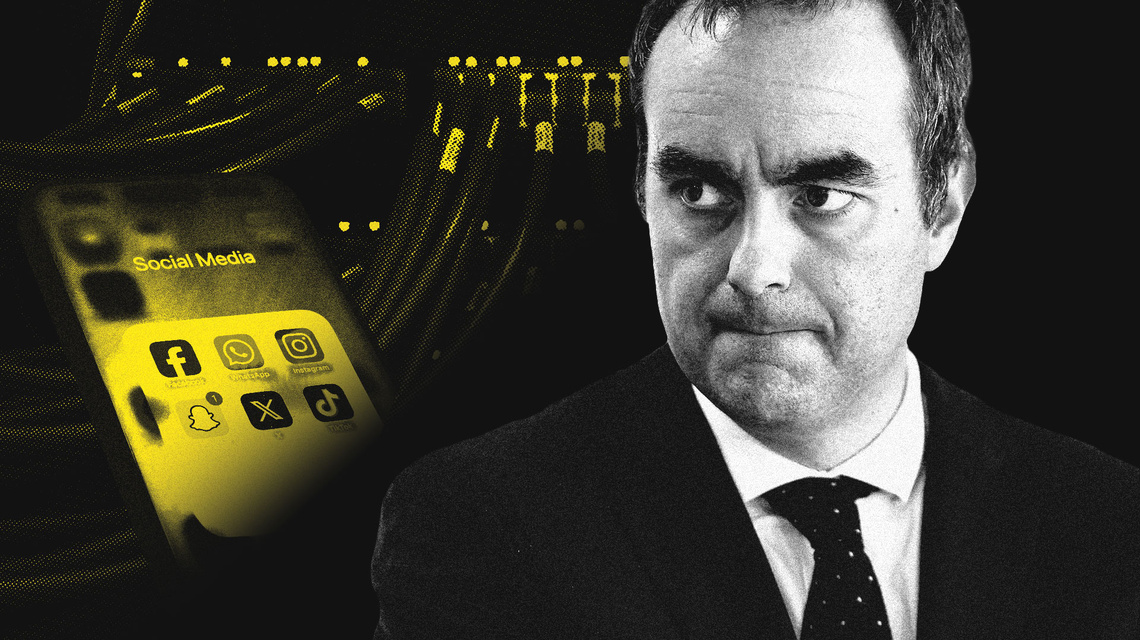
According to a report by the French outlet Blast, Prime Minister Sébastien Lecornu asked Orange, SFR, Free and Bouygues Telecom — the country's four largest ISPs — to stand ready to cut off access to TikTok, Instagram, Snapchat and X. The request was made in a letter sent two days before a demonstration scheduled for 24 October, and Blast says it has obtained both the letter and the minutes of the meeting that followed with the operators. The story reached a wider technical audience after appearing on the Hacker News front page, where it was described as a preparation for temporary DNS blocks of the four platforms. Nothing in the published material confirms that a block was actually activated; the disclosure concerns the preparations themselves.
The operators had doubts
According to the meeting record obtained by Blast, the operators expressed doubts about the plan. The summary that has been made public does not spell out the substance of those reservations, but their being documented at all suggests the government did not obtain an unqualified commitment from the telecoms industry. Blast's own framing is blunt: it characterises the measure as a restriction on freedoms and stresses that the initiative came directly from the prime minister's office.
A precedent that was struck down
Blast also points to the most recent precedent. In 2024, during unrest in New Caledonia, the French government imposed a comparable social media cutoff in that Pacific territory. The Conseil d'État, France's highest administrative court, subsequently disavoured the measure. Any equivalent blocking on metropolitan French networks would therefore be tested against a ruling that already went against the government once.
How DNS blocking works
DNS-level blocking is the cheapest way for an ISP to make a service disappear: the operator's resolvers simply stop answering queries for the targeted domains, so browsers and apps can no longer find the servers behind them. It is fast to deploy and needs no equipment on the user's side. Its weaknesses are equally well known. A block is bypassed the moment a user switches a device to a public third-party resolver, so it mostly affects people who never touch their settings. And because name resolution is not precisely scoped to a single service, blocks have a long history of catching unrelated domains in the same net. European regulators and ISPs have argued about that trade-off for years over piracy and gambling sites. Applying the same mechanism to four of the world's largest communication platforms, as a crowd-control measure around a political protest, is a different order of intervention.
Why it matters
First, it shows how easily the DNS layer of the open web can be repurposed as an instrument of political control: in practical terms, one letter to four companies functions as a national switch. Second, it casts ISPs in the role of enforcement arm for speech decisions, a position European telecom operators have historically resisted. Third, the New Caledonia precedent — and its rejection by the Conseil d'État — indicates the legal ground is shaky, and a metropolitan block would almost certainly end up in court. Finally, for engineers and platform operators, the episode is a reminder that service availability in a given country can hinge on resolver policy inside a handful of national networks. Whether any block was carried out on 24 October remains unconfirmed; what Blast documents is that the option was actively prepared, letter by letter, at the top of the French government.
- #france
- #dns
- #censorship
- #social-media
- #isps