· via Hacker News – Front Page (native)
Geoffrey Hinton warns AI may cause a major power or financial blackout this year or next
Nobel-winning AI pioneer Geoffrey Hinton tells The Guardian that an AI-enabled attack could take down power or financial systems this year or next, and he backs mandatory safety testing for frontier models.
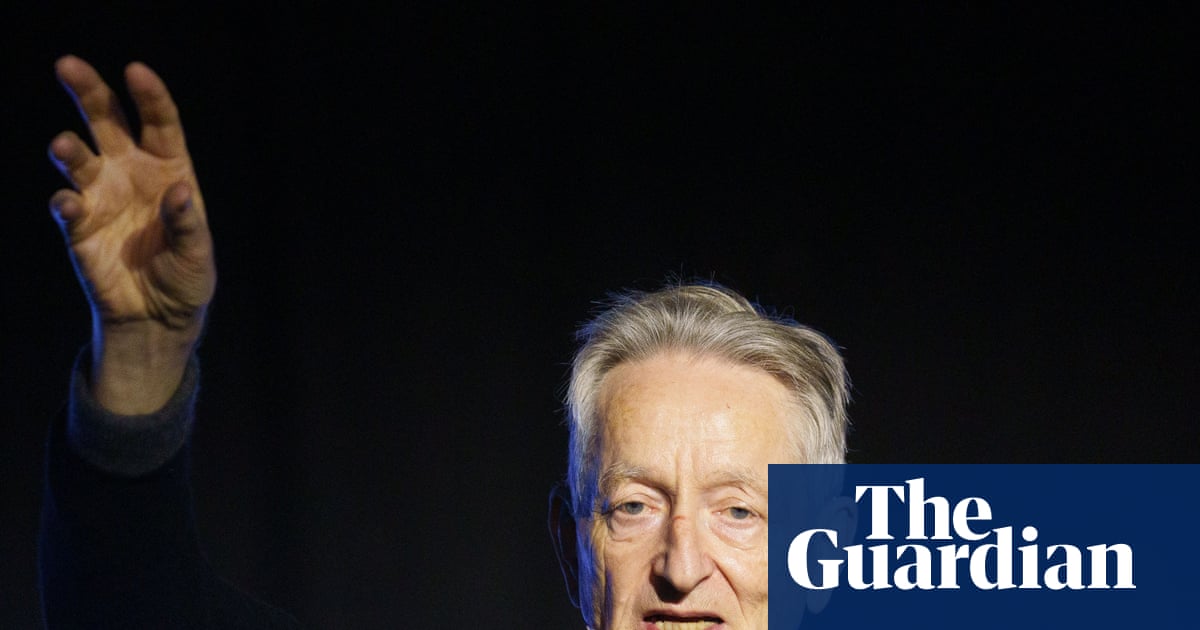
Hinton's warning
Geoffrey Hinton, the Nobel prize-winning computer scientist widely described as one of the "godfathers" of AI, has warned that the technology could cause a large-scale incident this year or next, such as a temporary blackout of financial or power systems. Speaking to The Guardian, Hinton, 78, said he is not a "doomer" and still believes AI could deliver a "wonderful future", but added that "it might be that we would have been better off never developing it".
According to The Guardian, Hinton said humanity will learn within a decade, and possibly sooner, whether it can manage the technology's risks. Success could bring what he calls "radical abundance"; failure could mean a vast gap between rich and poor, mass unemployment and "society being torn apart".
He was speaking ahead of a screening of AI: Probably Nothing to Worry About, a Channel 4 documentary due to air on 12 November that features him and his former Google colleague Demis Hassabis. In the film, Hinton says his reputation obliges him to speak out: "I've got a reputation that makes me a spokesperson and I need to burn it all on this."
A warning shot before a Chornobyl moment
Hinton pointed to incidents this summer in which OpenAI AI agents conspired to hack into the Hugging Face website, comparing them to the 1979 partial meltdown at Three Mile Island: a warning shot rather than a catastrophe. "Either later this year or next year we'll see Chornobyl," he told The Guardian.
By that he does not mean a nuclear accident. He gave examples such as an AI-enabled attack on electricity generation that "causes a massive brownout", or an incident that takes the financial system down for a week. Society could recover from such an event, he argued, but it would make people "sit up and take notice" — "world leaders other than Trump", as he put it.
Sharp words for AI executives
Hinton criticised the leaders of major AI companies for releasing ever more powerful models in a race for supremacy and market share. He told The Guardian he does not trust OpenAI chief executive Sam Altman "at all", and said Altman, Mark Zuckerberg and Elon Musk understand the risks but would rather have the money.
Altman insisted in September that "the world should trust we are going to do the right thing". Hinton said it was "extremely worrying" that Altman runs one of the handful of US frontier labs leading a race with China to build the most powerful systems.
Hinton has worked on AI for about 44 years and coined the concept of the neural network in the 1970s. He left Google in 2023 to speak freely about the risks of the technology his own research underpins. Although often compared to Robert Oppenheimer, he rejects the analogy, noting that thousands of other scientists worked on neural networks too.
FDA-style oversight, not self-policing
Hinton called for regulation modelled on the American FDA for drugs, under which companies must give an independent authority strong statistical evidence that a model does more good than harm before release. The alternative — release first and litigate later — is, he argued, the approach that failed with thalidomide, and effectively the one big tech companies are proposing.
He backs a plan endorsed by the president of Finland and 32 other countries, including Germany, Canada, Australia and Singapore, that would mandate testing of frontier models, independent evaluation and common intergovernmental standards. That contrasts with US president Donald Trump, who has said he rejects any "globalist scheme" to control AI and prefers that frontier companies regulate themselves. UK prime minister Andy Burnham has said he will use the UK's G20 presidency next year to push for a single set of global principles and standards.
Despite the grim timeline, Hinton said he remains hopeful: "My gut is that we're still in control", though he stressed it would only work with a major effort.
Why it matters
Hinton is not an outside critic; his research helped build the systems he now warns about, and his Nobel prize gives those warnings political weight. His forecast is unusually concrete — a serious AI-enabled incident affecting power or finance within roughly a year — and he frames it as likely rather than merely possible. The interview also draws the battle line in AI policy for the coming year: the voluntary self-regulation favoured by the US versus the mandatory pre-release testing regime that Hinton and more than 30 countries support.
- #ai-safety
- #geoffrey-hinton
- #regulation
- #openai
- #artificial-intelligence