· via Google AI blog
Google launches Gemini 3.7 Flash and Gemini 3.5 Transcribe alongside Pixel 11
Google's August recap adds Gemini 3.7 Flash for cheaper agent and coding work, Gemini 3.5 Transcribe for speech-to-text, and a Pixel 11 lineup built around on-device Gemini.
Google closed out August 2026 with a broad set of AI releases covering models, hardware and consumer features, according to a monthly recap published on the Google AI blog. The highlights are the launch of Gemini 3.7 Flash for coding and agent work, a new speech-to-text model called Gemini 3.5 Transcribe, and the Pixel 11 series announced at Made by Google 2026.
Gemini 3.7 Flash targets agent builders on a budget
Google positions Gemini 3.7 Flash as its most capable high-volume model yet for coding and agents. According to the blog post, it arrived just three weeks after Gemini 3.6 Flash and delivers improvements across software engineering, knowledge work and web development workflows. Its introductory price is half of what the original 3.6 Flash cost per million tokens, a clear signal that Google is competing on price as well as capability for developers building AI agents.
Gemini 3.5 Transcribe aims at noisy, jargon-heavy audio
The second new model, Gemini 3.5 Transcribe, provides real-time speech-to-text aimed at developer workflows such as voice agents, live captioning and post-call analytics. Google says conventional transcription models struggle with noise and domain jargon, and claims that 3.5 Transcribe instead converts raw audio directly into accurate, polished, context-aware output rather than a plain word-for-word transcript.
Pixel 11 hardware is built around Gemini
At its Made by Google 2026 event, the company unveiled four devices: the Pixel 11, Pixel 11 Pro, Pixel 11 Pro XL and Pixel 11 Pro Fold. All of them run Google's Tensor G6 chip, described as the company's fastest and most powerful, and the chip runs the latest Gemini Nano model on the device itself. The phones also gain camera upgrades and improved durability, and are designed for what Google brands Gemini Intelligence: personal, time-saving assistance woven into the hardware.
The Gemini app passed 1 billion monthly users
The Gemini app officially crossed 1 billion monthly users during the month, which Google says makes it the fastest-growing product in the company's history. Usage figures shared alongside the milestone include 63% of users now talking directly to Gemini, busy parents being 43% more likely to use it for everyday tasks, and more than 150 million images generated daily. Small businesses, Google adds, rely on the app's combined image, video and audio creation tools to produce marketing material.
The rest of the August roundup
The recap lists several additional items:
- Gemini Live added Personal Intelligence, Daily Brief, Spark and hands-free inbox management, moving it beyond conversation toward delegating tasks.
- Gemini began rolling out in Chrome on Android.
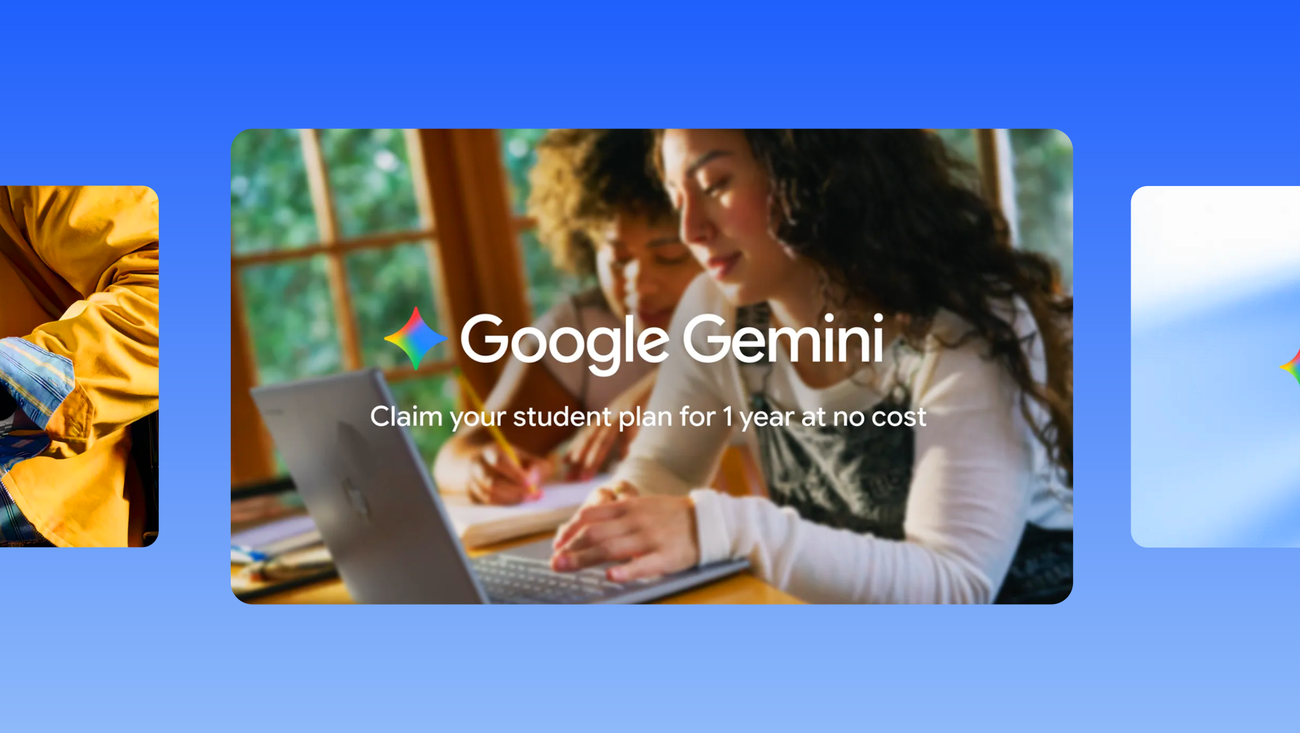
- Eligible college students worldwide get one year of a Google AI plan at no charge, plus a student hub, teacher-led tools and SAT prep in Gemini.
- Search gained AI-powered learning features, including interactive visuals for complex concepts, practice quizzes for the SAT, ACT, GRE and LSAT, step-by-step help through Lens, and notebooks.
- Gemini Omni 1.1 Flash adds finer control over video generation, with scene extension, first-and-last-frame interpolation, 4K upscaling and faster prototyping. It is available in Google Flow, Google AI Studio, the Gemini Enterprise Agent Platform and the Gemini app.
- Gemma, Google's open model family, passed one billion downloads and gained a community repository; Google says it now runs everywhere from phones to space.
- Google is open-sourcing WeatherNext 2, which the company says showed state-of-the-art accuracy in predicting cyclone track, intensity and wind structure in a Nature paper, and is expanding its AI-driven contrail-avoidance project, Operation Blue Skies, across the North Atlantic together with the UK Government.
Why it matters
The pace is the story. Shipping a new Flash-tier model three weeks after its predecessor, at half the per-token price, shows how quickly the cost of building capable AI agents is falling and how hard Google is pushing on pricing to capture that developer segment. Pairing the Pixel 11 lineup with on-device Gemini Nano extends model distribution into hardware, while the 1 billion-user milestone gives Google a reach few rivals can match. For developers, a cheaper agent model, a transcription model that claims context-aware understanding and broadly available video generation mean many of the building blocks for AI products now sit in a single vendor's catalogue.
- #gemini
- #pixel
- #ai-models
- #speech-to-text