· via Google AI blog
Google's AI Mode search can now draw on Wallet, Drive and Gemini app data
Google is rolling out opt-in connections for Google Wallet, Drive and the Gemini app in AI Mode search, letting results draw on spending, documents and chat context.
What Google announced
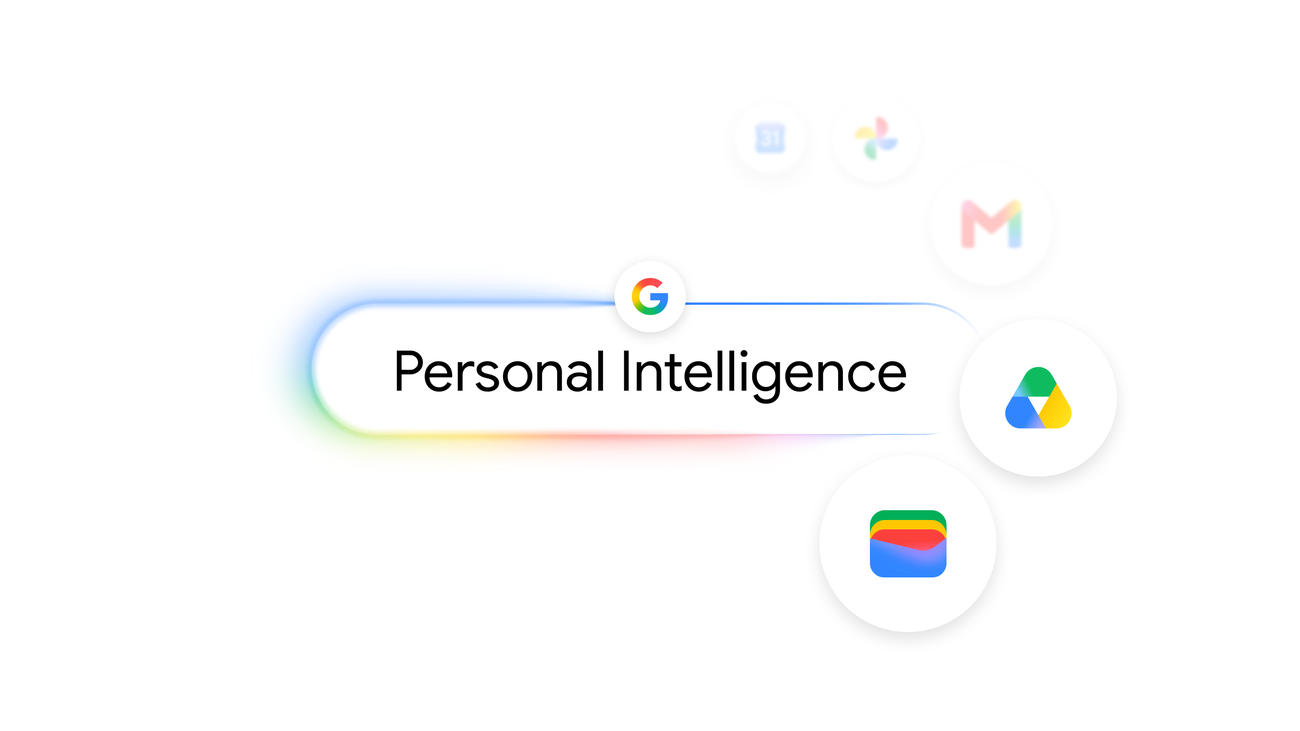
Google is broadening the personal data that can feed its AI-generated search results. In a November 23 post on its AI blog, the company said users can now opt in to connect Google Wallet to Personal Intelligence, the system that supplies personal context to AI Mode, Google's conversational search experience. Connections for Google Drive and the Gemini app are set to follow over the next few weeks. These join Gmail, Calendar and Photos, which could already be linked.
The announcement was written by Robby Stein, vice president of product for Google Search. The post itself carries a notice that it was generated by Google AI.
What each app adds
With Wallet connected, AI Mode and the Gemini app can analyze spending to help users plan financial goals and find ways to cut everyday costs. Google also says the integration can help people make better use of credit card benefits, such as cash-back categories, travel perks and reward points, based on the cards linked in Wallet. The company stressed one boundary: the AI can read account information only and cannot move, manage or invest money.
The Drive integration targets information scattered across documents, spreadsheets and PDFs. Google's example is a preparation plan for tax season assembled from files a user already has stored, so responses reflect that context rather than generic advice.
The Gemini app connection effectively works in both directions. Users could already link their Search history to Personal Intelligence inside the Gemini app; soon they will also be able to connect the Gemini app to Personal Intelligence within AI Mode, so a topic explored in one surface carries over to the other.
Beyond connected apps, Google says AI Overviews and AI Mode will produce more responses informed by recent search context, for example resuming trip planning in a new thread without repeating earlier questions.
Controls and visibility
Every connection is opt-in. Users enable them through the Connected Apps section of Search Personalization, can toggle any connection off at any time, and can adjust or disable personalization more broadly in Search Settings. Google says a Personalization icon below tailored responses will soon let users see which context AI Mode actually drew on, and users can correct the model directly in the conversation, for instance by telling it that a dietary preference no longer applies.
Why it matters
Payments history, stored documents and assistant chats are among the most sensitive data a typical user has, and this change makes them direct inputs to search results. Google's mitigations are real: connections are optional, Wallet access is read-only, and the planned per-response context viewer is a concrete transparency feature that lets people audit what the AI used rather than guess.
The open questions are equally real. The announcement does not detail how long connected context is retained or precisely how it shapes generated answers, and it points to Google's privacy policy for data handling. As AI Mode's usefulness increasingly depends on linked services, users face a growing trade-off between answer quality and how much of their Google footprint search can see.
Architecturally, the bigger signal is consolidation: Personal Intelligence is becoming a shared context layer spanning Search, AI Overviews and Gemini, a single pipeline for personal data into Google's AI surfaces rather than a set of per-product settings. How visibly that layer is surfaced to users, through the promised context icon and in-thread corrections, will largely determine how comfortable this expansion feels in practice.
- #ai-search
- #privacy
- #personalization
- #gemini