· via Hacker News – Front Page (hnrss.org)
GTA 6's record $3.79B launch draws a frame-by-frame rendering analysis
Take-Two reports $3.79 billion in first-day GTA 6 sales, and a new essay reconstructs how the RAGE engine renders each frame on current consoles.
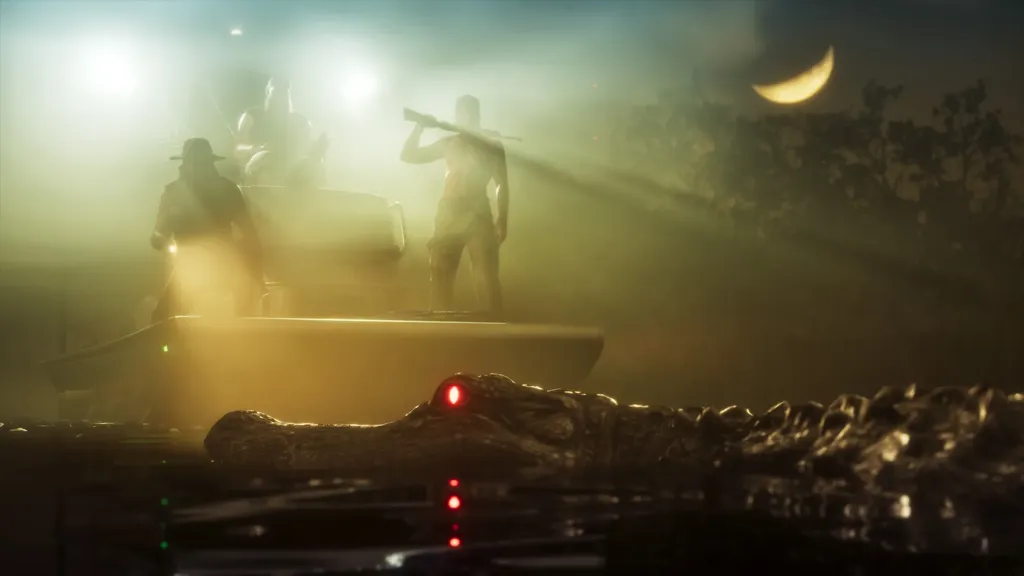
Grand Theft Auto VI has launched, and Take-Two Interactive reported $3.79 billion in first-day sales — the biggest opening for any entertainment product in any medium, according to a technical essay on ben3d.ca that reached Hacker News's front page. The numbers alone make it a landmark software release, but the essay's focus is why it also looks like one: Digital Foundry titled its pre-release analysis "perhaps the most impressive showcase we've ever seen in real-time rendering."
Rockstar has not documented how the RAGE engine produces those images, so the essay's author reconstructed a frame from indirect evidence: Rockstar's formal interviews, posts by Rockstar graphics programmers, Digital Foundry's analyses of the shipping game across all four consoles, a datamined settings table Rockstar has not authenticated, and earlier pass-by-pass studies of GTA V and Red Dead Redemption 2 by Adrian Courrèges and imgeself. The author is explicit that this is an estimate and that Rockstar's own new optimizations remain unknown.
The base pipeline
The frame begins with streaming and culling. RAGE loads geometry and textures around the player, discards what is off-screen and assigns levels of detail; nearby surfaces can use tessellation, and parallax occlusion mapping gives pavement and stone apparent depth without extra triangles — both carried over from RDR2's settings, the essay says.
An opaque pass then rasterizes the nearest surfaces into a depth buffer and a G-buffer of per-pixel material data, and lighting is evaluated afterwards: deferred shading, as in GTA V and RDR2. Rockstar programmer Oguzhan Karakaya has separately described working on a deferred shadow resolve system. Skin pixels are flagged in the stencil buffer for a later subsurface-scattering pass, and hair, water and transparents are drawn in forward passes into the HDR scene image. PS5 and Xbox Series X render the scene at 1440p; Xbox Series S runs at 720p with lower tiers for ray tracing, shadows and volumetric lighting. At the game's 30 fps, everything must fit in 33.3 ms.
Alongside the camera view, the engine maintains a ray-tracing scene in a bounding volume hierarchy so rays can skip whole geometry groups. Digital Foundry sees animated characters in off-screen reflections and characters contributing bounce light, which implies skinned meshes sit in the BVH and are refit as they move. The datamined table puts BVH quality at High on PS5 and Series X and Low on Series S — and because a BVH does not shrink with rendering resolution, the essay argues memory is the binding constraint on Series S. Ubisoft's Assassin's Creed Shadows talk reported roughly 320 MB of acceleration structures for comparison.
Lighting and shadows
Direct lighting treats the sun as a directional light and shades each surface with the local lights that reach it, assigned to screen tiles or 3D clusters to bound the work in dense night scenes. Emilio López, who worked on direct lighting at Rockstar, writes that "most lights are textured area lights," each with a finite emitting surface. The essay speculates the shader integrates the material response across the emitter — linearly transformed cosines are the standard method — and multiplies visibility in separately.
On the base consoles that visibility comes from shadow maps: the sun uses cascades, and Digital Foundry describes the results as closely derived from RDR2, with variable penumbra, occasional aliasing and visible cascade steps — hallmarks, the essay suggests, of a PCSS-style filter GTA V already offered on PC. Many local lights also cast shadows; caching shadow maps for static fixtures and updating only a few per frame is the usual way to afford that, though López only hints at "a specific bit of tech for local light shadows." Colored glass tints its shadow on every console except Series S.
Ray-traced global illumination
Global illumination is the stage the author trusts least. That all four consoles use hardware-traced, denoised GI is well supported, per the essay, but Rockstar has not said where the rays originate or how their hits are lit.
The essay's estimate is a reduced-resolution per-pixel diffuse gather: trace roughly one ray for a quarter to a half of visible pixels, reuse the already-lit image where screen depth yields a hit, continue into the BVH otherwise, light hits cheaply with simplified materials and a small world-space cache, then accumulate, denoise and upsample. Digital Foundry's findings — fine contact-scale indirect shadowing, bounce light from small objects and characters, no light leaks, a reactive but noisy flashlight, and denoising artifacts when a door opens onto a dark room — fit a screen-probe gather like Ghost of Yōtei's better than a slowly converging world-space probe grid, the author argues.
Why it matters
GTA 6 is the rare case where the highest-grossing entertainment launch ever and the state of the art in real-time rendering are the same product. Even as an estimate, the teardown documents where open-world console rendering has landed: a deferred base pass hybridized with hardware ray tracing for bounce light and reflections, tuned per machine against fixed memory and bandwidth budgets. For engine developers, the essay's constraint reasoning — above all, why BVH memory rather than resolution limits the Series S — transfers directly to their own work. And the method is its own lesson in how much can be inferred from public interviews, capture analyses and hardware budgets, before anyone has taken a GTA VI frame apart.
- #gta-6
- #rendering
- #game-engines
- #ray-tracing
- #graphics