· via Hacker News – Front Page (native)
GTA: Vice City now runs fully in the browser via a WebAssembly port
A full WebAssembly port of Grand Theft Auto: Vice City plays directly in the browser, with save-file uploads, gamepad support and streamed map data, after reaching Hacker News's front page.
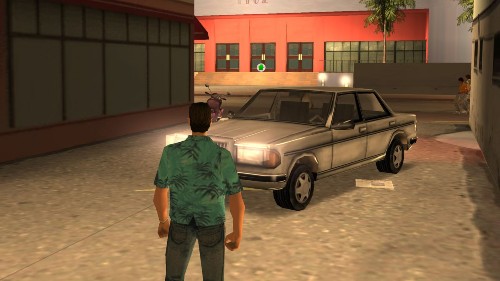
A full GTA, delivered like a web page
Grand Theft Auto: Vice City now runs entirely inside a standard browser tab. The port is hosted by a site called Quenq, and it reached Hacker News's front page on 6 September — under the submission headline "Play GTA III in the Browser", even though the linked page actually offers Vice City, the open-world game set in a sprawling city styled after 1980s Miami. According to the site, players follow Tommy Vercetti, a mobster just out of prison after fifteen years, whose drug deal goes wrong and leaves him clawing his way up the city's criminal hierarchy.
The hook for Hacker News readers was less the plot than the delivery. According to Quenq, a WebAssembly-based engine starts within seconds, requires no large upfront download, and streams the world in while you play.
What's in the browser build
The site lists several conveniences normally associated with a native install. An integrated save manager accepts existing .b save files from the PC or PS2 versions of the game, letting players resume old progress, and can export sf*.b backups so that progress carries between devices.
Input is similarly flexible. Desktop players use keyboard and mouse; mobile players get on-screen touch controls, with the site recommending landscape mode and fullscreen for the best experience. Standard gamepad inputs are supported too, covering Xbox and PlayStation controllers connected over USB or Bluetooth.
There is one hard requirement: hardware acceleration must be enabled in the browser. The site's FAQ notes that without GPU access for rendering the 3D world, the WebAssembly engine may fail to initialize at all, leaving players with a black screen or heavy lag.
The framerate footnote
The performance settings reveal how closely the port tracks the original. The default frame-rate limit is 0, meaning unlocked, for maximum performance on modern hardware. But the original engine was built around 30 FPS, and Quenq warns that unlocked rates can trigger physics bugs that make certain missions impossible to finish. Players who get stuck are told to set the limit back to 30 in the game menu.
For phones or low-end laptops prone to overheating or battery drain, the site suggests capping the frame rate at 30 or 60 FPS, which it says reduces processor load and makes long sessions more stable.
What the page leaves open
The site says little about how the port was engineered beyond describing it as a WebAssembly engine, and it does not address the licensing side of serving a commercial Rockstar title from a web page. Neither question is answered on the page itself, and they will likely shape whether the project stays up long term.
Why it matters
Set the unanswered questions aside and the technical result is striking: a demanding, full-scale 3D open world — streamed assets, physics simulation and all — running at interactive frame rates inside a browser, with no plugin and no installer. That is exactly the workload the web was long considered unable to handle, and WebAssembly is the reason it now can.
The port also doubles as an argument for the browser as a distribution and preservation layer. Old saves upload straight in, controllers pair over Bluetooth, and a phone held in landscape becomes a viable machine for the game. For developers outside gaming, the same signal applies more broadly: if a title of this scale can be streamed into a tab, the line between native application and web page is thinner than it has ever been.
- #webassembly
- #gaming
- #browsers
- #retro-gaming