· via Hacker News – Front Page (native)
Historian uses GPT-6 to identify unknown Newton alchemy source and probe Dee manuscript
A historian reports that the newly released GPT-6 and Opus 5.5 models can solve open research problems, from an unidentified Newton alchemy source to Enigma codebreaking, and calls on AI labs to fund historical research.
Frontier models turn to open problems in history
The near-simultaneous release of GPT-6 Sol and Opus 5.5 has prompted a historian of science and medicine to publish early results from pointing the new models at real, unsolved historical questions — and to argue that AI labs, historians and funding agencies should start building collaborations around them. In a post on the Res Obscura newsletter that quickly reached Hacker News's front page, the author says the shift is recent and stark: as recently as last year, frontier models were useful mainly as transcription and summarisation assistants rather than tools that could advance historical knowledge.
What makes a historical problem solvable
The author borrows a framing from mathematics, where reasoning models have made the deepest inroads: models perform best on problems they would themselves judge tractable. The working checklist looks like this:
- Experts in the field have already defined a set of open problems.
- The data needed to answer them is fully digitised and accessible.
- The problem plays to frontier models' strengths: multilingual reasoning, advanced mathematics, or autonomous research across large datasets and disciplinary subfields.
- Bespoke code can help deliver a solution.
- A proposed answer can be clearly proven or disproven.
That final condition, the author argues, is the main reason reasoning models have raced through mathematics but stalled in humanistic fields: most humanistic questions resist clean falsification. What remains is a narrow but genuinely useful band of historical problems — cryptography and codebreaking, tracing texts across translations and adaptations, and connecting findings scattered across niche subfields that scholarship has never integrated. The author suspects that last category may prove the most consequential of all.
Newton, Dee and a modest first harvest
The most concrete result comes from the history of alchemy. Using GPT-6 Astra, the author identified the French alchemical text behind a passage that Isaac Newton freely translated into Latin — an identification that, as far as the author can determine, had not previously been made.
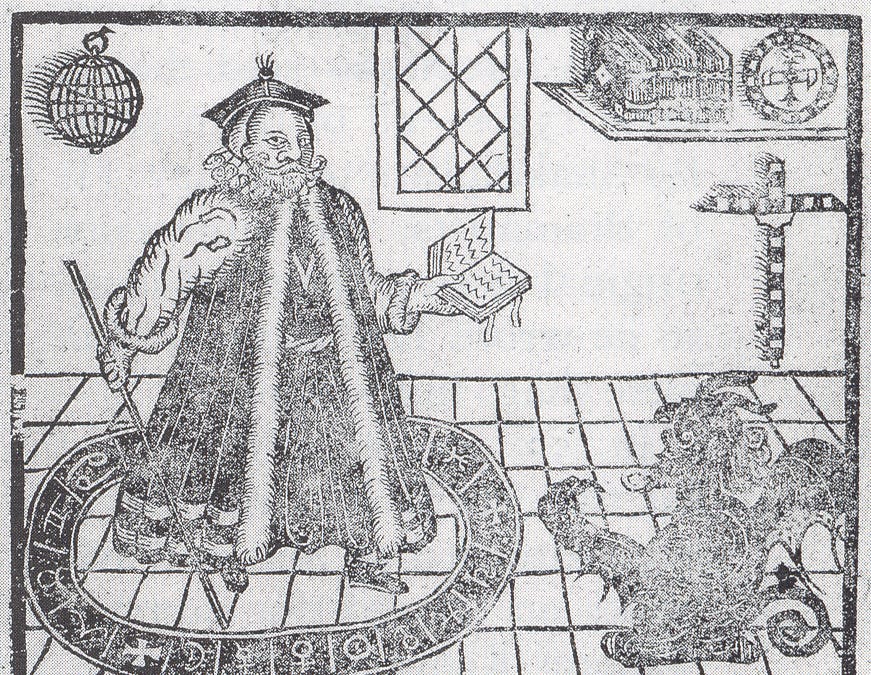
A second experiment targeted Liber Loagaeth, the coded manuscript that the Elizabethan occultist John Dee compiled from material his scryer Edward Kelley claimed to receive in an angelic language. Astra's verdict aligns with the long-standing view of Kelley as a charlatan: the text is almost entirely nonsense syllables rather than a genuine cipher. Even so, according to the post, the analysis produced real findings. Cross-checking character-repetition statistics against Dee's diary suggested Kelley grew lazier and more repetitive after a specific date, and one passage did encode meaning — a reference to Bornogo, one of the beings in Dee's invented angelic mythology. The author is candid that this is not the equivalent of cracking a major open problem, but reads it as evidence that expert historians plus frontier models plus serious compute can yield unexpected results.
Not every attempt succeeded. Pointing the models at unsolved WWI and WWII ciphers came up empty; the author says the easy pickings there appear to have been taken. Better results came from the author's own specialty: GPT-6 is currently reading through Charles Darwin's writings to map where he gathered information relating to natural selection, looking for undiscovered links between Darwin and his informants. Notably, the model proposed that research direction itself, and the author judged it a good match for professional intuition about what constitutes a worthwhile project.
The Enigma break and the transparency problem
The post also highlights work by others, including GPT-6 Astra's decipherment of a July 10, 1941 Enigma message that had long resisted solution. Citing the historical cryptology researcher Frode Weierud, the author notes that the decisive step was not codebreaking technique but noticing the full range of available information — including a July 2026 note about newly surfaced German Bundesarchiv collections of radio messages from the SS-Totenkopf Division's logistics command, which the model appears to have discovered on its own. Weierud's team is still dissecting the model's logs: the archive file references Astra cited are correct, but they are not available on the research group's website, and it remains unclear how the model reached them or what private collection it was referring to. The author's takeaway is that models given a problem they deem tractable will chase a solution as far as they can, often along paths that human experts find difficult to trace.
Why it matters
The core claim is institutional: pairing historians working in collaborative groups with current frontier models would, in the author's view, produce numerous meaningful advances in historical knowledge and interpretation — something that was simply not true a year earlier. That is an argument for AI labs and funding agencies to treat the humanities as a serious application domain for frontier models rather than a novelty. The Enigma episode carries a second lesson for anyone deploying these systems on consequential research: when a model arrives at correct results by a path experts cannot reconstruct, verification and provenance become the bottleneck, and expert oversight stops being optional. The workable pattern emerging from the post is historians framing narrow, checkable questions and treating model output as a lead to be confirmed rather than an answer in itself.
- #llms
- #historical-research
- #digital-humanities
- #gpt-6
- #cryptanalysis