· via Hacker News – Front Page (hnrss.org)
Internal documents detail Amazon AI tool that scores warehouses on union risk
Training material from a Canadian labour case suggests Amazon's Atlas AI rates warehouses on union-organising risk, with two UK sites placed in the highest-risk tier.
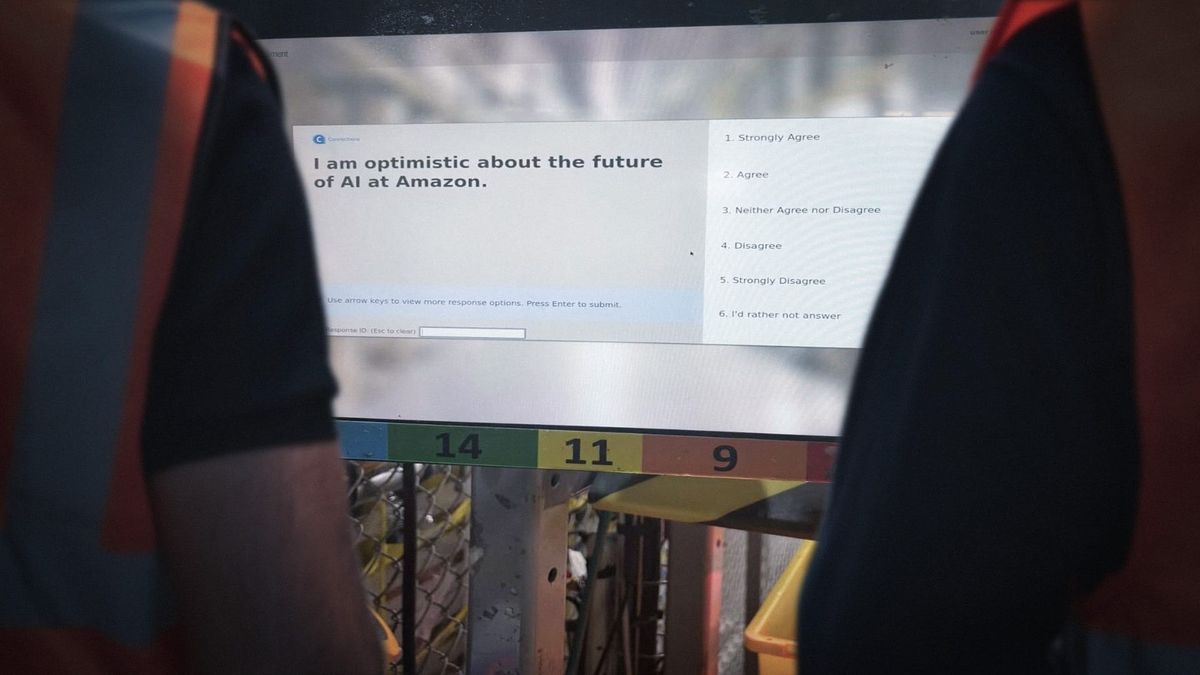
Amazon runs an in-house AI system that forecasts how likely its warehouse staff are to unionise or take other industrial action, and two UK sites are rated among the highest-risk locations in its network, according to internal documents reported by openDemocracy. The tool, named Atlas, aggregates data from sources including Reddit posts and internal staff surveys to produce a union-risk score for each building.
How the scoring works
The documents emerged from a legal dispute between Amazon and the Canadian union Unifor, were shared with the US non-profit publication Truthout, and appear to be training resources for Amazon managers in Canada.
According to openDemocracy, Atlas amasses "hundreds of data points" — posts in Reddit forums, employees' responses to internal feedback surveys, wider workplace information and any history of industrial action — and turns them into a score between 100 and 900. Lower scores indicate a greater likelihood that workers will unionise, stage a sit-in or take part in what the documents call other "disruptive labour events". The material states that higher scores are regarded as better by company leadership.
Each warehouse is then placed in one of five tiers. Tier 5 signals "no immediate perceived risk", while Tier 1 means "future activity is imminent". The tiering is meant to shape staffing decisions, resource planning and actions designed, in the documents' words, to "mitigate risks to Amazon labour structure".
Two UK sites in the highest risk tier
Sixteen warehouses across the US, Canada and the UK sit in Tier 1, the documents indicate. Two are British: a £500m robotic fulfilment centre in Sutton Coldfield near Birmingham, known internally as EMA4, and the Coventry site BHX4.
Coventry has been the centre of UK organising efforts. Workers there became the first in the country to strike against Amazon in January 2023, and the GMB union later lost a recognition ballot at the site by 28 votes, with roughly 2,600 workers taking part. The GMB and the tech justice group Foxglove allege Amazon used "dirty tricks" around that vote, including mass hiring of non-unionised staff and QR codes that let employees cancel union membership — the subject of an ongoing legal challenge backed by Foxglove and the law firm Leigh Day.
Garfield Hylton, a 62-year-old GMB member who works at the Coventry warehouse, told openDemocracy that monitoring of this kind undermines workers' freedom to decide whether to unionise and hands the employer a decisive information advantage over its staff.
What Amazon says
An Amazon spokesperson rejected the characterisation of Atlas as individual surveillance, telling openDemocracy it reflects "site/building level activity only" and that the company does not track employees' opinions, affiliations, union membership or personal data. Atlas, the spokesperson said, helps the company understand where staff need more support and respond to the issues they raise.
Amazon also said Atlas is not currently used in the UK, but had not answered, at the time of publication, whether a similar system operates under a different name — a position that sits uneasily beside the two UK buildings named in the training material.
Prior findings and legal pressure
The Canadian disclosures add to an already difficult record on monitoring. In 2022, France's data protection authority CNIL fined Amazon €32m (£27m) under GDPR after finding that tracking was so precise an alert fired when a worker was idle for as little as a minute. In the Unifor case, the British Columbia Labour Board ruled that Amazon had violated multiple local labour laws, following an earlier finding that it unlawfully imposed a wage freeze on unionised workers at a warehouse outside Vancouver.
Foxglove says it is reviewing the documents to see whether they strengthen its existing UK claims. Leigh Day partner Michael Newman told openDemocracy the material contradicts Amazon's earlier assurances that it does not seek to prevent workers from unionising, and said lawyers will now press the company on which data feeds the scores and how they are calculated.
Asked whether the tool represents an acceptable level of monitoring, a UK government spokesperson said workplace technologies should be used transparently and in ways that are fair, accountable and reliable, adding that all employers are expected to respect workers' right to take part in lawful trade union activity.
Why it matters
The documents offer an unusually concrete view of AI forecasting aimed at collective worker behaviour rather than productivity alone. Whether or not Atlas runs in the UK today, the described system exists to anticipate organising and trigger countermeasures before it happens — a power imbalance encoded in software, as union organisers see it. The story also lands amid broader questions about workplace AI: transparency duties, data protection limits and the legal right to organise were all designed before employers could score buildings for dissent at scale. The UK legal challenge, and the questions over exactly what Atlas ingests, are likely to grow from here.
- #amazon
- #workplace-surveillance
- #unions
- #ai
- #labour-rights