· via Hacker News – Front Page (native)
Isar Aerospace reaches orbit and deploys payloads from European soil on second flight
Isar Aerospace's Spectrum rocket reached orbit and deployed its payloads from Andøya in Norway, making the German company the first European commercial launch provider to put satellites in orbit.
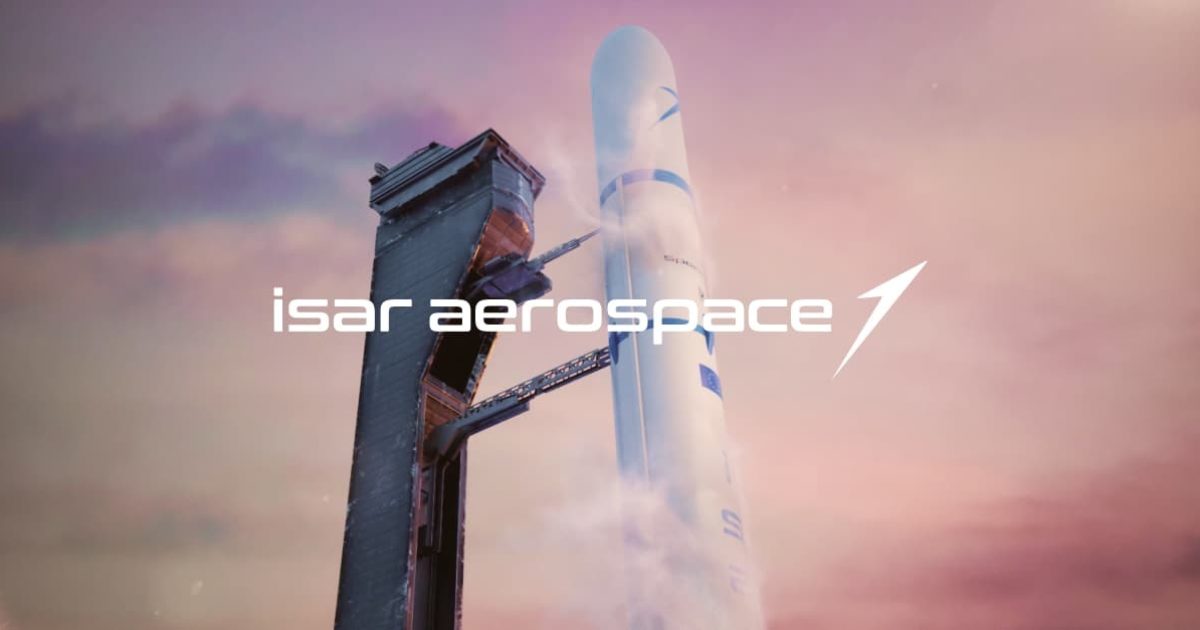
Isar Aerospace has become the first commercial space company from Europe to deliver satellites into orbit, and it did so on only its second flight. According to the company's mission updates, its Spectrum rocket lifted off from Isar's dedicated launch complex at Andøya Space in northern Norway at 10:12 pm CEST on 5 September 2026, flying a qualification mission named "Onward and Upward", and later completed spacecraft separation in orbit.
What the flight achieved
Per Isar Aerospace, the vehicle cleared its milestones in sequence: it passed MaxQ, the region of maximum aerodynamic stress, completed main engine cutoff and stage separation, and ignited its second stage as planned. It crossed the Kármán line at an altitude of 100 kilometres, jettisoned the payload fairing, accelerated to orbital velocity, and performed a circularisation burn before separating its payloads. The company said it is working with customers to confirm the status of the satellites.
Space.com, citing the company's launch webcast produced with NASASpaceflight, reported that the rocket settled into an initial elliptical orbit a little over seven minutes after liftoff, with a low point of roughly 180 kilometres and a high point of about 500 kilometres. The mission carried five cubesats along with one scientific experiment that was not designed to deploy. Space.com's report was filed while payload deployment was still pending; Isar's own update, issued later that day, confirmed separation had succeeded.
Spectrum chief engineer Nikolaos Perakis described the moment on the webcast as making history for the rocket, the company and for Europe.
A short but rocky road to orbit
The success came just one flight after a failure. Spectrum's debut mission, "Going Full Spectrum", lifted off from Andøya in March 2025 but broke apart less than a minute into flight. According to Space.com, an investigation completed within two months traced the loss to an unintended vent valve opening combined with a loss of attitude control at the start of a roll manoeuvre.
The second attempt was repeatedly delayed. Space.com's timeline records a pressurisation valve issue that pushed the flight from January to March, weather and an intruding boat that scrubbed attempts that month, and a 9 April try called off due to a leak in a composite overwrapped pressure vessel. Isar's own updates note a 15 June stand-down over off-nominal behaviour in the vehicle's fluid systems. The company then carried out component replacements, acceptance testing, stage tests and a wet dress rehearsal before returning the rocket to the pad for the 5 September launch.
Sovereign access and scaling up
Isar's chief executive Daniel Metzler framed the result in strategic terms, saying the company had "opened space from Continental Europe" and that Europe now has sovereign access to space. He added that launch remains the largest bottleneck for the global space industry and that Isar now represents a genuine alternative for commercial and institutional customers, with the company focusing next on rapidly scaling launch vehicle production.
The hardware is built with volume in mind. According to Space.com, Spectrum is a two-stage rocket standing 28 metres tall that can carry about 1,000 kilograms to low Earth orbit, and Isar's manufacturing facility near Munich is designed to produce more than 30 of the rockets per year.
One geographical caveat applies: Space.com notes this was the first rocket to reach orbit from Western European soil. Orbital launches have flown for roughly six decades from Plesetsk Cosmodrome, which lies in the European part of Russia.
Why it matters
Europe has relied heavily on a small number of institutional launch providers, and the ability of a private European company to reach orbit and deploy payloads from European soil changes that picture. A successful second flight after a debut failure also validates Spectrum's core design and flight software, moving Isar from experimental test flights toward operational service. If the company can translate its stated production capacity into a regular launch cadence, commercial and government customers gain a sovereign European option for small and medium satellite constellations, addressing a launch bottleneck that has shaped the continent's space plans for years.
- #spaceflight
- #rockets
- #isar-aerospace
- #europe
- #orbital-launch