· via Hacker News – Front Page (native)
Margaret Hamilton, Apollo flight software lead and computing pioneer, dies at 90
Margaret Hamilton, who led the MIT team that wrote the Apollo onboard flight software and helped establish software engineering as a discipline, died on Sept. 30 at age 90, MIT News reported.
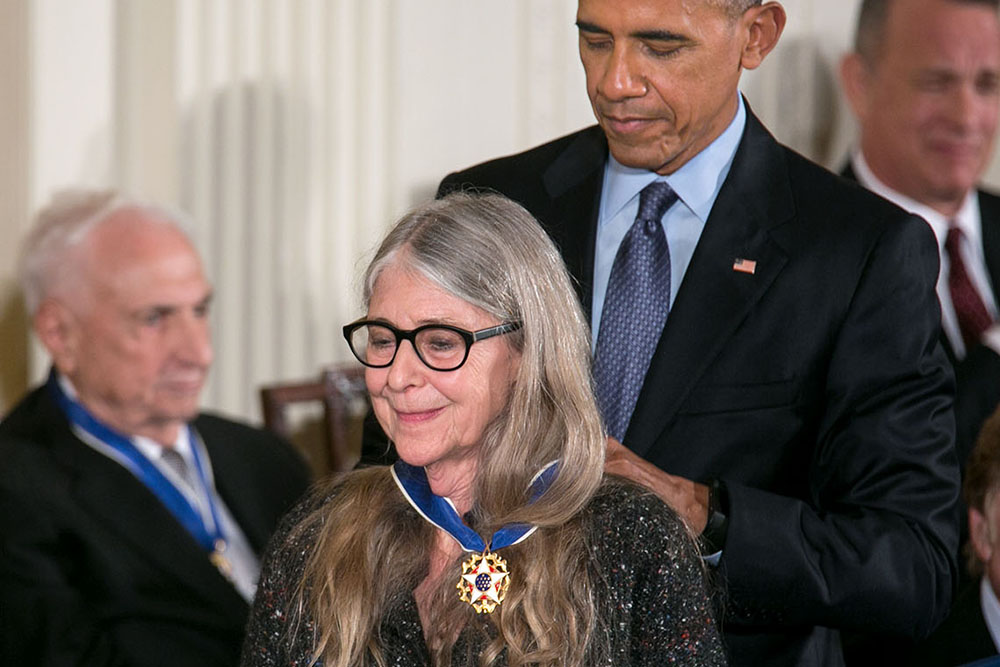
Margaret Hamilton, the computer scientist who led development of the onboard flight software that carried Apollo astronauts to the Moon, died on Sept. 30 at the age of 90, according to MIT News, which reported her death on Oct. 7. The institute credited her with helping establish software engineering as a discipline in its own right — a field that barely existed when she began writing code.
From weather models to the Moon
Born in Paoli, Indiana, in 1936, Hamilton studied mathematics at the University of Michigan before transferring to Earlham College, where she earned a mathematics degree with a minor in philosophy in 1958. After moving to Boston in 1959, she took a temporary post in MIT's meteorology department writing weather-prediction software for Edward Lorenz — work that later informed Lorenz's publications on chaos theory.
In 1961 she moved to MIT Lincoln Laboratory and wrote software for the SAGE air-defense system, programming the prototype AN/FSQ-7 computer used to search for potentially hostile aircraft. It was there, MIT News notes, that she first grew interested in software reliability, then a largely unexplored concept.
In 1965, as she prepared for graduate studies, her husband spotted a newspaper advertisement: MIT's Instrumentation Lab, which held NASA's contract for Apollo flight software, was looking for people to help "send man to the moon." Hamilton applied and became the project's first programmer — and its first female one. By 1968 she was assistant director leading the Command and Service Module software team, part of an effort that had grown to more than 400 people.
Alarms, errors, and a landing that held
Hamilton's focus on failure modes paid off repeatedly. When her four-year-old daughter Lauren managed to trigger the pre-launch program P01 on a midflight simulator and crash it, Hamilton proposed a software fix — and was overruled on the grounds that trained astronauts would never make that mistake. During Apollo 8 in 1968, Jim Lovell did exactly that, erasing the mission's navigational data mid-flight. Hamilton's team was brought in to work the problem, and her protective change was folded into the software afterward. MIT News describes the episode as an early example of "defensive" programming: code designed to anticipate and contain human error.
The defining moment came during Apollo 11 in July 1969. As the Eagle lander approached the lunar surface, the guidance computer raised 1202 alarms: a fault in a hardware switch had overloaded the machine, and it was unclear whether it could handle the descent. Because Hamilton's team had built priority-driven scheduling into the software, the computer shut down low-priority background tasks and kept the mission-critical ones running. Houston trusted the software and let the landing proceed, and two astronauts walked on the Moon.
Entrepreneur and advocate
As Apollo wound down, the Instrumentation Lab spun out of MIT to become the independent Draper Laboratory, whose president and CEO, Jerry Wohletz, said Hamilton left an indelible mark on the organization. In 1976 she founded Higher Order Software, built around her approach of error prevention and fault tolerance, and later launched Hamilton Technologies. Its flagship product, the Universal Systems Language (USL), is a systems-modeling language and methodology intended to bring those same reliability principles to complex software systems.
Hamilton authored more than 130 publications and spent much of her career campaigning for software to be recognized as a legitimate engineering discipline. In 2016 President Barack Obama awarded her the Presidential Medal of Freedom; the citation credited her with defining new forms of software engineering and "writing the code that helped America set foot on the moon." Looking back in 2009, she told MIT News that because software was seen as "a mystery, a black box," her team was given unusual freedom and trust: "There was no choice but to be pioneers."
Why it matters
Hamilton's career is, in large part, an origin story for software engineering as a profession. The practices her team developed under extreme constraints — priority scheduling, fault tolerance, defensive design — are now foundational to everything from operating systems to spacecraft avionics and cloud infrastructure. Her death also closes a chapter in computing history: it marks the loss of someone from the generation that proved, on 1960s hardware, that software could be trusted with human lives.
- #apollo
- #nasa
- #software-engineering
- #obituary
- #space