· via Hacker News – Front Page (native)
Meta details Prometheus, the gigawatt supercluster scaling toward one million GPUs
Meta says the first phase of its gigawatt-scale Prometheus supercluster in New Albany, Ohio is complete, that it trained the Muse foundation models, and that the site will grow to roughly one million GPUs.
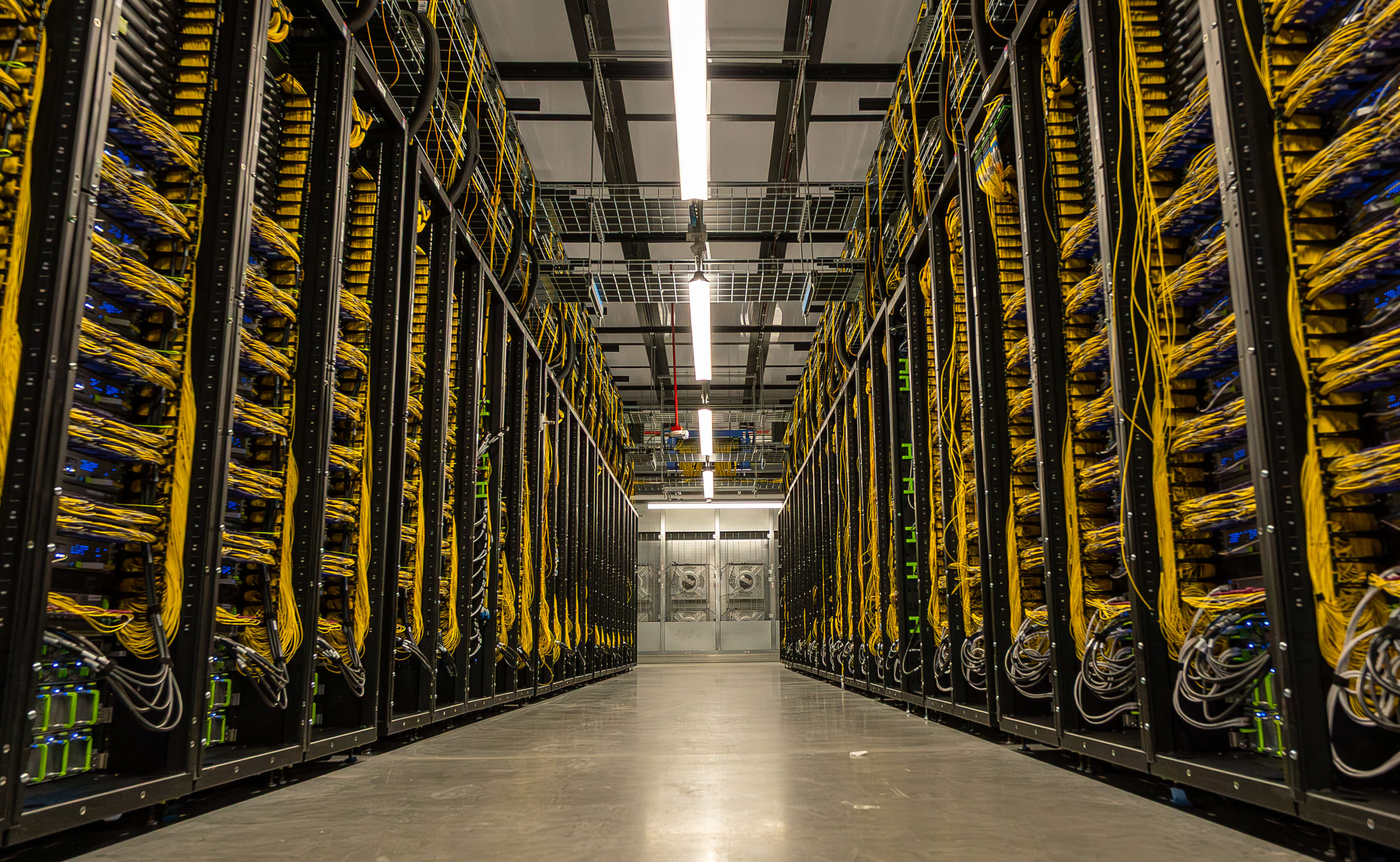
Meta has published an inside look at Prometheus, the gigawatt-scale supercluster behind its newly released Muse family of foundation models. In a post on its engineering blog, the company said the first phase of the cluster at its New Albany, Ohio campus is already complete, that it trained the Muse models, and that Meta intends to grow the site to roughly one million GPUs in total.
A web data center turned training ground
Two years ago, according to Meta, the New Albany site was an ordinary data center serving web traffic. The company has since reworked it into a home for frontier model training, mixing conventional server buildings with AI-optimized data halls and rapid deployment structures. Hundreds of thousands of GPUs are already installed across multiple buildings, tied together by miles of fiber so the site operates as one machine. The first training runs on the cluster produced the Muse models, including Muse Wonder, which Meta describes as its new frontier models for personal and professional agentic tasks. Future phases are being planned around the next models from Meta Superintelligence Labs.
Reliability measured in goodput
Meta frames stability, not just raw compute, as the central operational challenge: a fault on a single host can slow or halt an entire training job. During the runs that trained Muse Wonder, the company says it sustained more than 85% goodput, a measure of useful training progress against wall-clock time, for pre-training and more than 90% for reinforcement learning runs. Mean time between interruptions across the fleet averaged about 47,000 GPU hours during those runs, and Meta says firmware fixes have since pushed the figure past 54,000 GPU hours. The site also uses closed-loop liquid cooling to keep the hardware running efficiently.
Two NVIDIA platforms, with a third coming
Prometheus currently runs two NVIDIA GPU platforms, and Meta says a third based on the Vera Rubin NVL72 will arrive soon. Both existing platforms use the NVL72 rack architecture, in which 72 GPUs are networked into a single logical accelerator.
The first, called Catalina, uses the NVIDIA GB200 NVL72 in its Ariel two-rack configuration, with 36 GPUs per rack linked by NVLink into a 72-GPU domain. Meta chose this variant to pair each Blackwell GPU with a Grace CPU and dual ConnectX-7 400G NICs, delivering 800G of scale-out I/O per GPU. The company says the standard configuration would have left scale-out bandwidth at 400G while nearly every other dimension scaled up, an imbalance it expected to hurt performance. A Catalina pair carries 13.4 TB of HBM3e memory (192 GB per GPU), delivers 720 peak PFLOPS of FP8 compute and 130 TB/s of NVLink bandwidth, and draws about 120 kW. The racks use Meta's Open Rack V3 high-power design, which it has contributed to the Open Compute Project.
The second platform, Clemente, moves to the GB300 NVL72. Memory per GPU rises 50% to 288 GB, or 20.7 TB per rack, and peak FP4 compute passes one exaFLOP. NVIDIA's ConnectX-8 SuperNICs now provide 800G per GPU natively, and with a 2:1 GPU-to-CPU ratio the full 72-GPU domain fits into a single rack drawing roughly 135 kW. Meta reports a 5–10% performance improvement over the GB200 systems, along with less cabling and better serviceability, and says Clemente can use either its modular Air-Assisted Liquid Cooling or facility liquid cooling in newer data centers.
A network shaped like the training job
Underneath it all is networking designed around how large training jobs behave. Beyond the standard data center network, Meta operates a dedicated Ethernet Back-End network for direct GPU-to-GPU communication within and between buildings. The topology mirrors data-parallel training: latency- and bandwidth-sensitive collective traffic stays inside a model replica on the building fabric, while traffic between replicas rides an aggregation network that tolerates more latency. Each building fabric interconnects up to 20,736 GPUs, initially through a Disaggregated Scheduled Fabric built to handle the small number of large, long-lived flows that training collectives generate. Meta says it scaled concepts proven on earlier 24,000-GPU building clusters and a 100,000-plus GPU regional cluster to a new level of scale and distance.
Why it matters
The post is a snapshot of what frontier AI training now demands: a conventional web data center rebuilt into a gigawatt-scale machine, racks drawing 120–135 kW each, and liquid cooling as a baseline rather than an option. Equally telling is what Meta chose to emphasize: goodput and mean time between interruptions, a reminder that at this scale reliability engineering is as decisive as peak FLOPS. And the stated destination of roughly one million GPUs, explicitly tied to the next models from Meta Superintelligence Labs, signals that the compute race is still accelerating rather than plateauing.
- #meta
- #nvidia
- #ai-infrastructure
- #data-centers
- #supercomputing