· via Hacker News – Front Page (native)
Micron CEO expects AI-driven memory shortage to stay tight through 2028
Micron says demand for its memory will outstrip supply into 2028, with 75% of its 2027 output already committed to buyers. Samsung executives expect the wider shortage to persist too.
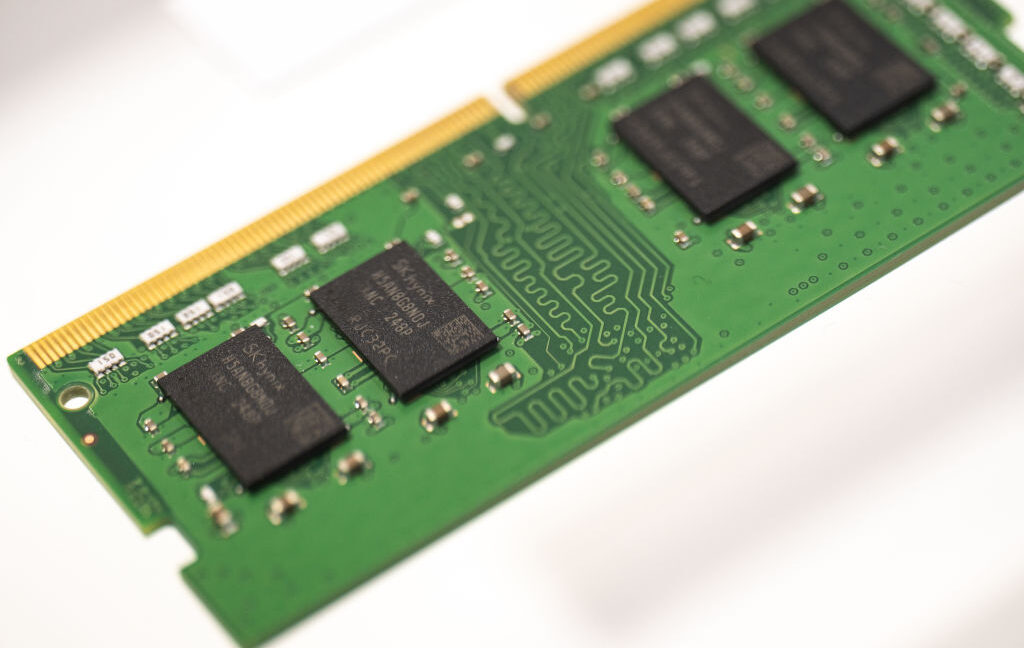
Memory supplies will stay tight for at least the next two years, according to executives at Micron and Samsung, as AI demand continues to absorb the industry's manufacturing capacity. Micron CEO Sanjay Mehrotra told investors that demand for his company's memory will exceed its available supply over that period, and Samsung executives expect the broader shortage to persist as well, Ars Technica reported this week.
What Micron told investors
Mehrotra was blunt about the outlook on an investor call. "Overall, supply-demand environment is only getting tighter," he said, according to a Seeking Alpha transcript cited by Ars Technica.
The numbers back that up. Seventy-five percent of Micron's memory output for 2027 is already accounted for, and most of the company's current sales discussions concern allocations for 2028. Demand for high-bandwidth memory, the stacked DRAM used in AI accelerators, is now surpassing demand for Micron's conventional DRAM.
There is an important scope note here: Micron no longer sells consumer RAM, so the CEO's remarks concern its business-to-business sales of HBM for AI systems and DRAM for servers.
Why new capacity will not bring quick relief
Micron plans to open new clean rooms for memory manufacturing in 2028, but Mehrotra cautioned against expecting an immediate fix. "Even after they are built, even after first wafer output, production ramps up only gradually in the clean rooms," he said.
He pointed to three structural headwinds. First, Micron's product mix is shifting from HBM3E toward a greater share of HBM4 and HBM4E. Second, HBM production carries a trade ratio: it yields fewer bits of usable capacity per wafer than standard DRAM, so every shift toward a richer HBM mix effectively constrains overall supply growth. Third, node transitions of the future deliver less productivity gain per wafer than the industry has historically seen, compounding the squeeze.
Ripple effects for consumer devices
Although Micron's comments were about its enterprise business, they reach further. According to Ars Technica, manufacturing capacity is being prioritized for AI and server memory, which limits the supply of memory made for consumer devices. With fabs allocating silicon toward the highest-value AI contracts, makers of PCs, phones and other consumer hardware face a thinner supply pool for the foreseeable future.
Why it matters
Memory is one of the largest cost components in both servers and consumer devices, and a shortage lasting through 2028 has practical consequences for almost anyone buying or building hardware. Cloud and AI operators are effectively locking up supply years in advance — three quarters of Micron's 2027 output is already spoken for — leaving other buyers to compete for what remains. New fab capacity arriving in 2028 will ramp slowly, and each HBM generation consumes more wafer capacity per bit, so the industry's structural tilt toward AI memory will keep total bit growth constrained. For hardware buyers, that means planning around elevated memory costs and tight availability for at least another two years.
- #memory
- #micron
- #hbm
- #dram
- #ai-hardware