· via Hacker News – Front Page (native)
NASA's Roman Space Telescope to launch on Falcon Heavy in August 2026
NASA says the fully built Nancy Grace Roman Space Telescope will launch on a SpaceX Falcon Heavy from Kennedy Space Center on August 30, 2026, at 07:26 EDT.
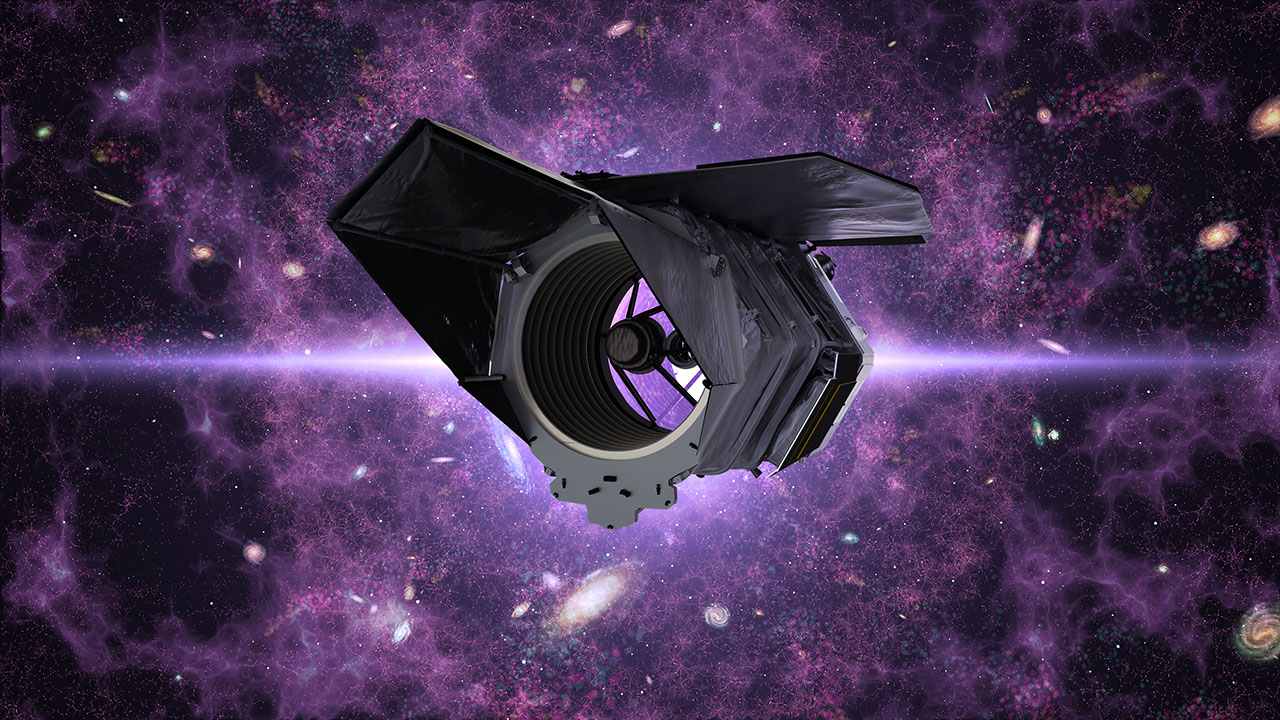
NASA has set a launch date and a ride for its next flagship observatory: the Nancy Grace Roman Space Telescope is scheduled to lift off on August 30, 2026, at 07:26 a.m. EDT (11:26 UTC) aboard a SpaceX Falcon Heavy, according to the agency's mission page, which recently drew renewed attention on Hacker News's front page. The launch will take place from Launch Complex 39A at NASA's Kennedy Space Center in Florida. The same page notes that technicians have finished building the observatory, leaving the hardware on track for its flight.
A flagship on a Falcon Heavy
Falcon Heavy, SpaceX's three-core heavy-lift rocket, has become a regular choice for NASA science payloads. It carried the Psyche asteroid probe in October 2023 and the Europa Clipper orbiter in October 2024, both from the same Kennedy pad. Choosing it for Roman continues that pattern: a large science spacecraft flying on a partially reusable launcher with a growing flight record. Launch Complex 39A itself is NASA's historic pad, used for Saturn V flights during Apollo and later for space shuttle missions, and is now operated by SpaceX under a lease agreement with the agency.
What Roman will do
The telescope is named after Nancy Grace Roman, NASA's first chief astronomer and an early champion of what eventually became the Hubble Space Telescope. The observatory is an infrared telescope built around a 2.4-meter primary mirror, the same diameter as Hubble's, but paired with a far wider field of view. That design makes it a survey instrument rather than a narrow-field one. Its core science program targets dark energy and the expansion history of the universe, a census of exoplanets using gravitational microlensing, and broad infrared surveys of the sky. The observatory also carries a coronagraph intended to demonstrate technology for directly imaging planets around other stars.
The hardware is done
According to NASA, construction of the observatory is complete, and the countdown clock on the agency's page now tracks toward the August 2026 window. The mission site also hosts a range of supporting material for journalists and the public, including a press kit, video and image resources from NASA Goddard's Scientific Visualization Studio, galleries on YouTube and Flickr, and an interactive diagram that lets visitors tour the observatory.
Why it matters
Roman is one of a small number of flagship-class space observatories NASA will fly this decade, and it fills a role its siblings do not. Where Hubble and Webb examine relatively small patches of sky in great depth, Roman is built to sweep wide, pairing Hubble-class mirror diameter with a field of view large enough to map huge portions of the sky quickly. That combination underpins its planned work on dark matter mapping through gravitational lensing, large-scale structure surveys, and the detection of rare, time-sensitive events such as supernovae and free-floating planets.
The launch vehicle choice carries weight beyond this single mission. Another NASA flagship flying on a Falcon Heavy reinforces SpaceX's position as the default heavy-lift provider for US science missions, a trend competitors and mission planners will be watching closely. If the August 2026 schedule holds, Roman would head to its operational orbit around the Sun-Earth L2 Lagrange point, roughly 1.5 million kilometers from Earth, where it would begin a survey campaign designed to reshape how astronomers study the universe at the largest scales.
- #nasa
- #spacex
- #falcon-heavy
- #space-telescope
- #astronomy