· via Hacker News – Front Page (native)
OpenAI breaks up stand-alone robotics team, betting general AI models can control robots directly
OpenAI has folded its stand-alone robotics team into its broader research and applied organizations, arguing that general-purpose frontier models can now drive robots directly, according to Fortune.
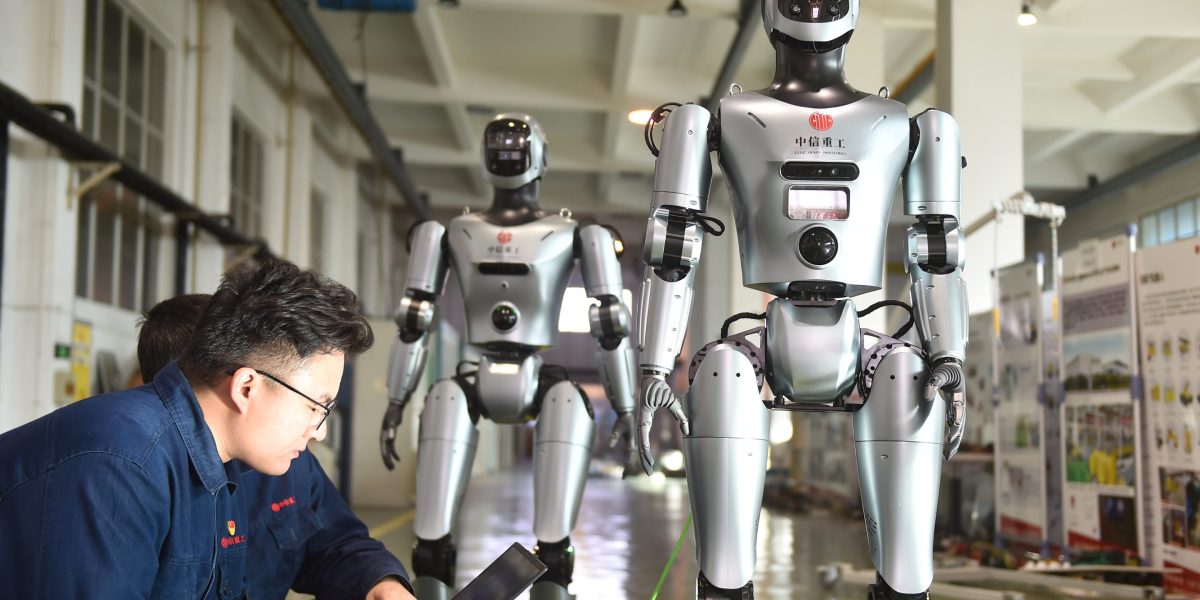
OpenAI has dissolved its stand-alone robotics group and redistributed its researchers across the company, framing the move as evidence that robotics no longer needs a dedicated team because its general-purpose AI models can now operate robots directly. Fortune first reported the reorganization, which OpenAI confirmed when asked.
What changed inside OpenAI
According to Fortune, the robotics research team has been absorbed into OpenAI's main research organization under Chief Research Officer Mark Chen, while applied robotics and hardware staff moved into the larger Applied organization led by President Greg Brockman. A spokesperson told Fortune that robotics remains central to OpenAI's long-term vision and described the shuffle as commitment rather than retreat.
The change was recent enough that OpenAI still held a registered booth, number 208, at CoRL, an academic robotics conference held in Austin this week. Fortune found the spot empty, with no OpenAI branding, though a few former robotics researchers at the conference still drew a crowd.
A third act for OpenAI robotics
OpenAI ran a robotics effort in its early years but shut it down in 2020, with cofounder Wojciech Zaremba later citing scarce robot data and faster routes to artificial general intelligence through other methods. That pivot toward large language models trained on text produced ChatGPT in late 2022. OpenAI rebuilt a stand-alone robotics team in 2024 and announced a partnership with the startup Figure to build AI for humanoid robots; Figure ended the deal in February 2025 to develop its own robot software. OpenAI has said it is now building its own humanoid robot, with Sam Altman targeting a first public demonstration in 2027.
The bet behind the breakup
Fortune reports the reorganization rests on a conviction gaining ground across the industry: general models trained for language, code and vision can also power embodied AI, acting as the brains for robots, driverless cars and drones, and eliminating the need for bespoke robotics models.
OpenAI told Fortune that at the start of the year it assumed progress would come by building on Sora, its video generation model, whose realistic output implies an implicit understanding of the physical world. Since then, researchers found that frontier models including GPT-6 Astra could be applied to robotics directly, and that discovery motivated dissolving the team. In an Nvidia study cited by Fortune, an Astra-powered agent scored a 74.8 percent success rate on a simulated manipulation benchmark, compared with 51.0 percent for the best specialized robotic models on that leaderboard.
Guanya Shi, an assistant professor at Carnegie Mellon University's Robotics Institute, told Fortune he reads the move as OpenAI concluding that robotics is no longer a distinct problem but a downstream application of general intelligence, much as frontier models now underpin specialized tools for coding, legal and financial work. Shi added that improved spatial and reasoning capabilities already let general models handle tasks that once required dedicated training, such as coping with objects in new positions or changed lighting.
Dissenting views and open questions
The shift challenges robotics startups that have raised billions on the premise that robots need purpose-built brains. Russ Tedrake, an MIT professor and cofounder and CEO of Walden Robotics, told Fortune that robotics firms retain an edge: their machines are already working in real settings like factory floors, and the deployment data they gather becomes more valuable as foundational models improve, since robots can learn from it faster.
Shi also flagged practical limits: large models are slow and cloud-hosted, so devices need a constant network connection, which keeps smaller onboard models relevant. Pete Florence, cofounder of the robot-focused AI startup Generalist, told Fortune it remains unclear whether any existing approach will dominate robotics in the long run.
The reorganization also arrives amid financial pressure. Fortune notes that Altman urged staff to abandon side quests, that OpenAI has shed efforts including Sora to reallocate compute, and that its operating losses reportedly reached $10.9 billion in the most recent quarter as it seeks new funding and weighs a possible IPO in early 2027.
Why it matters
If general-purpose models can control robots without specialized training, the economics of robotics change: the scarce asset becomes frontier model capability rather than purpose-built robot software. OpenAI is betting that robotics is simply a downstream market for general intelligence, while incumbents wager that real-world deployment data keeps them relevant. Which assumption proves right will shape funding, hiring and product plans across embodied AI, and the empty booth at CoRL is a visible marker of where one of the field's best-funded players now stands.
- #openai
- #robotics
- #embodied-ai
- #humanoid-robots
- #frontier-models