· via GitHub Blog
OpenClaw maintainers on scaling and securing GitHub's fastest-growing project
The personal AI assistant OpenClaw has reached roughly 388,000 GitHub stars, making it the fastest-growing project in the platform's history. Its maintainers explain how they cope with AI-generated contributions and new security risks.
A weekend experiment becomes GitHub's fastest-growing project
OpenClaw, a personal AI assistant that runs on users' devices and connects to the messaging channels they already use, is the fastest-growing project in GitHub's history, according to the GitHub Blog. Peter Steinberger started it as a weekend project in November 2025, and by 26 August 2026 the repository had accumulated roughly 388,000 stars, 81,000 forks and more than 80,000 commits.
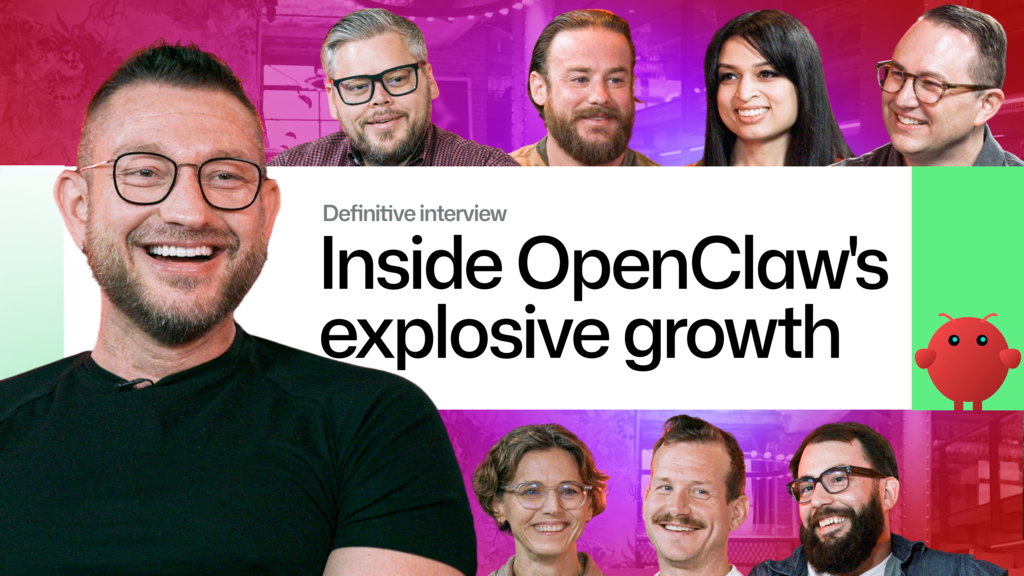
The GitHub Blog filmed a group interview with Steinberger and several maintainers six months into the project and published it on 27 August. The participants, including the OpenClaw Foundation's chief architect Vincent Koc, Red Hat principal software engineer Sally O'Malley and contributors from Martian Engineering, Digital Meld and OpenCoven, discussed how a wave of automated contributions forced them to rethink review and trust, and what securing an agentic application involves in practice.
When contributions arrive by the thousand
The first shift was volume. Maintainers reported handling thousands of pull requests and issues, with some contributors running heavily automated pipelines that fired off hundreds of changes at once. Josh Lehman likened the setups to factories working through the tracker for anything addressable, and Steinberger said he has largely stopped thinking of these submissions as pull requests in the traditional sense, because they begin life as prompts.
The team still tried to stay welcoming. Koc noted that a good share of the merged first-time contributions came from non-developers: people with a concrete problem who used an agent to draft a change and then worked with maintainers to finish it. Rather than rejecting rough patches outright, maintainers looked for promising ideas and refined, rewrote or completed the changes themselves.
New trust signals and new review tooling
With contribution counts no longer meaning much, the useful evidence became things a contributor can show: transcripts of their sessions with an agent, screenshots proving a change was tested, and an account of their reasoning. Steinberger's position, as the GitHub Blog presents it, is that authorship matters less than understanding — the real question is whether the contributor thought the feature through and considered how it interacts with the rest of the project.
Reviewers are also turning AI on AI-generated code. Val Alexandar said he now runs GitHub Copilot reviews on machine-submitted pull requests to get a clear picture of what each file does and how it changed, and Lehman observed that OpenClaw is the first project where he has seen it become routine for maintainers to edit an incoming change until it is right.
Reputation itself proved attackable. Because merge counts functioned as a trust badge, some contributors duplicated other people's pull requests to inflate their numbers, Koc explained, and Steinberger recalled an automated pull request that existed mainly to advertise a company's product. Working out which change was original became part of the review job.
Secure defaults, dependencies and burnout
Choosing safe defaults for software with broad agent capabilities is a constant negotiation. Tighter restrictions on what an agent's workspace can do drew complaints from users, while looser ones increase exposure. Steinberger described it as a balancing act between convenience and safety, dependent on what the agent can do, what the user understands and what the environment permits.
On the supply chain side, the GitHub Blog reports that recent attacks have led the maintainers to look more closely at the project's dependencies. The maintainers also shared security lessons drawn from the GitHub Secure Open Source Fund, and stressed the value of comparing notes with maintainers of other projects facing the same pressures.
The human side came up too. Lehman said having agents work on his behalf frees him to spend time with his three small children, while Alexandar has watched people realise they can skip sleep and compress a week of work into a day. O'Malley noted that maintainers now announce breaks openly in the project's channels.
Why it matters
OpenClaw is a live experiment in what mainstream open source looks like once coding agents are cheap and abundant. Its first six months suggest that the signals projects traditionally rely on — contribution volume, merge counts, even authorship — degrade quickly, and that visible evidence of understanding and testing has to replace them. It shows reputation metrics becoming attack surfaces, and it illustrates how agentic software forces projects to make explicit, contested decisions about how much capability to expose by default. For anyone maintaining a popular repository, or building one into their stack, these are early answers to problems that are unlikely to remain unique to OpenClaw.
- #open-source
- #ai-agents
- #github
- #code-review
- #developer-tools