· via Hacker News – Front Page (native)
papyDeck console runs games as editable Lua scripts on three genlocked RP2350B chips
A Show HN project called papyDeck pairs three genlocked RP2350B microcontrollers with a sandboxed Lua VM, making every game on the console a readable, editable script.
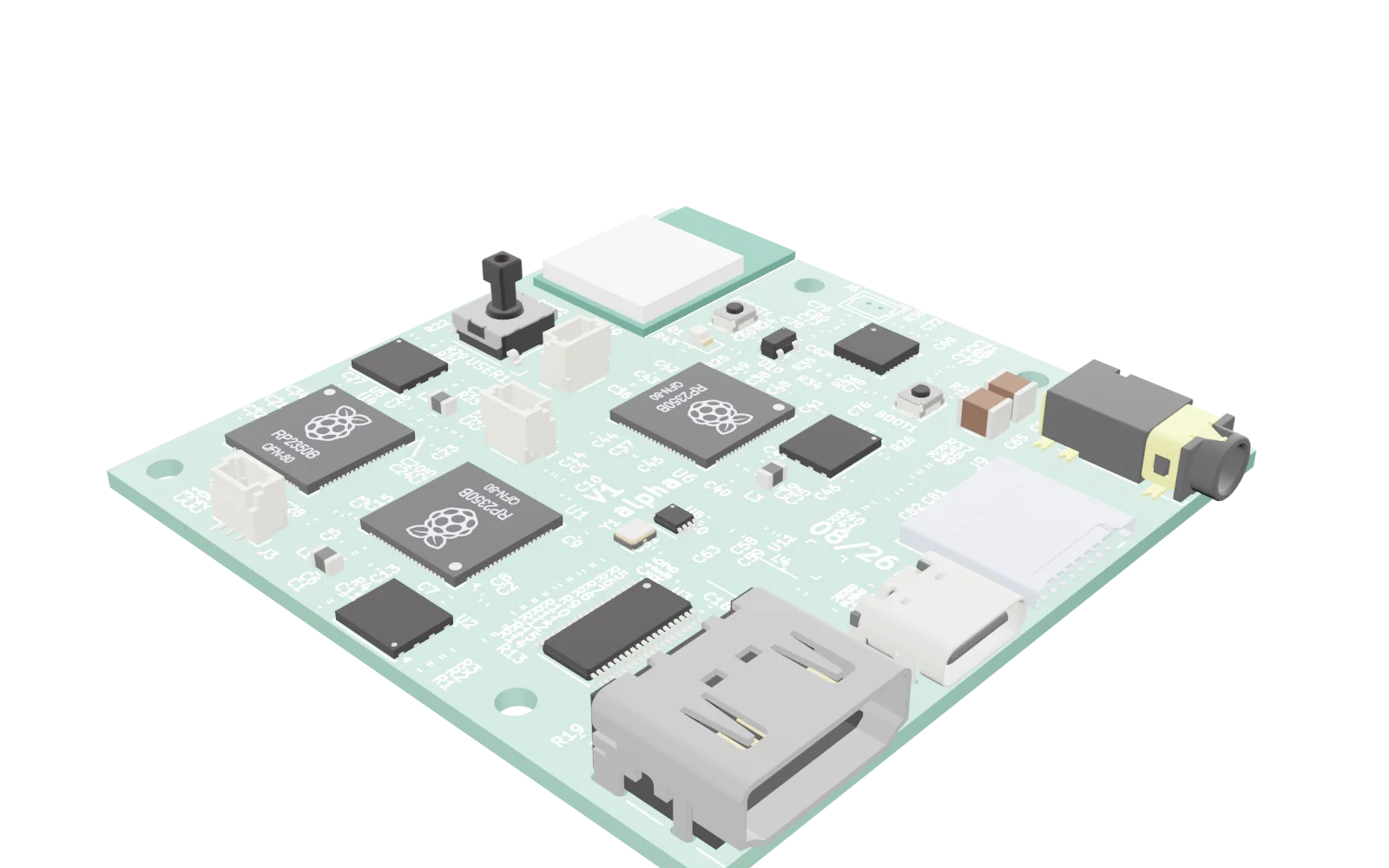
A console whose games are meant to be opened
A Show HN post on Hacker News, linking to the project's site at papydeck.eu, introduces papyDeck: a homebrew game console built around three genlocked RP2350B microcontrollers. The pitch is unusual. Instead of closed cartridges or compiled binaries, every game on the device is a Lua script stored as a plain folder on a micro-SD card. The project positions it somewhere between an arcade cabinet and a code editor — a player can open any game, including ones written by other people, change a value, save, and see the result on the next frame.
According to the project page, the V1 alpha board has been running on the bench since August 2026.
Sandboxed Lua, no toolchain
Each game folder holds a main.lua, its artwork, and nothing else. There is no compiler, no cross-toolchain and no upload cable: write the script, copy the folder to the card, and play. The Lua virtual machine is sandboxed — it has no filesystem access, cannot make OS calls and cannot load arbitrary code — so a faulty script produces an error message with a line number rather than taking the console down.
There is also a distribution story. The console's menu lists published games, fetches them over Wi-Fi straight onto the SD card, and lets the player open a downloaded game's source right away, so a technique can be studied and remixed immediately.
Three chips, genlocked
The hardware is the other half of the project. Three RP2350B chips — six Cortex-M33 cores in total — are genlocked together on a board measuring 60 mm square. The project's measured figures put sprite throughput at 3,000 opaque sprite pixels per scanline, which the creator estimates is roughly double what a Neo Geo managed, alongside a scrolling tile background. Video output is 640×480 at 60 Hz over plain HDMI, and the genlocked design is said to rule out tearing entirely.
Other working features listed on the page include Bluetooth gamepads, four-channel music and sampled sound effects through the headphone jack, and over-the-air updates for the console's four firmware images. The V1 alpha board arrived on 26 August 2026.
A browser simulator with hardware parity
To lower the barrier further, the same virtual machine core runs in a browser simulator, and the project claims the simulator's output matches the board exactly — what you see in the browser is what the hardware shows. Tutorials ship with source that can be read, cloned, edited and re-run in the simulator. The creator demonstrates the parity claim with side-by-side recordings of two games, each captured once in the simulator and once on the console over HDMI.
Open by licence, but not yet public
The creator has committed to open licences — CERN-OHL-P for the hardware and MIT for the firmware — with the licence notices already in the source tree. The repositories themselves stay private until the V1 board is finalised; once they open, the schematic, board files and firmware will be published so others can study, modify and manufacture their own versions. Still open on the roadmap: HDMI audio, a verified leaderboard, and V1 board revisions adding a voltage supervisor and a secure element. The project page is explicit that nothing is for sale and there is no release date.
Why it matters
Two things lift this beyond a bench novelty. First, it collapses the distance between playing a game and understanding it: the game and its source are the same artifact, it runs off a card with no toolchain, and the browser simulator means you do not even need the hardware to start tinkering. That combination — inspectable games, sandboxed errors, simulator parity — is a credible template for teaching game programming on real silicon.
Second, the architecture is a demonstration of what Raspberry Pi's RP2350 line can achieve when several chips are locked together. Reaching Neo Geo-class sprite throughput on a 60 mm hobbyist board suggests retro arcade graphics no longer demand custom silicon or FPGA expertise. If the promised hardware and firmware releases land, papyDeck could be forked into a family of open consoles rather than remaining a single prototype.
- #lua
- #microcontrollers
- #open-source
- #raspberry-pi
- #retro-gaming