· via Hacker News – Front Page (native)
Pentagon acknowledges possible refrigeration disruption at US military commissaries
Refrigeration failures hit commissaries at a dozen or more US military bases over two days in August 2026. The Pentagon now acknowledges a possible disruption, and reporting points to DeCA's networked freezer controls.
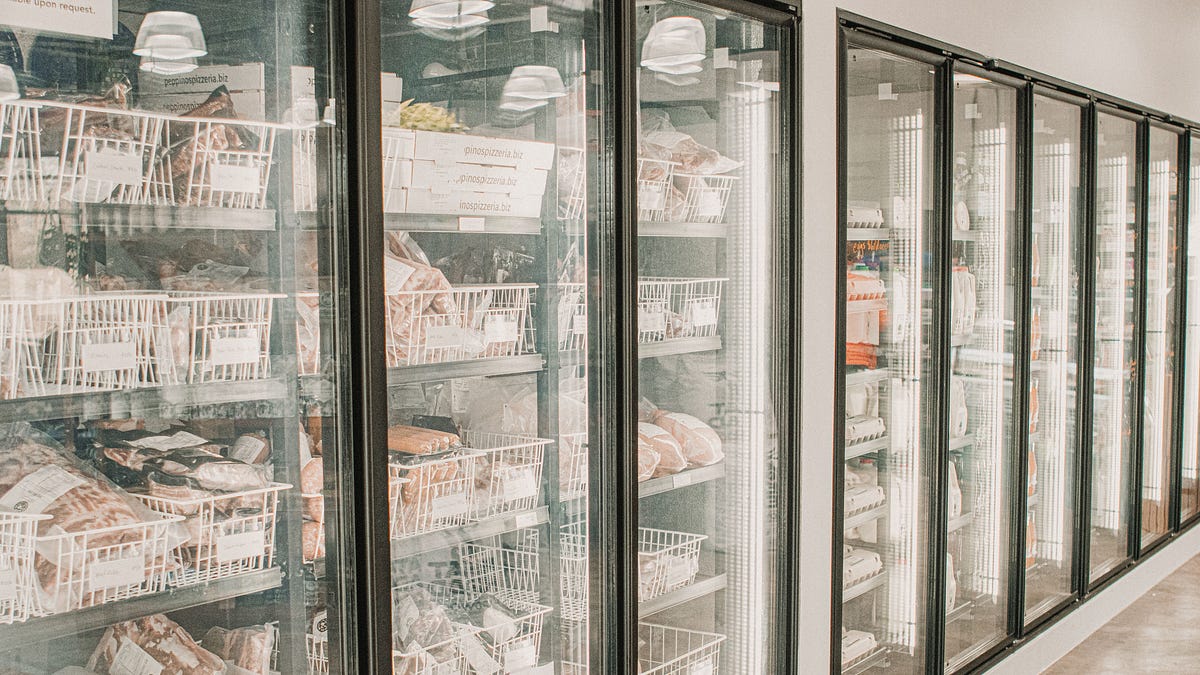
A cluster of freezer failures across bases
Between August 26 and 27, 2026, shoppers at US military commissaries — the tax-free grocery stores on bases that serve service members and their families — began reporting that entire refrigerated and frozen sections had gone down, with cold stock spoiled or pulled from the shelves. A write-up on the Signal and Silence Substack, which then surfaced on the Hacker News front page, traced 14 separate outage reports across 11 states within that two-day window.
According to an update to that post, Stars and Stripes and Military Times/Navy Times have since independently reported the multi-base failures, and the Pentagon now acknowledges a “possible refrigeration disruption” at numerous commissaries run by the Defense Commissary Agency (DeCA). The post counts at least six installations confirmed through official sources, plus independent confirmation of several more.
Confirmed sites include Fort Huachuca, F.E. Warren AFB, Fort Irwin, Columbus AFB, Naval Station Newport and Travis AFB. NAS Lemoore, Port Hueneme and Dyess AFB were independently confirmed, with commissary employees reportedly restoring Lemoore by August 28 and Dyess and Newport by August 29. Other bases on the list — Little Rock, Holloman, Robins, McConnell and Cannon AFB — carried less confirmation, and two original entries were removed after review: Fort Meade was operating normally, and the Camp Lejeune outage notice turned out to date from 2025.
Defrost mode, not a power cut
The detail that lifted the story above routine equipment failure came from Fort Huachuca in Arizona. The installation's official Facebook account announced that an overnight equipment failure had pushed every commissary freezer into defrost mode, spoiling the contents. When commenters assumed a power flicker, the account replied that power had stayed on, and clarified that the freezers had not simply shut off — they entered defrost, which actively heats food.
An unverified commenter added that the cold-storage equipment had been replaced relatively recently and that refrigeration and HVAC are remotely managed through DeCA. The post's author flags this as anecdote rather than evidence, but it raised a concrete question: could remote control even produce this failure mode?
DeCA's networked refrigeration infrastructure
It could. DeCA, a Department of Defense agency operating roughly 235 commissaries worldwide, does not leave refrigeration to each individual base. Procurement documents issued in March 2026 sought support for facilities maintenance, call-center operations and Remote Monitoring Control System (RMCS) management across about 182 DeCA locations — a footprint covering every store on the outage list. DeCA's engineering specifications state that defrost is controlled through the RMCS. A separate contract describes per-store RMCS units whose refrigeration and HVAC alarms are monitored remotely around the clock, and requires the contractor to maintain a master control system for all of them somewhere in the continental US.
The post is careful about the limits of this. Centralized monitoring is not the same as a headquarters console that can defrost every commissary at once. How much remote control exists today, where the master systems are hosted, and whether affected stores share equipment or vendors remains unclear. That said, the contractor that built the newer commissary at Robins AFB — one of the reported sites — describes that store's refrigeration and HVAC as managed under unified controls.
At Holloman AFB, a printed notice taped across a blocked-off, empty refrigerated aisle cited an unexpected refrigeration system failure and suspended all chilled and frozen sales until further notice. The person who photographed it noted the base had weathered power outages before, but none had ever taken out every refrigeration system simultaneously.
What is actually established
The author states plainly that there is no evidence DeCA was hacked. What is documented is a tight cluster of failures across 11 states inside two days, at least one incident in which equipment entered defrost rather than losing power, and an agency whose freezer defrost cycles run through networked control systems. Coincidental failure of aging hardware remains an alternative explanation.
Why it matters
Commissaries are grocery infrastructure for military families at hundreds of locations, so simultaneous cold-chain loss means large volumes of spoiled food and reduced access for a short period. The larger issue is the failure mode: defrost is a networked function, so a software bug, compromised credentials, a breached vendor or a fault at the master control layer could plausibly affect many stores at once — with no attacker required. If a cyber cause is eventually confirmed, this becomes a concrete example of building-automation and operational-technology systems translating a network event into physical, visible damage. For DeCA and the DoD, the public procurement record now doubles as a map of that attack surface.
- #cybersecurity
- #military
- #infrastructure
- #iot
- #defense