· via Hacker News – Front Page (hnrss.org)
SpaceX's Starship attempts first orbital launch with 26 next-gen Starlink V3 satellites
Starship's 14th flight is SpaceX's first attempt to reach Earth orbit, carrying the first 26 Starlink V3 satellites while Amazon's rival Leo constellation remains grounded.
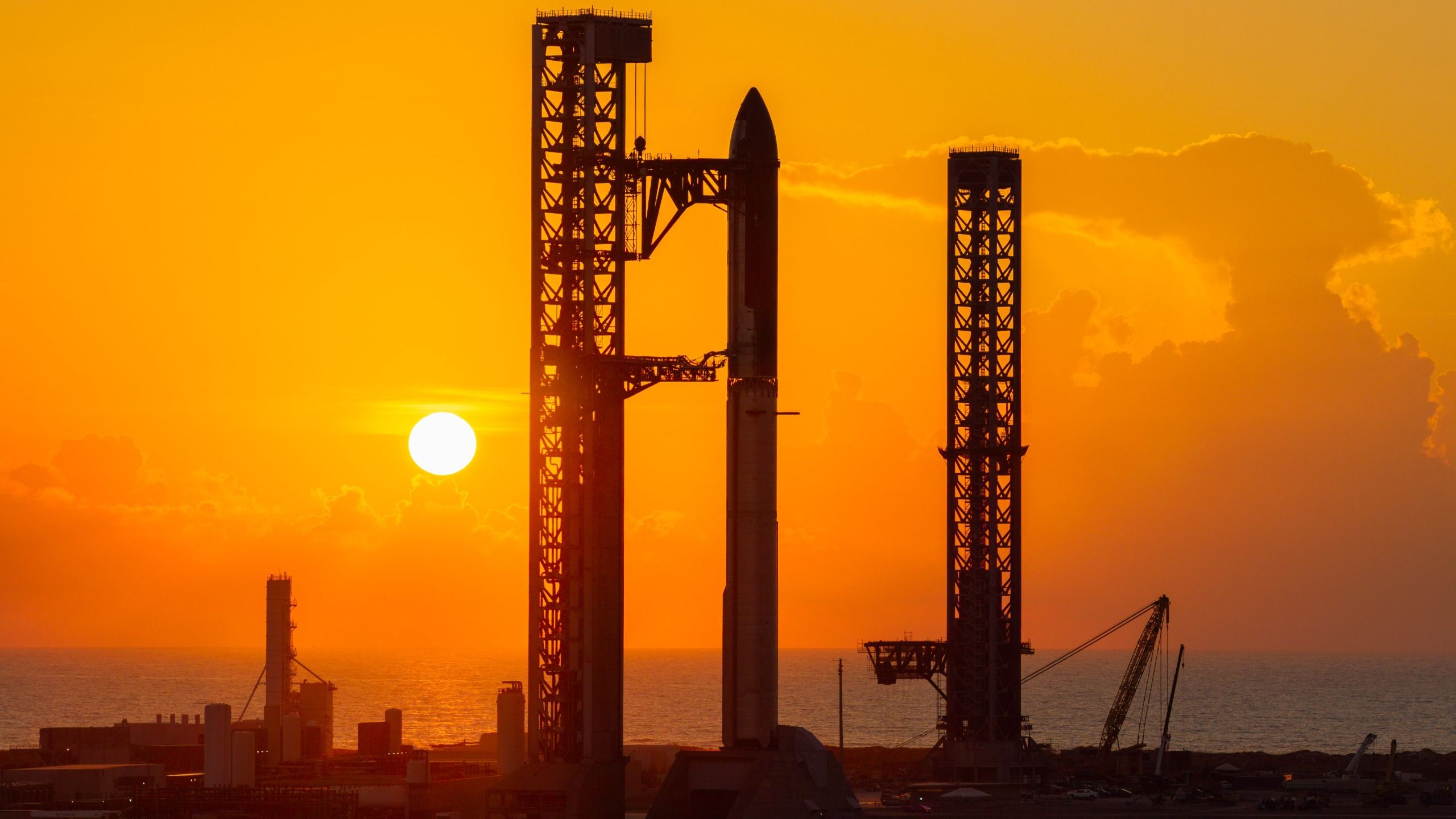
Starship attempts its first trip to orbit
SpaceX is trying to fly its Starship vehicle to Earth orbit for the first time. According to Space.com, the mission — the 14th Starship test flight — was set to lift off from the company's Starbase site in South Texas on Monday, Sept. 28, inside a 75-minute window opening at 8:15 a.m. EDT. Every one of the 13 flights since Starship's April 2023 debut has been suborbital.
The rocket is the largest and most powerful ever built: fully stacked it stands 407 feet (124 meters) tall, with both the Super Heavy booster and the 171-foot Ship upper stage designed to be fully and rapidly reusable. Flight 14 also carries the vehicle's first commercially significant payload — 26 next-generation Starlink Version 3 internet satellites, which Ship will release once in low Earth orbit.
How the flight is meant to unfold
Space.com outlines a flight profile that stretches well beyond earlier tests. After reaching orbit, Ship will circle the planet six times before splashing down in the Pacific Ocean off the coast of Chile nearly 10 hours after launch. Previous missions lasted at most 65 minutes and ended in the Indian Ocean off Western Australia. Super Heavy is expected to splash down in the Gulf of Mexico about seven minutes after liftoff, as on earlier flights.
On operational missions, SpaceX intends to return both stages to the pad and catch them with the launch tower's "chopstick" arms — a manoeuvre it has completed three times with the booster but never attempted with Ship. Other milestones still pending include transferring propellant to Starship through rendezvous with tanker Ships, required for missions beyond Earth, and adding life support ahead of crewed flights. NASA has selected Ship as the first crewed lunar lander for its Artemis programme, which aims to return people to the Moon in 2028 on Artemis IV.
The first Starlink V3 satellites
The Verge reports that the 26 V3 satellites bring a significant capability jump to the Starlink constellation, which currently has roughly 11,000 satellites operating in low Earth orbit. Elon Musk has said the Version 3 constellation should eventually number 100,000 spacecraft — a scale that only Starship's payload capacity and reusability could plausibly support.
Amazon's rival constellation keeps slipping
The flight lands at an awkward moment for Amazon, as The Verge notes. Amazon's Leo broadband constellation has 396 satellites in orbit and has added none since July 2, when 29 launched aboard United Launch Alliance's Atlas V. In the same period, SpaceX has launched 552 Starlink satellites.
Amazon's problems stem largely from its launch partners. ULA's Vulcan has been grounded by the US Space Force since February 2026 while a booster anomaly is investigated. Blue Origin's New Glenn has been grounded since its only launchpad was destroyed in May. Earlier in September, Amazon ordered six additional launches on Arianespace's A64, raising its contracted total from 18 to 24, but unspecified Ariane 6 component problems are expected to disrupt launches through the rest of 2026, and October missions carrying 36 Leo satellites have already disappeared from the European spaceport's schedule. Amazon has already secured an extension to its FCC deadline to deploy half of its planned 3,232 satellites, and its self-imposed mid-2026 target for commercial service has passed without an update.
Why it matters
Reaching orbit would shift Starship from an experimental vehicle to an operational launcher, and the first V3 deployment ties that milestone directly to SpaceX's internet business. If Starship flights become routine, SpaceX gains a low-cost, high-capacity route to a constellation roughly ten times larger than today's Starlink. For Amazon, whose rival service is stalled by grounded rockets across three separate providers, the gap is widening rather than closing — and at the current launch cadence, The Verge argues it could be years before Leo competes with Starlink globally.
- #spacex
- #starship
- #starlink
- #satellites
- #space-internet
- #amazon