· via Hacker News – Front Page (hnrss.org)
Suspected arson hits Polish Starlink ground station serving Ukraine and Central Europe
A fire at a Starlink-linked ground station near Warsaw was deliberate, according to Poland's digital affairs minister, who sees Russian hybrid warfare behind it while conceding attribution is not yet certain.
Fire at Masovian ground station treated as arson
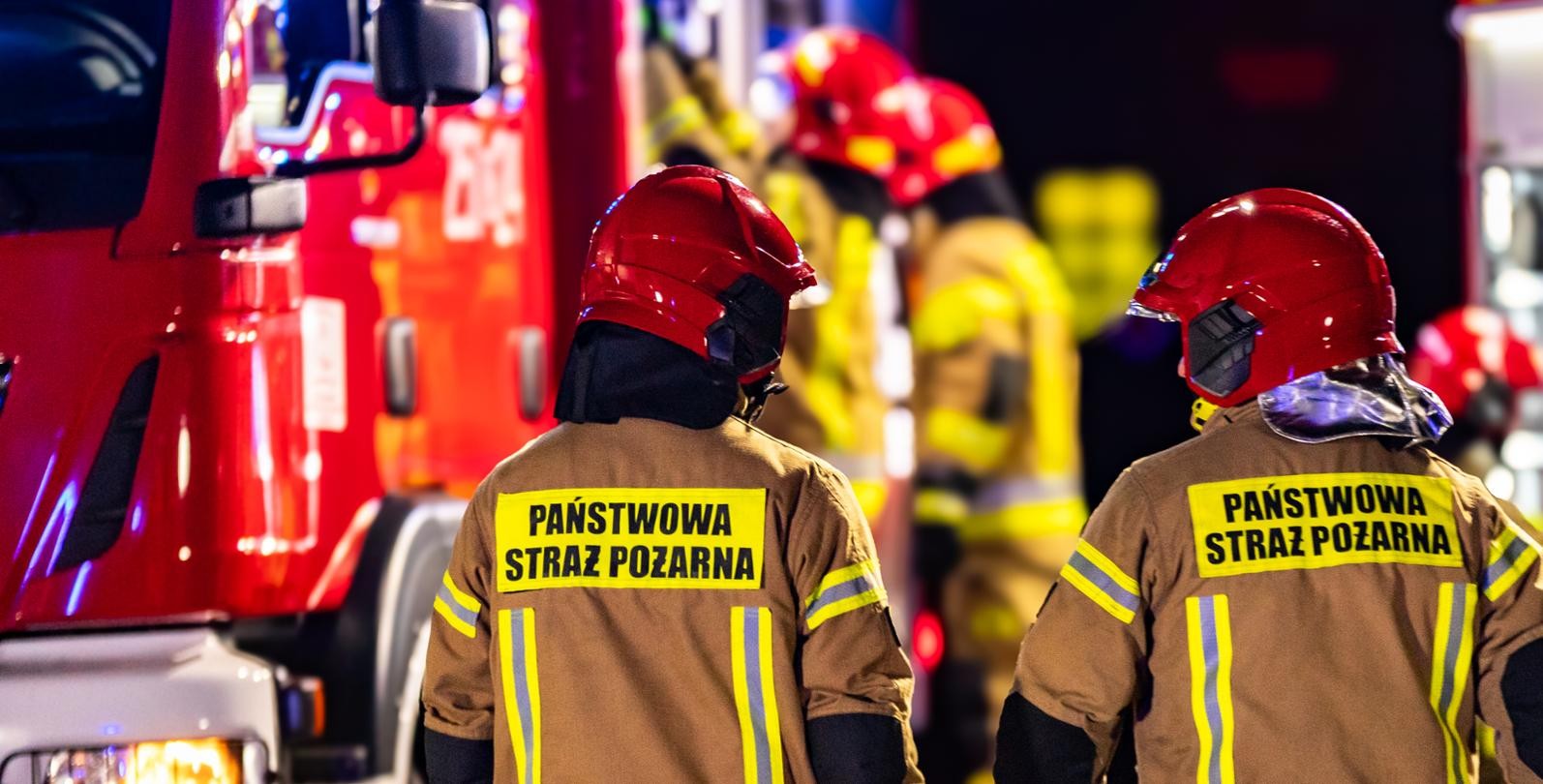
A fire broke out at around 9 p.m. on Wednesday evening, 23 September, at a ground station used by Starlink in the village of Wola Krobowska, just south of Warsaw, according to Notes from Poland. Firefighters were joined at the scene by police and officers from Poland's Internal Security Agency (ABW) after suspicions emerged that the blaze had been started deliberately.
Digital affairs minister Krzysztof Gawkowski, who also serves as deputy prime minister, told broadcaster TVN the following morning that Poland was dealing with a deliberate attack on critical telecommunications infrastructure that affects how the internet runs. Speaking separately to state broadcaster TVP, he said the facility belongs to Exatel, a Polish state-owned telecommunications operator, and carries internet traffic across Poland and onwards to Ukraine. Other internet providers use the site too, including SpaceX, the company behind Starlink.
A chokepoint for Starlink in Central Europe
As the Polish news service Defence24 explains, ground stations are the points where Starlink's satellite constellation connects to terrestrial communications networks. The Polish facility, alongside one in Lithuania, serves the entire Central and Eastern European region, including Ukraine, where Starlink terminals have become vital connectivity during the war with Russia.
That makes a single building in a village outside Warsaw part of the path linking an orbiting constellation to users across a large region — among them a country whose military and civilian communications rely heavily on the service.
Attribution remains open
Gawkowski went furthest on motive. He told TVN that the way the attack was carried out pointed clearly to Russia and described it as another element of the hybrid warfare Poland says it faces, arguing that the goal of such operations is to paralyse critical infrastructure and spread panic. Yet, as Notes from Poland highlights, the same minister conceded to TVP that it is impossible at this stage to say for sure whether Russia was behind this particular fire.
Other officials were more careful. Jacek Dobrzyński, the spokesman for Poland's security services, told TVN it was too early to discuss the causes or motives of the fire, while confirming that all signs pointed to deliberate ignition. Justice minister Waldemar Żurek told broadcaster RMF that sabotage was one possibility being taken into account and nothing could be ruled out, given the facility's sensitive role in satellite communications.
A wider pattern of incidents
Notes from Poland places the fire in a broader context. A report by the International Centre for Counter-Terrorism described Poland as the primary focus of a Russian sabotage campaign in Europe, counting 31 of 151 identified incidents since 2022 on Polish soil — more than in any other country. Earlier this month, a fire broke out at a Polish drone plant owned by WB Electronics, a supplier to the Polish and Ukrainian armed forces; Prime Minister Donald Tusk said there was no question it was started deliberately and that Russia was likely behind it. On the same day as the Wola Krobowska fire, a Russian helicopter briefly entered Polish airspace, and in July a Russian missile landed in a field in eastern Poland.
Why it matters
Satellite internet is often framed as resilient because its signals come from orbit, but this incident is a reminder that it depends on physical ground infrastructure that can be attacked with basic means. For Ukraine, where Starlink underpins battlefield and civilian connectivity, the security of these terrestrial links is not an abstraction. If the arson finding holds, this becomes a physical strike on the supporting infrastructure of a service that much of the region — and one country at war in particular — depends on, and a further step in the sabotage campaign European governments have been warning about. Even before any final attribution, the response the fire drew — counterintelligence officers at the scene and three ministers on morning television — shows how sharply Poland's threat picture around critical infrastructure has shifted.
- #starlink
- #spacex
- #satellite-internet
- #infrastructure-security
- #poland