· via Hacker News – Front Page (hnrss.org)
Tesla kills Solar Roof, leaving certified installers with six-figure losses
Tesla halted solar tile shipments in August and will now supply only conventional panels, stranding certified installers who sank six figures into training, tooling and crews for a product installed on about 3,000 US roofs.
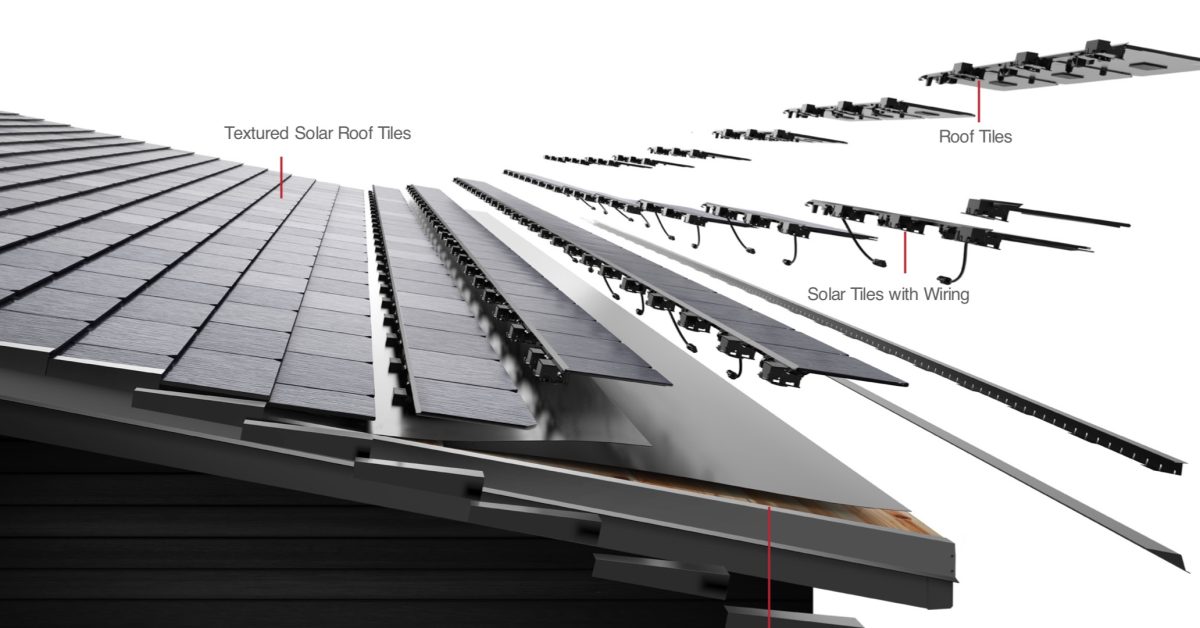
Tesla has killed its Solar Roof product, halting shipments of the solar tiles in August and informing its network of certified installers that it will supply only conventional solar panels from now on, according to Electrek. The sudden exit has left the contractors who sold and installed the tiles absorbing the fallout — some of whom told the outlet they invested hundreds of thousands of dollars into the program and now have little to show for it.
A quiet end to an underperforming product
As Electrek reports, Tesla installed only around 3,000 Solar Roof systems across the United States over roughly seven years. Weekly installations peaked somewhere between 21 and 32 — more than 95 percent short of Elon Musk's repeated target of 1,000 installations per week by 2019 or 2020. Electrek previously reported that Tesla discontinued the product after concluding internally that it could not be made profitable. The Solar Roof page on tesla.com now redirects to the company's solar panel offering, and the product has been dropped from the Energy section of the site's navigation. Electrek describes it as the quiet end of a product that had effectively been winding down for more than a year.
The cost of certification
The contractors left to clean up are the roofers and solar installers Tesla certified to put the product on houses. In a report published this week, Roofing Contractor spoke with several of them, including Elevated Roofing & Siding in Dayton, Ohio; PGT Home Energy Solutions in Tempe, Arizona; Westfall Roofing in Florida; and Saguaro Solar, Electric & Roofing in Tucson.
Becoming a certified installer was a serious commitment. Contractors sent crews to multi-week training sessions on the West Coast, and some had to complete three supervised installations before being approved. Ryan Westfall, president of Westfall Roofing, told the outlet the process demanded a genuine investment in learning the system rather than a quick course.
The finished product was also slow to deliver: a Solar Roof took roughly two weeks or more to install, compared with about two days for a conventional rack-mounted solar array. Contractors are now redesigning active projects or swapping in alternative systems mid-pipeline.
Electrek spoke separately with installers who said they had poured six-figure sums into crews, tooling and training built around the Solar Roof. Several declined to be named publicly because they still sell Tesla's remaining energy products, including solar panels and the Powerwall battery, and feared that open criticism could damage those relationships.
Warranty and service doubts
Tesla has said it will honor existing warranties and keep supplying replacement parts for the systems already installed. Contractors are skeptical that commitment will survive the roofs' 25-year design life. Greg Field, owner of PGT Home Energy Solutions, questioned whether parts will actually remain available over the long term. Aaron Nichols of Exact Solar warned that servicing will carry significantly higher labor costs, since the tiles are labor-intensive to work on and their electrical connections are complex. Todd Miller of Isaiah Industries argued that Tesla treated the Solar Roof as a piece of solar technology first and a roofing product second, and underestimated the complexity of the roofing trade it was entering.
Why it matters
Electrek notes that Tesla's earlier shift toward third-party certified installers — a retreat from what the company itself characterized as a local, labor-heavy business with thin margins — now reads very differently in hindsight. Tesla pushed the hardest, least profitable part of the product onto small local companies, let them absorb the training and tooling costs, and then pulled the product entirely. Tesla is left with a bounded warranty obligation on 3,000 roofs; the installers are left with stranded investments, abandoned project pipelines, and the awkward job of servicing a discontinued product for the next two decades. For any small business that builds itself around a single vendor's platform, it is a sharp lesson in platform risk. Building-integrated solar itself is not necessarily finished — several contractors told Roofing Contractor they would take it on again, but only for a manufacturer willing to commit to long-term support and parts.
- #tesla
- #solar
- #vendor-deprecation
- #hardware
- #renewables