· via Hacker News – Front Page (hnrss.org)
Texas city demands $2 million for Flock camera records as transparency portals go unused
A Texas city is demanding roughly $2 million to release public records on its Flock license plate cameras, a figure that shows how rarely police agencies volunteer details about the surveillance network.
A $2 million price tag for answers
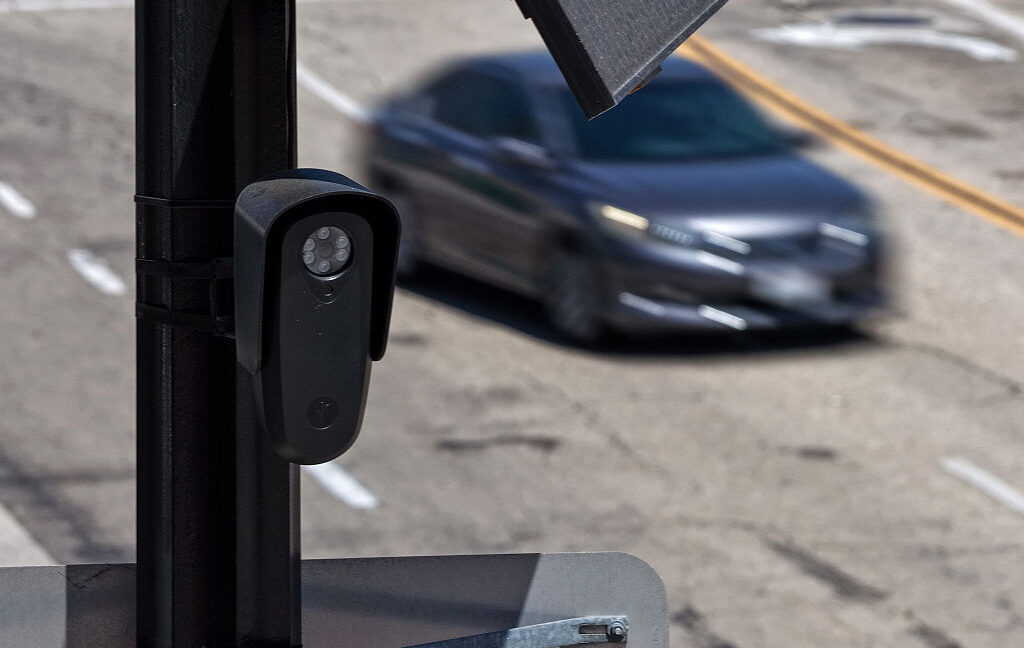
A Texas city is demanding roughly $2 million to fulfill a public records request covering its use of Flock surveillance cameras, according to a report from Ars Technica that recently surfaced on the Hacker News front page. The demand is the latest flashpoint in a running dispute over automated license plate recognition (ALPR): as the camera network spreads, the people being tracked have little visibility into how it actually operates.
The questions the public cannot answer
As Ars Technica lays out, citizens probing Flock's practices struggle to establish even basic facts: where the cameras are positioned, which personnel can view footage, how often the data is queried, and how long it is retained. Public records requests are one of the few tools available, and some departments voluntarily publish partial answers through optional "transparency portals" that Flock builds into its product. Those portals log statistics such as the number of cameras deployed, vehicles scanned, and police searches run in a given area.
Optional portals, minimal uptake
Flock frames the portals as a good-faith gesture. Company spokesperson Andrew Smith told the Texas Tribune that they give agencies "a public-facing way to publish information" about ALPR programs, including policies, usage and access rules, so communities can better understand the technology.
In practice, participation is thin. By the Texas Tribune's count, hundreds of agencies across Texas use Flock cameras, yet only 59 have activated transparency portals — and of those, just 16 share data with the public. In most of the state, a records request or a lawsuit remains the only avenue for oversight, and as the $2 million demand shows, the first route can be priced out of reach.
AI could automate the worst patterns
Advocates quoted in the coverage warn that the transparency gap is widening at a bad moment, as AI makes it cheaper to process movement data across an ever-broadening network. Michael Soyfer, an attorney at the Institute for Justice who is litigating several Fourth Amendment cases involving Flock, told 404 Media that police already flag loosely defined "suspicious patterns of movement." He described federal agents using ALPRs to monitor vehicles making day trips across the border and back, then leaning on those trips to manufacture a basis to stop drivers, interrogate them and search them.
Soyfer expects that behavior to be productized. "I think Flock is going to automate that, using AI where cops can set alerts for those kinds of travel patterns," he told 404 Media. That shift — from an officer manually reviewing footage to an automated alerting system configured by police themselves — would make opaque deployments even harder to audit after the fact.
Why it matters
The $2 million figure makes an abstract debate concrete. When records requests carry prohibitive costs and voluntary disclosure covers only a sliver of deployments, there is effectively no routine public oversight of a system logging the movements of ordinary drivers. Advocates point out that courts have not required warrants for this kind of tracking and that state and local officials have not mandated disclosure, which leaves litigation — the very cases Soyfer and others are already fighting — as the remaining check. And if AI-driven alerting turns passive plate logging into automated suspicion, the cost of not knowing how these systems are configured only rises.
- #surveillance
- #privacy
- #flock-cameras
- #public-records
- #alpr
- #texas