· via Hacker News – Front Page (native)
TikTok posts and QR codes were used to fabricate Barcelona protest that ended in looting
An analysis by The Conversation details how anonymous 'Blocus' accounts lured young people via TikTok and QR codes into private chats used to coordinate looting in Barcelona, with copycat gatherings now spreading across Europe.
A protest that was not what it claimed
On the evening of October 24, young people converged on Plaça Catalunya in Barcelona, apparently answering a call to demonstrate for better public schools. According to The Conversation, the summons came from around 20 TikTok accounts connected to an anonymous platform known as Blocus. The posts imitated France's recent student movement and placed the rally beside the city's ongoing housing-rights encampment — yet, as Barcelona's mayor Jaume Collboni has acknowledged, no evidence connects the two causes.
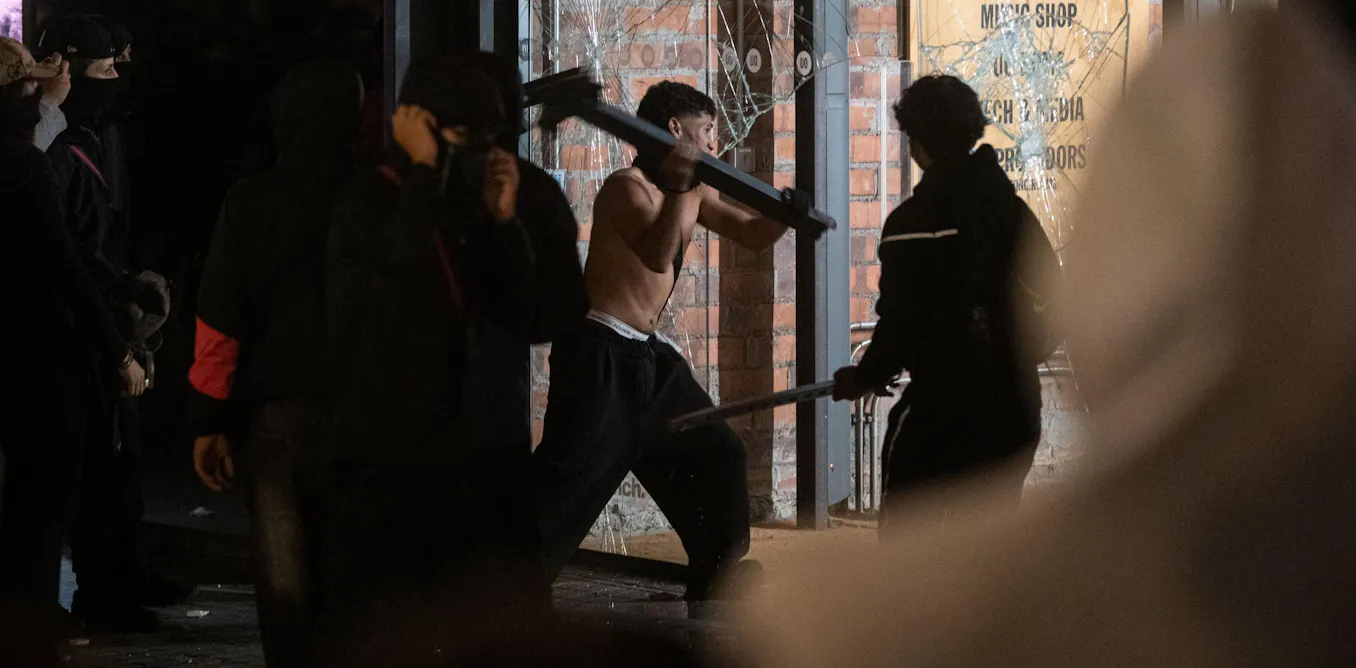
What followed was not a demonstration about education. Masked participants smashed shopfronts and fought with police. By the end of the night, 130 young people had been arrested, 76 of them underage, and 14 officers were injured.
The QR-code funnel
The organising method, as reconstructed by The Conversation, was simple: a TikTok post promoted a cause, and a QR code promised more information. Scanning it dropped users into private chats where the instructions concerned looting rather than schooling. Once the night was over, the accounts — and every post they had made — were deleted, removing the visible trail.
The format appears to be spreading. New profiles have adopted the Blocus label elsewhere in Spain and across Europe, and Spanish fact-checking outlet Maldita has identified Halloween-themed calls to gather in multiple cities across nine European countries, including Germany and the Netherlands. Some invite peaceful demonstrations; others reference The Purge, the 2013 film in which all crime is legal for a night.
The accounts share a visual signature: AI-generated posters with repeated slogans and dark scenes of burning streets, imagery that echoes the far-right anti-immigration mobilisations which followed the Ceuta crisis, with the Spanish flag appearing alongside Catalan and Basque regional flags. Images of similar Madrid posters were verified by RTVE Verifica. The Conversation cautions that the shared aesthetics, timing and methods point to a wider ecosystem of online mobilisation, but that it remains unknown whether this is digital mimicry or the work of a single orchestrator.
Real violence, competing narratives
Spain holds general elections in five weeks, and the events were absorbed into campaigning within days. Opposition leader Alberto Núñez Feijóo accused President Pedro Sánchez of "violently resisting a handover of power", saying of the government: "Having lost the streets, they want to set them on fire." The far-right Vox party blamed Sánchez's "militias" and framed the disturbances as "Islamo-leftism" attributable to first- and second-generation immigrants.
Government spokesperson Elma Saiz and other progressive figures countered that the right benefits from the turmoil, which diverts attention from the genuine housing encampments. Left-wing Catalan politician Gabriel Rufián went further, suggesting the far right orchestrated the riots.
An unresolved interference question
The episode has also drawn geopolitical speculation. On October 26, Foreign Minister José Manuel Albares said there was no indication of Russian interference in Barcelona. The European Union has separately warned of hybrid campaigns combining what it calls "malicious cyber activities" with foreign information manipulation and election interference. In France, an independent investigation found no proof that a foreign actor ignited that country's violent protests, but did document Russia-linked networks amplifying anger around them. In Italy, Defence Minister Guido Crosetto described riots in Milan and elsewhere as "hybrid warfare", while Interior Minister Matteo Piantedosi said there was no evidence the young rioters had been directed from abroad.
Why it matters
The Barcelona case shows how cheaply a mobilisation can be manufactured on mainstream platforms: a sympathetic cause for the public feed, a QR code to move coordination into private and largely unmoderated channels, then deletion of the accounts once the damage is done. The violence that results is real, and its imagery now circulates as supposed proof of immigration-driven insecurity, government failure or Europe in decline — narratives that are useful to political actors regardless of who, if anyone, coordinated the original calls.
Meanwhile, the actual movements around housing and education that the fake protest leaned on lose the headlines. With elections weeks away and copycat calls already appearing across nine countries, the most durable outcome may be the chaos and distrust itself.
- #tiktok
- #disinformation
- #protests
- #spain
- #social-media