· via Hacker News – Front Page (native)
Valve says community and constant updates are the best defense against AI game clones
Speaking at a developer event in South Korea, Valve's Steam team said community trust and continual updates are the strongest defense against AI clone games, and admitted Next Fest still exposes low-quality titles.
Valve confronts AI clone extortion fears
Valve has publicly addressed developer anxiety over AI-generated clone games, telling indies that community trust and continual improvement — not platform enforcement — are the strongest defenses against copycats on Steam.
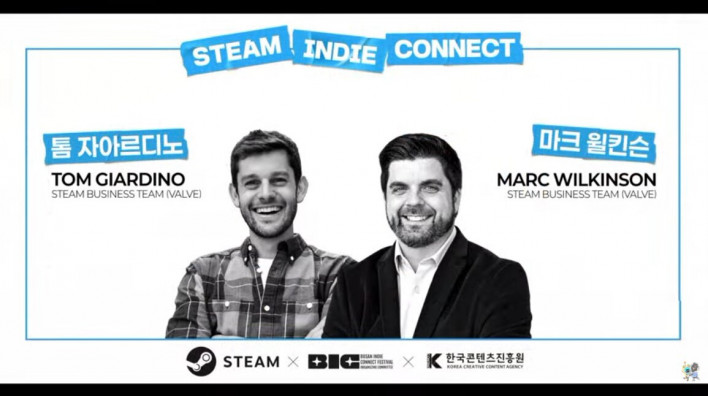
According to Inven Global, which covered the session, the comments came at the Steam Indie Connect event on October 27, co-hosted by Valve, the Busan Indie Connect Festival Organizing Committee and the Korea Creative Content Agency. Tom Giardino and Marc Wilkinson of Valve's Steam Business Team presented, with a localization team member joining for questions.
The AI question was triggered by a specific threat: one developer said indies have been receiving extortion emails warning that unless they pay, someone will clone their game with AI and release it first. Giardino said this was the first he had heard of such cases, described extortion as primarily a matter for law enforcement rather than a game platform, but added that Valve wants developers to report incidents so it can investigate and help where it can.
No gatekeeping on tools
Giardino framed Valve's stance around a longstanding principle: the company does not want to decide which tools developers should or should not use, and whether to adopt AI in development is the creator's own choice.
He also pointed out that clone games predate AI. Spotting an interesting concept at Next Fest and rushing out a similar game, or chasing trends, has always happened — AI has simply accelerated the pace. Rather than promising protective measures, Valve offered two lines of defense that sit with developers.
The first is community. A developer website, genuine engagement with players, and an established identity and trust form the first barrier against clones, regardless of whether AI was involved. Giardino acknowledged this takes time and does not happen automatically, so community alone is not enough.
The second is continuous improvement. Giardino compared the situation to Valve's historically relaxed approach to DRM and anti-piracy: instead of aggressive enforcement, Valve has long focused on making the legitimate version of a product the best version. He said Valve views AI cloning through the same lens, advising developers to keep adding features, personality and creativity drawn from their own perspective rather than relying on a single mechanic that is easy to copy. He noted this task applies equally to small studios and to Valve itself, which continues to operate and update Dota.
Next Fest and the 'AI slop' problem
A separate developer raised the flood of low-quality, AI-made games — so-called AI slop — during Next Fest, citing complaints on social media and disappointing personal results.
Wilkinson explained the event's visibility mechanics: for the first two days, games are shown to players on a nearly random basis, after which personalized recommendations take over and surface titles a player is more likely to enjoy and buy. He claimed many articles complaining about low-quality floods were written based only on those opening two days. The random start is intentional, designed to stop participants jumping in early purely for visibility and to give every game fair exposure. The trade-off, he admitted, is that some low-quality games get shown, and he said a significant number of people at Valve are actively thinking about how to solve the problem.
Giardino put the scale shift in perspective: three years ago he was persuading developers to join an event with 50 to 100 games, while Next Fest now draws thousands of titles. Success benchmarks also vary wildly — some teams celebrate tripling their wishlists with 10,000 additions, while others are disappointed by 50,000. He recalled that when Steam Greenlight launched roughly 14 years ago, developers asked to filter those games out, and similar requests arrived with Steam Direct. Each time, Valve chose to refine the shopping experience rather than pre-filter titles, and he described making Steam smarter and more dynamic — rather than limiting developer access — as the starting point of the company's philosophy.
New developer tools and Steam's scale
The presentation also introduced new tooling. A Wishlist Data API lets developers retrieve wishlist data by period, country and language using an App ID and date range. The Personal Calendar, previously a Steam Labs experiment, is now an official store feature that recommends upcoming releases based on players with similar play styles; games need a confirmed release date to appear.
Giardino also shared figures: Steam, launched in September 2003, recently peaked at 43.5 million concurrent users. Revenue in South Korea grew 126% over five years, with premium game and DLC revenue up 70% and in-game purchase revenue up 388% over the same period.
Why it matters
Valve's answer is a clear refusal to police AI use on Steam, paired with practical guidance: the real defense against cloning is a relationship with players and a game that keeps evolving, not platform intervention. For indie developers facing extortion threats, that places most of the burden back on them — Valve will examine reports, but treats the extortion itself as a law enforcement issue. The Next Fest exchange also confirms the AI slop visibility problem is real and unresolved, with Valve openly acknowledging the trade-off in its current design. As AI-generated content floods digital storefronts, Steam's chosen strategy of improved curation over gatekeeping will be watched closely by other platforms and by the developers who depend on them.
- #steam
- #valve
- #indie-games
- #ai-generated-content
- #game-development