· via Vercel blog
Vercel Connect opens its connectors directory to third-party submissions
Vercel now lets developers submit their own services to the Vercel Connect connectors directory through a four-step process, with every entry reviewed before it goes live.
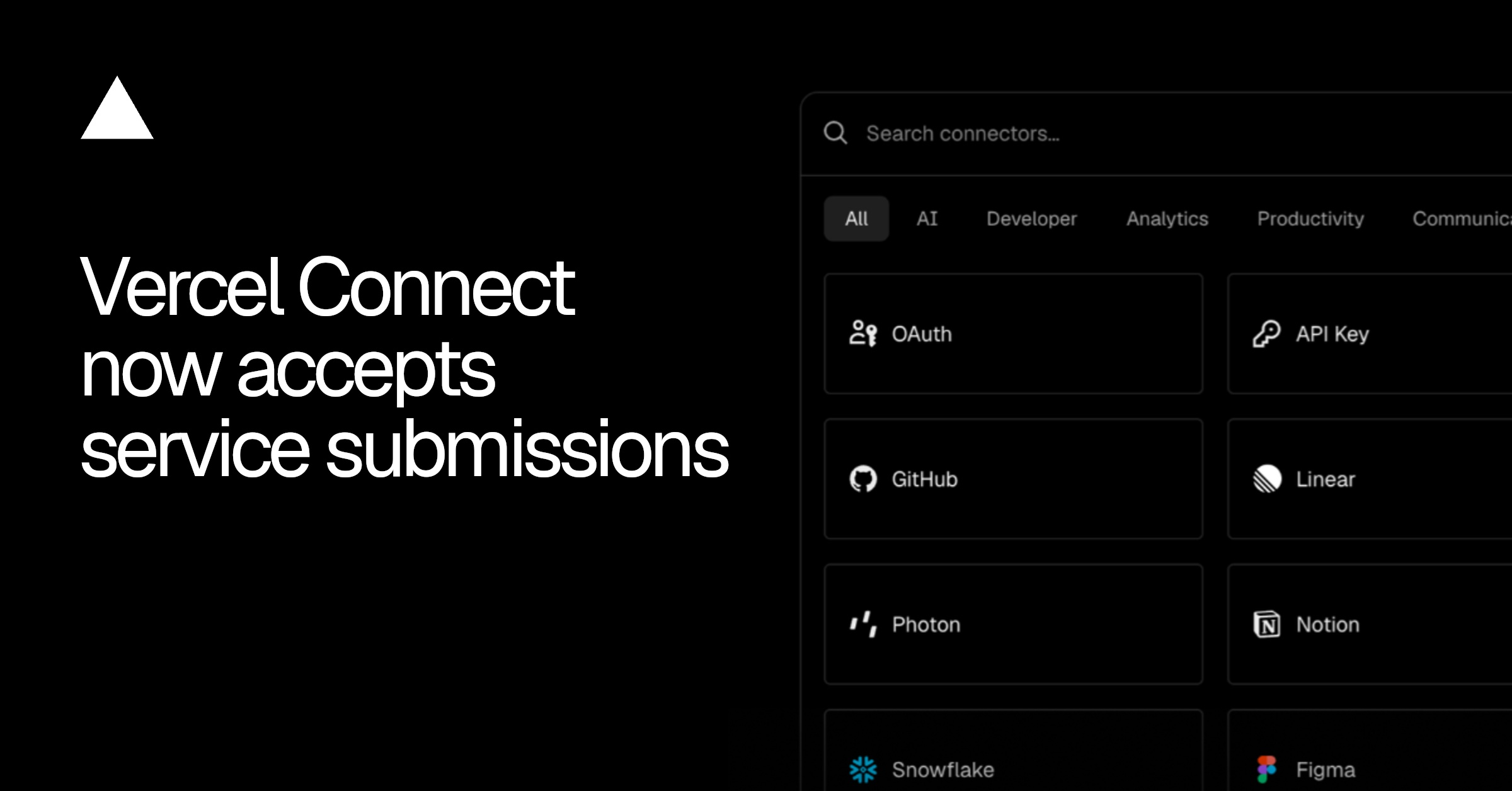
Vercel has opened the Vercel Connect connectors directory to submissions from third-party developers. According to a changelog post on the Vercel blog dated September 30, service owners can now propose their own offerings for the directory instead of waiting for Vercel to build a connector on their behalf.
What changed
Vercel Connect serves as the connectors catalogue for the platform: the place where services that a Vercel project can hook into are listed. Until now, appearing in that catalogue depended on Vercel building the connector itself, so new entries arrived at whatever pace the company's internal roadmap allowed. The new submission process shifts that work to service owners. Anyone running a service they want exposed through the directory can submit it themselves, and the entry point is a "Submit a Service" option in the Vercel dashboard.
How a submission works
Vercel breaks the process into four steps:
- Describe the service being submitted.
- Add one or more connection methods, choosing between OAuth and API-key authentication. Multiple methods are supported, so a single service can offer more than one way to connect.
- Verify each OAuth method by requesting a real token through a test connector. This check applies to OAuth flows specifically; the changelog does not describe an equivalent verification step for API-key methods.
- Send the submission to Vercel for review.
Vercel points developers to its documentation for the full list of what a service needs to support. That is worth reading before starting, since the changelog itself only sketches the requirements.
The review gate
Nothing goes live automatically. Vercel reviews every submission before it is published to the directory, which keeps the catalogue curated rather than turning it into an open self-service listing. The changelog does not specify how long reviews take or what criteria decide acceptance, so would-be submitters should treat the documentation as the authority on what passes.
Why it matters
The change turns the connectors directory from a first-party-built catalogue into something closer to a community-driven ecosystem. For developers building on Vercel, the practical effect is a wider range of integrations arriving at the pace the community wants them, including niche services that might never have made it onto Vercel's own priority list. For service owners, being listed lowers the friction for Vercel users to connect to and adopt their product.
The most security-relevant detail is the OAuth verification requirement. Connectors handle credentials, and forcing submitters to obtain a real token through a test connector demonstrates that the authentication flow works end to end before anything reaches users. Combined with the mandatory review, it suggests Vercel is trying to open up its ecosystem without giving up quality control, a familiar tension for any platform that moves from building its own integrations to accepting them from outside.
- #vercel
- #connectors
- #integrations
- #oauth
- #developer-tools