· via Hacker News – Front Page (native)
Opus 5.5 agents reportedly find two room-temperature magnetic semiconductor candidates
Vals AI says its AI agents designed one new spintronic compound and identified a 1999 material as a second candidate, with both predicted to stay magnetic and spin-sorted above room temperature.
What happened
According to a Vals AI blog post that reached the front page of Hacker News, a team of AI agents working alongside a human researcher has produced two candidate materials for a long-standing goal in memory technology: a semiconductor that stays magnetic at room temperature while producing no external magnetic field. The Hacker News posting identifies the agents as Opus 5.5 models.
One candidate is a brand-new compound the agents designed from scratch. The other is a substance first synthesized in 1999 that, according to Vals AI, nobody had previously recognized as fitting this class of material, even though the relevant data had been in the literature for decades.
The materials problem being targeted
Ferromagnets, the familiar kind, align their atomic moments so the material leaks a magnetic field. Spintronic devices such as hard-drive read heads and MRAM exploit the fact that their current-carrying electrons are mostly of one spin orientation, but the stray field disturbs neighboring devices, and switching is comparatively slow and power-hungry.
Antiferromagnets cancel internally, with neighboring moments pointing in opposite directions. They emit no external field, pack more densely, and switch roughly a thousand times faster. Their weakness is that electron spins are mixed at every energy level, removing the handle spintronics needs to sort and read information.
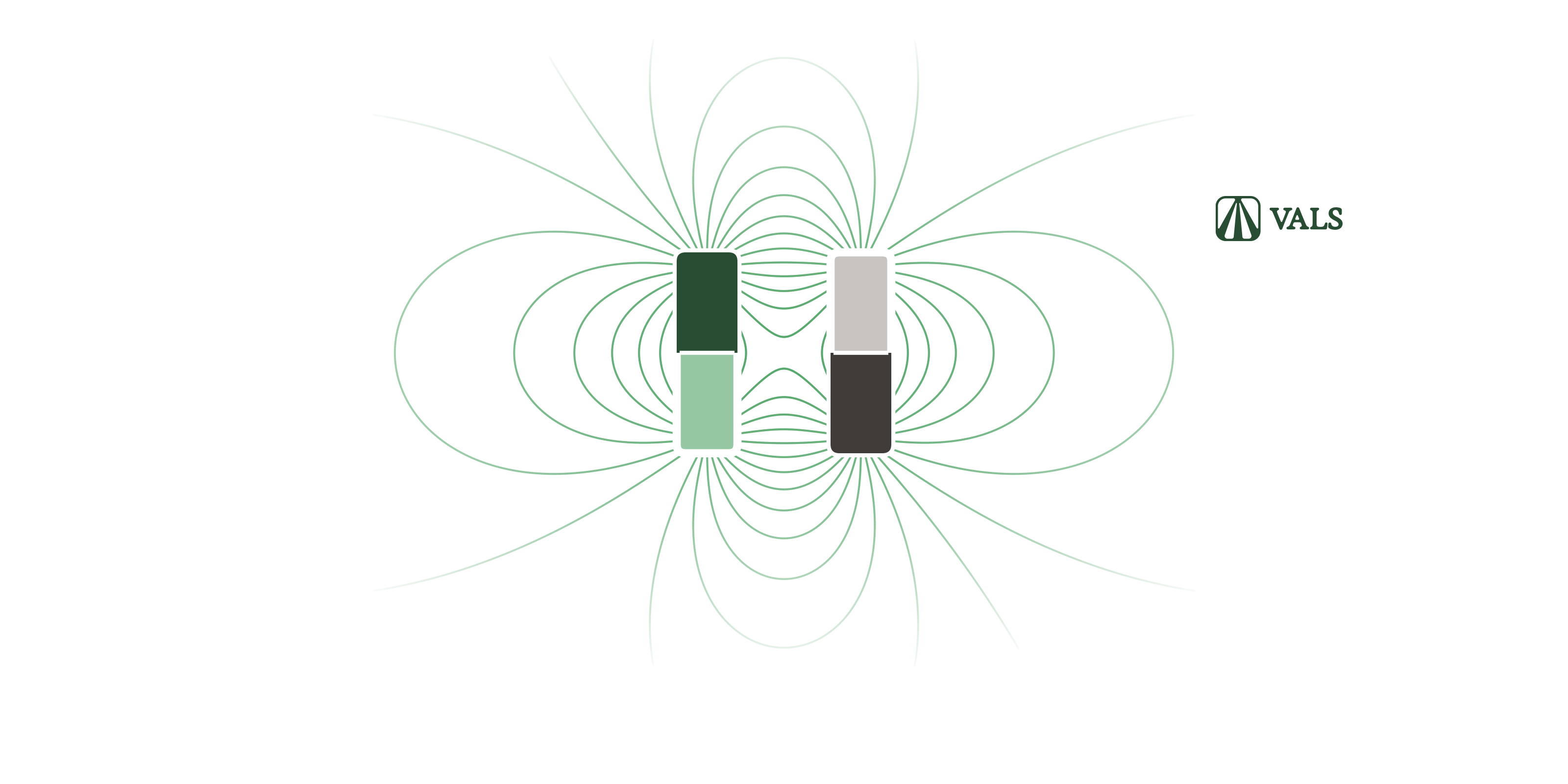
The target is a middle ground Vals AI describes as a Luttinger-compensated magnet: an antiferromagnet whose net spin is locked to zero — a consequence of Luttinger's theorem for an ideal insulating crystal — but whose spin-up and spin-down atoms sit in inequivalent environments, such as being different elements. That inequivalence makes it possible to separate spins by energy, as in a ferromagnet. The key metric is the spin window: the range of energies at each edge of the band gap where every electronic state carries the same spin. For room-temperature operation it must dwarf thermal fluctuations of roughly 26 meV.
A designed compound with a synthesis problem
The agents designed YBaMnFeO₅, made of yttrium, barium, manganese, iron and oxygen, which Vals AI says appears never to have been synthesized or proposed for this purpose. They screened it with density functional theory at two levels of approximation, PBE+U and HSE06, with the reported figures coming from the more accurate HSE06 runs. The predictions: a 2.35 eV band gap, spin windows of 1.0 eV on the hole side and 1.4 eV on the electron side, and magnetism persisting to roughly 420 K in the raw simulation, or about 490 K after calibrating the method against a known magnet.
There is a catch the agents themselves uncovered. The manganese and iron atoms must occupy a strict alternating checkerboard arrangement, and the agents' simulations of how atoms order themselves at different temperatures show that pattern collapsing into a random mix near 950 K. Oxides of this type are typically made at 900–1300 °C, and atoms barely move below that range, so Vals AI concedes that standard synthesis would likely yield a disordered crystal — which destroys the spin sorting that makes the material interesting.
A 1999 material rediscovered
The second candidate, KV[Cr(CN)₆], belongs to the same family as the pigment Prussian blue and was first reported in 1999. Its creators deliberately balanced the magnetism of two metals so it cancels. A 2008 study using hybrid functionals, the same class of method, even plotted its electronic states spin by spin and showed both band edges carry the same spin — but that paper studied magnetic coupling under pressure and never commented on the implication. According to Vals AI, nobody had identified the material as a Luttinger-compensated semiconductor, quantified its spin windows, or checked how robust they are.
The agents' calculations predict a band gap of about 2.1 eV, with spin windows of 2.6 eV for holes and 1.6 eV for electrons. The chemists who made the original sample measured it staying magnetically ordered up to 376 K (103 °C), above room temperature.
Why it matters
A room-temperature magnetic semiconductor would combine three things memory engineers want: no stray field, antiferromagnet-grade switching speed, and a band gap with spin-sorted edges for building devices. Every number above comes from simulation rather than measurement, and the designed compound may be impractical to synthesize in its ordered form. But the second candidate can presumably be remade with chemistry published a quarter-century ago, giving experimentalists a concrete target.
The broader signal is about process. The agents proposed a new compound, ran the physics, flagged its own synthesizability problem, and then reinterpreted an overlooked material from the existing literature. Whichever candidate survives contact with the lab, that end-to-end workflow is a tangible demonstration of AI agents contributing to experimental science rather than merely answering questions about it.
- #ai-agents
- #materials-science
- #spintronics
- #semiconductors