· via Hacker News – Front Page (native)
State of Devs 2026 survey finds burnout, layoffs and divided AI sentiment among developers
Devographics' State of Devs 2026 survey reports widespread job insecurity, an unchanged 62% burnout rate and sharply polarised opinions on AI among developers.
A profession under pressure
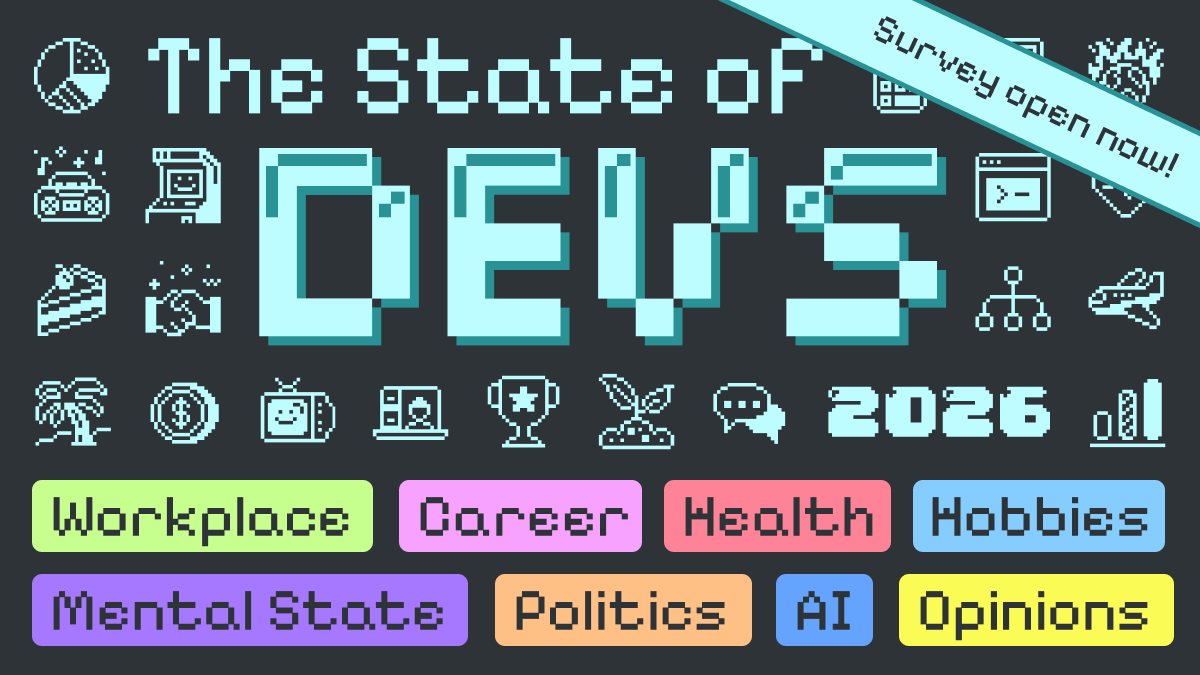
The 2026 edition of the State of Devs survey, run by Devographics with responses collected through September 5, 2026, describes an increasingly precarious profession. Nearly half of respondents said they had experienced job insecurity and insufficient pay. A quarter had been laid off at some point in their careers, with nearly one in ten losing a job within the previous nine months. More than a quarter expected to be forced out of the field entirely within five years for reasons beyond their control.
The results drew wide attention after reaching the front page of Hacker News on October 7.
Burnout is holding steady rather than improving
For the first time, Devographics asked developers about their mental state, and the answers point to widespread exhaustion. Roughly two thirds of respondents said they had recently felt less motivated and more cynical about their work. About half reported trouble concentrating, more procrastination, emotional depletion at the end of the workday, and a reduced sense of accomplishment and effectiveness on the job.
Sixty-two percent of developers said they had experienced burnout at some point in their careers, the same share as in the previous year's survey, indicating no improvement. The report notes that developers who had been through burnout tended to be less happy and more likely to report ongoing physical and mental health problems, which the authors present as a reason not to treat burnout as a normal feature of software work.
AI splits the community
AI was also a new topic this year. Adoption was described as extremely widespread, but sentiment was heavily polarised: 49 percent of respondents viewed AI positively while 42 percent viewed it negatively.
Close to half said AI tools had not had a positive effect on their mental state. The survey points to early evidence that prompting can feel addictive, that heavy reliance on AI can undermine learning, and that operating multiple agents in parallel can produce a cognitive overload the report calls 'AI brainfry'.
More than 1,500 respondents chose to write free-text comments about their AI outlook. Recurring themes included working out how to use the technology safely and sensibly, a sense that AI makes the work itself less rewarding, and a belief that AI is encouraging management to set productivity expectations that cannot be sustained.
Older problems persist
While AI dominates the current conversation, some issues barely move. Respondents identifying as female remained considerably more likely to report workplace discrimination than their male colleagues, and more likely to respond by avoiding colleagues, altering their behaviour or appearance, or changing careers altogether. The survey reads this as women reshaping themselves to fit workplace cultures that disadvantage them, rather than those cultures changing.
LGBT+ respondents and people with ADHD or autism reported pressure to hide their identity at work. The survey links unfair treatment and this pressure to mask to a heightened risk of burnout and its related harms for these groups.
Why it matters
The survey documents several pressures arriving at once: economic precarity, chronic burnout that is not improving, and an AI transition that many developers experience as stressful rather than empowering. For engineering leaders, the data is a retention warning, since a quarter of the workforce is actively contemplating leaving the field and those who burn out tend to carry lasting health consequences.
More broadly, the findings suggest that AI's most contested effects may be organisational rather than technical. If a large share of developers believe the tools are being used to ratchet up expectations and strip meaning from their work, adoption strategies risk failing on human grounds regardless of the underlying technology's merits. The survey's own closing argument is that these problems only become addressable if developers keep talking openly about what the work is doing to them, and which parts of it are worth defending.
- #developer-survey
- #burnout
- #ai
- #layoffs
- #mental-health
- #software